People are taking allergy and heartburn pills for PMS. Could it work?

For the latest stories on the science of healthy living, subscribe to NPR’s Health newsletter.
People who feel extra rotten in the days leading up to their period say they’re finding relief from a new TikTok trend.
It’s a combination of two over-the-counter drugs: An allergy pill, like Claritin or Zyrtec, along with Pepcid AC, the heartburn medication.
It might sound unbelievable, but after dealing with years of unexplained symptoms, Terese Hansen of Omaha, Nebraska was willing to try almost anything.
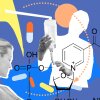
Hansen told NPR that for the past four years she’s suffered from persistent nausea, heartburn, and an erratic body temperature: She felt constantly on edge and exhausted. And her symptoms got worse around her period.
“I could not be around anyone because I knew I was unpleasant,” she says.
The TikTok videos of people taking Pepcid AC and allergy medicine impressed Hansen, especially those who claimed it helps with their premenstrual dysphoric disorder, or PMDD, which is when people experience depression and anxiety caused by premenstrual hormonal shifts.
After talking to her doctor, she says she decided to “take a shot in the dark” by giving the TikTok trend a try.
She says it was like a switch in her body flipped from bad to good, improving her physical symptoms, as well as her energy and mood.
“It was nuts,” she recalls. “My kids noticed, my boyfriend noticed. My boss noticed.”
The claim
TikTokers say that taking a combination of allergy medication and Pepcid AC helps to combat their premenstrual blues, leading them to feel less irritable and more energetic. Others going through perimenopause report this combo helps to lessen similar symptoms.
The evidence
There haven’t been clinical trials testing the safety or efficacy of this TikTok trend.
“This is basically an evidence-free zone,” says Leigh A. Frame, executive director of the Office of Integrative Medicine & Health at George Washington University. “There’s no evidence that it does or doesn’t work.”
However, experts who spoke to NPR for this story agree there’s a plausible biological mechanism for why Hansen and others may be finding benefit from this over-the-counter hack.
It has to do with histamine.
Histamine is a chemical your immune system releases when your body comes into contact with an allergen. It triggers an inflammatory response, which is why you feel crappy during an allergic reaction.
There’s some evidence to suggest that histamine also fluctuates with your menstrual cycle.
Estrogen, which stimulates the release of histamine, ebbs and flows throughout the month. And progesterone seems to act as a sort of natural antihistamine and in the days leading up to your period, progesterone takes a nose dive.
And in perimenopause, levels of both hormones rise and fall rapidly, often erratically.
These dramatic shifts can cause moodiness and discomfort, explains Dr. Mara Rivera, an Austin-based psychiatrist who specializes in the mental health challenges related to the menstrual cycle and reproductive health transitions.
Pepcid AC and allergy pills are both histamine blockers, and act on different receptors throughout the body. Though the relationship between hormones and histamine is not well understood, Rivera says the theory is these over-the-counter drugs may help keep histamine in check, essentially replacing progesterone’s effect.
Histamine also interacts with neurotransmitter systems, including serotonin and dopamine. Anecdotally, Rivera notes some of her patients report mental health benefits after taking antihistamines for other conditions, such as allergies.
In some ways, Rivera sees this trend as a modern-day example of how some old wives tales hold a pearl of truth.
“Women have been doing this forever, just talking to one another, and seeing what works,” she says.
It’s possible that people are experiencing some level of placebo effect, says Dr. Tami Rowen, a gynecologist at the University of California, San Francisco.
She notes that multiple studies show that patients benefit from the placebo effect, whether or not a medication works. That might be happening with these over-the-counter antihistamines, says Rowen, who agrees with Rivera that people are likely experiencing real relief.
She notes that currently the treatments for perimenopause and PMDD are limited.
“As an academic researcher myself, it would be lovely if there was a way to study this,” she said.
A Band-Aid, not a solution
There’s no clinical evidence that this over-the-counter hack works, says Frame, who worries that people who use Pepcid AC and allergy medicine to treat their symptoms aren’t getting to the bottom of why they’re sick. Histamine is associated with all sorts of health problems including hormonal fluctuations, poor sleep or thyroid issues.
“A healthy menstrual cycle should not be painful,” she says. “That’s a misrepresentation that we have been disserved by.”
The popularity of this online trend shows there’s a real need to improve research into women’s health, she adds.
The bottom line
There’s no data to support their use for PMDD or other medical conditionsPMS, but it might be reasonable to try these medications temporarily while waiting to connect with a specialist, says Frame. She warns that people should speak with their doctors before taking any new medications.
While Pepcid AC and allergy drugs are relatively low-risk, they are not risk-free. Antihistamines can cause drowsiness, fatigue, dry mouth, gastrointestinal symptoms, and adverse drug interactions, especially among older adults and those with kidney or liver issues.

- Admin
- Hannah-Jones’ ignorant Times essay: Letters to the Editor — Sept. 29, 2026 September 29, 2026
- USC coach Lincoln Riley dismisses ‘the noise,’ says team can go on a run September 29, 2026
- Gordon Johncock, Two-Time Indianapolis 500 Winner, Dies at 90 September 29, 2026
- Trans NYT exec threatened to kill wife, scared their kids with chilling book before his in-laws shot him dead: docs September 29, 2026
- Senate passes Protect College Sports Act with decisive vote September 29, 2026