Katie Couric couldn't remember the year or the president during frightening brain episode

NEWYou can now listen to Fox News articles!
Journalist Katie Couric is sharing a scary medical episode that she experienced on June 27.
In a post on Substack titled “The Day I’ll Never Remember,” she detailed a sudden episode that left her unable to recall the current month, year and president.
“I thought it was 2024. And I believed Joe Biden was president,” she wrote.
ONE WALKING HABIT COULD SIGNAL A HEALTHIER BRAIN AFTER 80, SCIENTISTS SAY
The event occurred while Couric was attending the Aspen Ideas Festival in Colorado, during which she participated in two public panels — one on AI and one on journalism — both of which she cannot remember at all.
“I have no idea what we talked about, or of what occurred when the panels ended,” she said.
Journalist Katie Couric is sharing a scary medical episode that she experienced on June 27. (Getty Images)
John Molner — Couric’s husband, who was in attendance at the festival and the two panels — also shared his account.
After the event, someone told Molner that Katie wasn’t feeling well. When he reached her, an EMT and a doctor were tending to her. “I could tell something was off,” he wrote. “It could have been altitude sickness, but Katie was definitely not all there.”
WOMAN WITH ADVANCED ALZHEIMER’S REGAINED SPEECH AND MEMORIES AFTER TAKING MAGIC MUSHROOMS
At the hospital, when Couric struggled to recall the year, the president and her grandchildren’s names, doctors began checking for a stroke.
An MRI revealed no signs of stroke, which was a relief, but “Katie’s ‘fog’ became a lot more apparent,” Molner wrote.

John Molner — Couric’s husband, who was in attendance at the festival and the two panels — also shared his account. (Getty Images)
“She repeatedly asked me the same questions: ‘What was I doing before we got to the hospital?’ ‘Why am I at the hospital?’”
Couric was ultimately diagnosed with transient global amnesia, a sudden, temporary episode of memory loss that prevents a person from forming new memories and may also erase some recent memories, according to Mayo Clinic.
“The cause seems to be as mysterious as the brain itself.”
It is not caused by a stroke, seizure or head injury, and it usually resolves completely within 24 hours.
“[It’s] just a very weird neural episode that’s pretty uncommon and, at least in most cases, is a ‘one and done’ experience,” Molner said.
TEST YOURSELF WITH OUR LATEST LIFESTYLE QUIZ
Couric said she finally began feeling “like herself” again around 9 p.m., and went to sleep at 2 a.m.
As TGA leaves a “permanent gap in memory” for the duration of the episode and for hours beforehand, Couric said that from around noon on that day until at least 7 p.m. will remain a “big, black hole.”

As TGA leaves a “permanent gap in memory” for the duration of the episode and for hours beforehand, Couric said that from around noon on that day until at least 7 p.m. will remain a “big, black hole.” (Getty Images)
Data shows that approximately three to eight people per 100,000 will have an episode of transient global amnesia, with people 50 years of age and older at higher risk.
The specific cause of TGA is not known, but some experts believe it stems from a “temporary dysfunction in the brain’s hippocampus — the area responsible for creating new memories,” Couric shared.
CLICK HERE TO SIGN UP FOR OUR HEALTH NEWSLETTER
“Doctors believe this is driven by brief interruptions in blood or oxygen flow, or microscopic spasm in the blood vessels.”
Episodes could potentially be triggered by intense physical exertion, emotional distress, extreme temperature changes or migraines, experts say.
CLICK HERE FOR MORE HEALTH STORIES
Approximately 15% of patients will have a recurrence 10 years later.
“Why did this happen to me? Was the altitude an issue? Was I dehydrated? Tired? Stressed? The literature doesn’t seem to indicate that these are contributing factors, but the cause seems to be as mysterious as the brain itself,” Couric wrote.
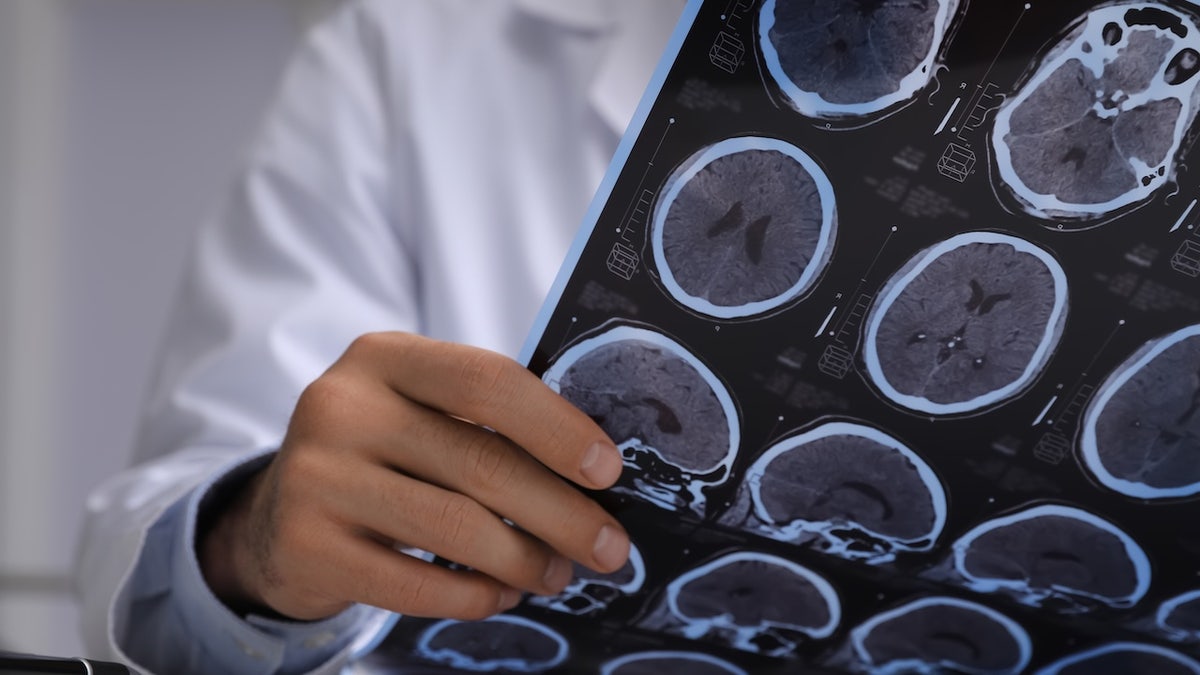
Anyone who experiences sudden memory loss, confusion, difficulty speaking, weakness, numbness, vision changes, severe headache or other stroke-like symptoms should seek immediate medical attention or call 911, doctors advise. (iStock)
“All I know is that those hours will be forever lost. Someone described it as my brain failing to hit the ‘record button.’”
CLICK HERE TO DOWNLOAD THE FOX NEWS APP
“While this was a freaky occurrence, it could have been much more serious. So ultimately, I’m relieved — even though several hours of a Saturday in June will always be missing for me.”
Anyone who experiences sudden memory loss, confusion, difficulty speaking, weakness, numbness, vision changes, severe headache or other stroke-like symptoms should seek immediate medical attention or call 911, doctors advise.

- Admin
- Julia Haart’s ex husband facing criminal charges, jail over alleged actions during brutal divorce September 26, 2026
- Fulton Sheen became a TV sensation preaching faith, morality and warnings Michael Knowles says still resonate September 26, 2026
- Iconic Los Angeles Starbucks closing after 30 years as coffee giant shutters another 250 stores September 26, 2026
- Francisco Lindor vows return to form following banged-up Mets season: ‘No other option’ September 26, 2026
- Ella Langley goes viral after rejecting fan who asked her out September 26, 2026