Why your favorite international artist might be reconsidering their next U.S. tour
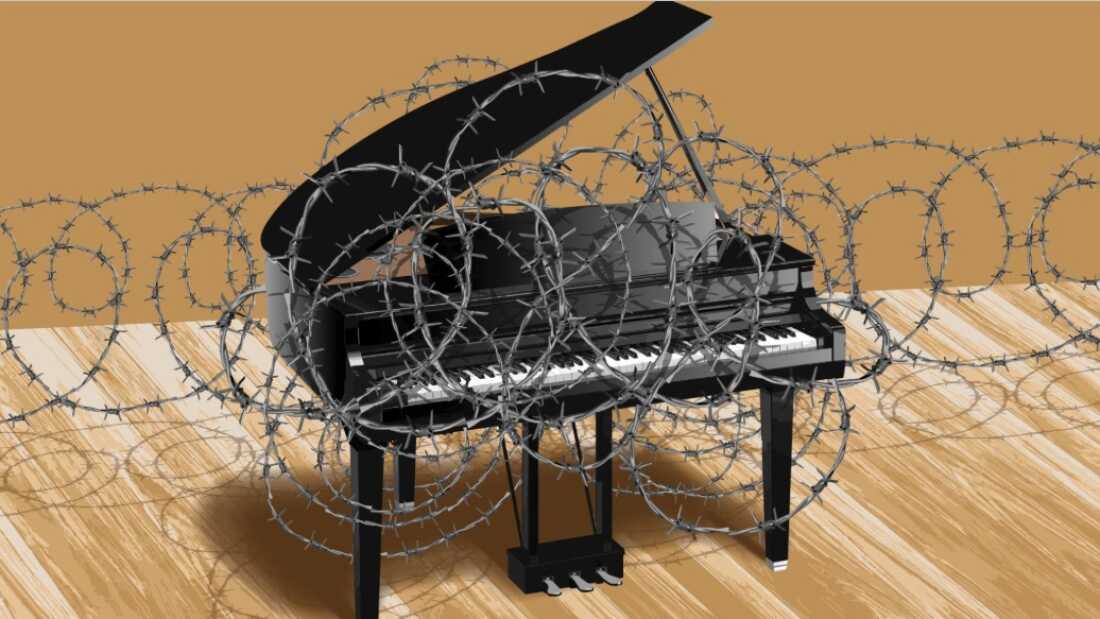
Here’s something American concertgoers might not know: before a musician from another country can take the stage in the U.S., someone has to file paperwork with the federal government on their behalf. And not just any paperwork — a petition, hundreds of pages long, stacked with press clippings, award documentation, testimonial letters from other artists, venue contracts, a detailed tour itinerary, and evidence that the artist is legitimately accomplished at what they do.
And that’s just to start the clock in a process that may take over a year to complete.

This is the reality for international artists — from musicians to painters, dancers to comedians — who want to come to the U.S. to share their work. It’s a complicated, expensive process that arts advocates say has long made the country a difficult place for foreign artists to access. But now, they say it’s gotten much worse.
The time it takes to process a visa has dramatically increased. The number of available interview slots at U.S. embassies is backlogged. Application costs have surged. And there’s an added layer of uncertainty: paperwork can be perfect, fees can be paid, and yet artists still can be turned away at the border.
For U.S. audiences, all of this means a quiet loss of global cultural exchange.
What does the artist visa process look like?
To illustrate the nonimmigrant visa process for artists, let’s take Kongero, a small, Swedish folk a cappella group that completed its second U.S. tour last fall.
First step: File a petition.
The group’s booking agent planned the tour and gathered all the necessary documentation to file a petition with U.S. Citizenship and Immigration Services (USCIS) to demonstrate that the group qualified for a P-3 visa, the category for culturally unique artists.
Once USCIS approved the petition, each individual artist still needed to wait for a separate visa interview at a U.S. consulate in their country of residence.

Swedish Folk’appella group Kongoro, Anna Wikenius, left, Lotta Andersson, Sophia Hultqvist Kott and Emma Björling perform in Greensboro, Vt., in December 2023.
Danielle Devlin
hide caption
toggle caption
Danielle Devlin
According to several artists and attorneys, nonimmigrant visa processing had historically taken around two to four months, though processing time started to increase after a backlog built up during the pandemic, and then increased further after the Trump Administration’s crackdown on immigration.
Visas can be withheld and reviewed again any time the federal government announces an immigration policy change, like a travel ban update, or revisions to the petition review policy, said Zelo Safi, a senior attorney with the Artistic Freedom Initiative. There have been several similar changes during the Trump Administration.
Right now, the average time to review a P visa petition like Kongero’s is 11 1/2 months. Processing for an O-1 visa petition — for individual artists of “extraordinary ability” — has grown to a little over a year. The problem is that the government won’t even accept petitions more than a year in advance for all O visas, which are temporary work visas for those with extraordinary ability or achievement.

According to one manager of a dance troupe from Spain, the process is “completely out of sync with how the arts industry works.” Like many artists and managers NPR reached out to, this dance troupe manager requested that NPR not use their name out of fear that there would be reprisals against their future visa applications. Others declined to be interviewed for the same reason.
A statement to NPR from the U.S. Citizenship and Immigration Services said that the new procedures are due to “increasing threats to public safety and national security.” It continued, “Verifying identities and personal histories from various countries requires a rigorous process — one that prioritizes the safety of the American people over everything else.”
Step two: take out your wallets
If you can’t wait a year — and most artists can’t — you pay. Specifically, you pay $2,965 per petition for premium processing, another travel fee that has increased in recent months. According to immigration attorneys, paying that fee is essentially a mandatory step for artists if they want to make their scheduled tour dates.

Kongero paid it, and they still ran into trouble. The group was granted only two months of entry instead of the year they’d applied for, forcing them to cancel their planned 2026 summer, fall and winter appearances.
Matthew Covey, executive director of Tamizdat, a legal nonprofit that helps performing artists navigate U.S. visa processing, has watched his client numbers drop since premium processing effectively became mandatory. He says that they’re choosing not to come to the U.S., because for many, the cost of total travel expenses has become too great.
“The current situation is [that] a tour that would have been marginal and maybe break-even, even five years ago, is a losing-money project now,” he said.
Step three: the interview
Once USCIS approves a petition, each individual artist still needs to wait for and complete a separate visa interview at a U.S. consulate in their country of residence. It is the Department of State that issues visas if everything checks out. With current backlogs, an interview can take months to schedule, and they cannot be missed.
Group member Emma Björling missed the first week of a two-month U.S. tour after the Trump administration instituted a new, mandatory in-person interview requirement last September.
When the new requirement was announced, she was on tour with a different musical group in Canada. Now, because of the new policy, she first needed to fly all the way back to Sweden to do the interview, before returning to North America to do the U.S. tour.
The U.S. tour ended up running $8,000 in the red. Kongero won’t return to the U.S. in 2026.
“With all the additional fees and costs and troubles and stress … it’s not worth it, not financially, and not stress-wise and workload-wise,” Björling said.
In a statement, the Department of State said, “Under President Trump, the United States is unapologetic in implementing America First visa policies. We welcome the many foreign artists who follow the required procedures and meet all of the visa requirements under U.S. law.”
But if your paperwork is approved and your interview is completed, and your fees are paid, congratulations! You have a visa!
But does that mean you get to enter the country?
Maybe not.
Step four: get past the border
Once artists have their travel arrangements set, their petition approved and their passport stamped, one final hurdle awaits once they arrive in the U.S.
U.S. Customs and Border Protection (CBP) agents have final authority at ports of entry — and arts organizations say the current climate has introduced a new level of unpredictability in how that authority gets used.
Comedian and theater-maker Alaa Shehada had come to the U.S. twice before to perform his one-man show, The Horse of Jenin, about growing up in the West Bank. He had a valid O-1B visa when he landed at John F. Kennedy Airport last November for another scheduled performance. But this time around, he says officers pulled him aside for additional questioning as soon as they saw his Palestinian Authority passport.

Alaa Shehada in The Horse of Jenin.
Dario & Misja Photography
hide caption
toggle caption
Dario & Misja Photography
After hours of questioning, Shehada said he was handcuffed and transferred to an immigration detention facility in New Jersey, where he described spending the night with other detainees in a cramped room on a concrete floor, shocked and confused.
He was placed on a return flight to his residence in Amsterdam the following morning — one day before his scheduled performance in Massachusetts. Neither he nor his producer received a clear explanation for why his visa was rejected. In a statement to NPR, CBP said Shehada was refused entry for “not being forthcoming with facts” during his interview with CBP officers.
“When an immigrant attempts to enter the U.S. without possessing an immigrant visa or is not forthcoming with facts during an interview, travelers may be subject to detention and refusal as statutes or visa terms may be violated,” the statement read. “A visa is a privilege, not a right, and only those who respect our laws and follow the proper procedures wil

l be welcomed.”
About a month later, the Trump administration issued an expansive travel ban that suspended visa issuance to individuals applying using any travel documents issued or endorsed by the Palestinian Authority.
“Of course, it is scary to sit with people with power who can just kill your dreams as simple as that,” Shehada said, who had planned to tour additional U.S. and Canadian cities. “You feel how unfair and humiliating that is.”
Covey says there’s heightened scrutiny at U.S. ports of entry, but less consistency with how that scrutiny is applied. In a statement, CBP said, “Admissibility determinations are made on a case-by-case basis using law enforcement, national security, and immigration information available at the time of inspection. CBP officers have the authority to question travelers, conduct inspections, and determine admissibility consistent with U.S. law.”
Jennifer Roe, executive director of Folk Alliance International, which connects artists with presenters globally, says that this means there’s no room for even the smallest of mistakes.
“I know a lot of artists are fearful of coming into the U.S.,” she said. “They’re hearing stories of being asked random questions at the border and being sent home because they didn’t answer something correctly.”
Ripple effects
When an international artist cancels their tour, the effects ripple outward.
The presenters who were stops on Shehada’s upcoming visit had already begun marketing the show and selling tickets. The New York Theatre Workshop had built an entire festival around the show. Boom Arts, a small presenter in Portland, had rented a theater for Shehada’s live performance. While several of the presenters were able to switch to showing a filmed version of the show, Shehada’s tour producer Jenny Tibbels said the losses totaled tens of thousands of dollars.
Shehada’s performance at the University of Massachusetts Amherst Fine Arts Center had been planned for nearly a year before it was canceled at the last minute. Executive Director Jamilla Deria said the organization had been eager to share a story from a Palestinian artist with the community.
“In Western Massachusetts, where our communities are more rural, access to storytelling and the perspective of folks who are coming from parts of the world that you don’t have direct engagement with is not only lost for that night, but maybe lost for good,” she said.

Tracy Francis, a presenter with Boom Arts, said that recent travel bans and changes in immigration policy are forcing her to make difficult decisions about which international artists she can safely invite to share their art in person. She’s already shaped her next season around which countries’ artists are realistically likely to be allowed in.
“I was bringing more European artists for the first time next season, just because their visas are more likely to get approved,” she said. “I also was more careful about making sure that artists I am bringing are on a larger tour, so there’s more shared costs.”
Shehada said his experience traumatized him.
“This experience was so hard and deeply hurtful, so the idea of coming back becomes so hard,” he said. “I would love to go and meet the international audiences, the Americans. I have lots of people and friends in the U.S,, and of course, this is my mission as an artist. This is my approach to reach audiences, but with that experience, right now, I don’t feel like going back at all.”
Jennifer Vanasco edited this story for broadcast and digital. Chloee Weiner mixed the audio. Danielle Scruggs edited the visuals.

- Admin
- Iran claims attacks on Bahrain, Jordan, Strait of Hormuz after latest US strikes July 14, 2026
- ICE Ordered to Cease Most Vehicle Stops After 2 Killings in a Week July 14, 2026
- English referee will miss out on massive World Cup final bonus due to controversial ban July 14, 2026
- ‘Lilo & Stitch’ star Daveigh Chase’s death certificate reveals final resting place July 14, 2026
- Mahmoud Khalil Accuses Trump Officials of Conspiring Against Him July 14, 2026