Oil surges to $100 per barrel. And, Trump imposes a new round of tariffs
Good morning. You’re reading the Up First newsletter. Subscribe here to get it delivered to your inbox, and listen to the Up First podcast for all the news you need to start your day.
Today’s top stories
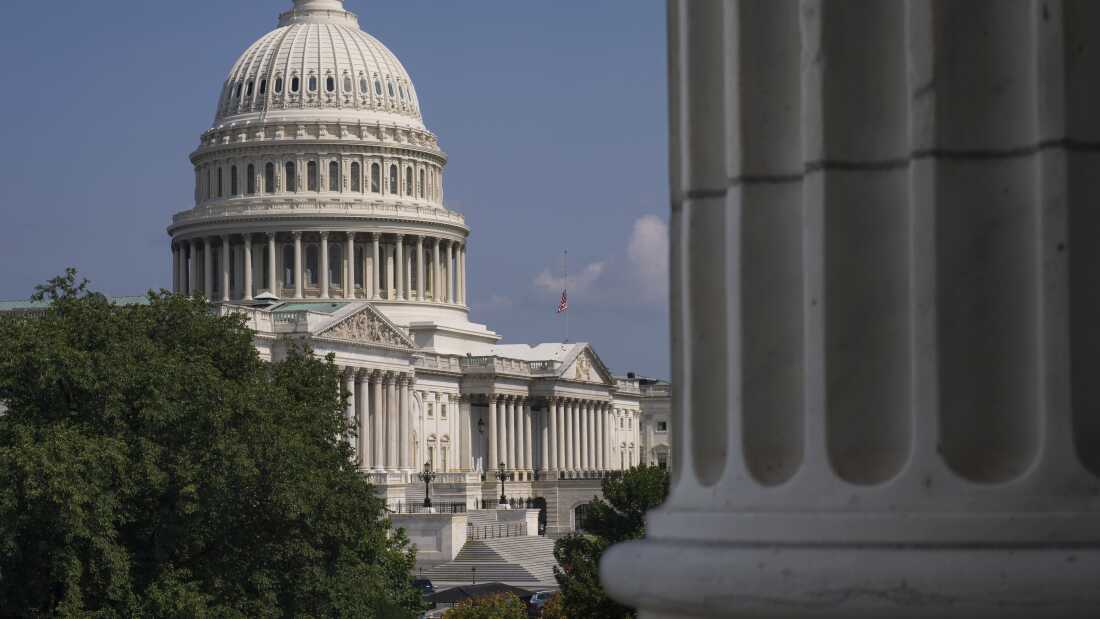
The House yesterday approved a resolution to remove U.S. forces from the war in Iran as the conflict continues to escalate in the Middle East. The non-binding resolution reflects lawmakers’ disapproval of a war they did not vote to authorize. It marked the second such rebuke passed by the House since the war began. Soon after the House vote, Senate Democrats attempted to advance their own war powers resolution, but it failed 47 to 49. In the past two weeks of renewed fighting, the U.S. has launched strikes on Iran, while Iran has targeted American bases in the Gulf and Jordan, impacting global energy markets.
The U.S. Capitol is seen from the Cannon House Office Building on July 22.
J. Scott Applewhite/AP
hide caption
toggle caption
J. Scott Applewhite/AP
- 🎧 Brent crude oil reached its highest level since May yesterday when it surged more than 6% to $100 a barrel, NPR’s Hadeel Al-Shalchi tells Up First. The spike will impact everyday people, increasing costs for school supplies and fresh food. Shipping companies like UPS are tacking on fuel surcharges. Prices rose after Iran-backed Yemeni Houthis attacked two Saudi oil tankers in the Red Sea. The Houthis said they got involved in the war to retaliate against Saudi Arabia for its siege on Yemen and assaults on the capital’s international airport. Earlier this week, the rebel group also threatened to blockade the Bab el-Mandeb Strait. The strait is another crucial chokepoint for oil and fuel transport, in addition to the Strait of Hormuz, which the U.S. and Iran have been fighting for control over. The ongoing conflict has also led some foreign missions to reduce their presence in Iran, according to Al-Shalchi.
The Trump administration announced overnight that it is imposing tariffs on 59 countries and the European Union. The new tariffs have two tiers — 10% and 12.5% — and went into effect at midnight, at the same time as when a 10% global tariff struck down by the Supreme Court earlier this year expired. The administration said it imposed these new tariffs because these countries are importing goods made with forced labor. The tariffs cover more than 99% of imports to the United States. Major categories like energy and many foods will remain exempt. Earlier this week, President Trump also signed proclamations to impose 50% tariffs on a selection of Canadian goods.
- 🎧 Polls show that Americans largely disapprove of tariffs and that their approval of Trump’s handling of the economy has declined, NPR’s Danielle Kurtzleben says. Despite public opinion, she says Trump views tariffs as a tool to pressure other countries into making concessions on things like trade deals. As the midterm elections approach, the administration continues to assert that its tariff policies will yield long-term economic benefits. Some economists caution that it is risky to ask voters to back a potentially unpopular approach, given the uncertainty of future outcomes.
A vigil last night in Madison, Wisconsin, drew hundreds of people mourning 38-year-old Corey Ruiz, a man shot and killed by police on Wednesday. Madison Police Chief John Patterson said that officers responded to a call about a man checking cars. When they arrived, Ruiz fled on his bike. When officers attempted to arrest him, he produced a knife and injured one officer, according to the police chief. Four officers were involved in the incident. The officer who was injured was the one who shot Ruiz. Authorities have not yet released his name. The four officers have been placed on administrative leave.
- 🎧 Emotions are running high in the city since the shooting, says Sarah Lehr of NPR network station Wisconsin Public Radio. The community is particularly raw to this incident, having experienced two other deadly shootings by police in the same neighborhood since 2012, Lehr adds. The Wisconsin Division of Criminal Investigation is looking into the shooting. The officers involved in the incident were not wearing body cameras, as the Madison police don’t have them department-wide. Madison police do have dashboard cameras, and there are multiple bystander videos circulating of the incident, Lehr says.
Living better

Research into any health benefits of avocado oil lags behind the studies of other oils, such as olive and seed oils.
fcafotodigital/Getty Images
hide caption
toggle caption
fcafotodigital/Getty Images
Living Better is a special series about what it takes to stay healthy in America.
A growing number of consumers are interested in avocado oil’s purported health benefits. But some people might not be getting what they think they’re buying. A new study finds that consumers paying a premium for foods advertised as containing avocado oil are probably not receiving it, highlighting ongoing authenticity issues in the industry. Selina Wang, the lead author of the study, says the findings are particularly disheartening, as avocado oil products are often much more expensive than those made with olive or other vegetable oils. Here’s what we know:
- 🥑 In a study, researchers conducted a chemical analysis of 54 products that listed only avocado oil. They found that 89% were adulterated with cheaper oils like soybean.
- 🥑 In comparison, researchers found that, out of 20 packaged foods made with olive oil tested, only one showed signs of adulteration.
- 🥑 Some see avocado oil as a healthier alternative to seed oils like canola and soybean. According to Sarah Berry, a nutrition professor at King’s College London, there’s limited direct evidence supporting its health benefits compared to data about eating avocados.
- 🥑 Avocado oil costs more largely because avocados are costly and produce a limited amount of oil.
Weekend picks

Check out what NPR is watching, reading and listening to this weekend:
🍿 Movies: Can’t get to Broadway? Don’t worry! Catch the film adaptation of Hadestown: The Musical, a retelling of the Greek tragedy of Orpheus and Eurydice. The show is in theaters for a limited time.
📺 TV: Netflix’s new series The Hawk stars Will Ferrell as a past-his-prime golfer. In the show, he reunites with some former collaborators, including Molly Shannon, Luke Wilson and Chris Parnell.
📚 Books: Grace Farris’ graphic memoir See One, Do One, Teach One gives readers an insider’s look at medical school, including the stresses of student loans, friendships built under pressure and the impossible pursuit of work-life balance.
🎵 Music: NPR’s New Music Friday is breaking down the best new albums out today, and Charli xcx, Tyla and Shania Twain are on that list. Check out the other albums that made the cut and listen to a playlist of new songs.
🕹️ Gaming: Discover the best games of 2026 so far as NPR staff members spotlight some of their favorites with this interactive list.
❓Quiz: This week’s quiz features a variety of topics, from a deformed yet adorable animal to international politics. Fortunately, the Up First newsletter answered several questions throughout the week.
3 things to know before you go

Sisters of the Little Way, Sister Danielle Lussier and Sister Theresa Theresa Alethia, pose for a portrait on the front porch of their home in Mt. Sterling, Ky. in April.
Natosha Via for NPR
hide caption
toggle caption
Natosha Via for NPR
- Theresa Aletheia and Danielle Lussier, two Catholic sisters in Kentucky, are seeking to establish a new official order in the Catholic Church dedicated to helping survivors of clergy abuse.
- Wang Hong was awarded the Fields Medal yesterday, making her the first Chinese woman to win the world’s most prestigious mathematics prize.
- More than 1,000 people in eastern Democratic Republic of Congo have now died from the Ebola outbreak. Officials say that the virus is spreading at the fastest rate on record.
This newsletter was edited by Suzanne Nuyen.

- Admin
- Rutgers destroyed by Indiana as Hoosiers extend win streak to 21 games October 4, 2026
- US Marine, 20, arrested in Japan on suspicion of killing local woman at hotel October 4, 2026
- Brewers take Game 1 of NLDS after a controversial call on sure-fire home run ball that hit the stadium roof October 4, 2026
- The ‘God Gap’ Is Narrowing in Texas October 4, 2026
- Taylor Swift crashes Dakota Johnson’s ‘SNL’ monologue: ‘My literal therapist’ October 4, 2026