Trump is hellbent on tariffs. Here are 5 implications
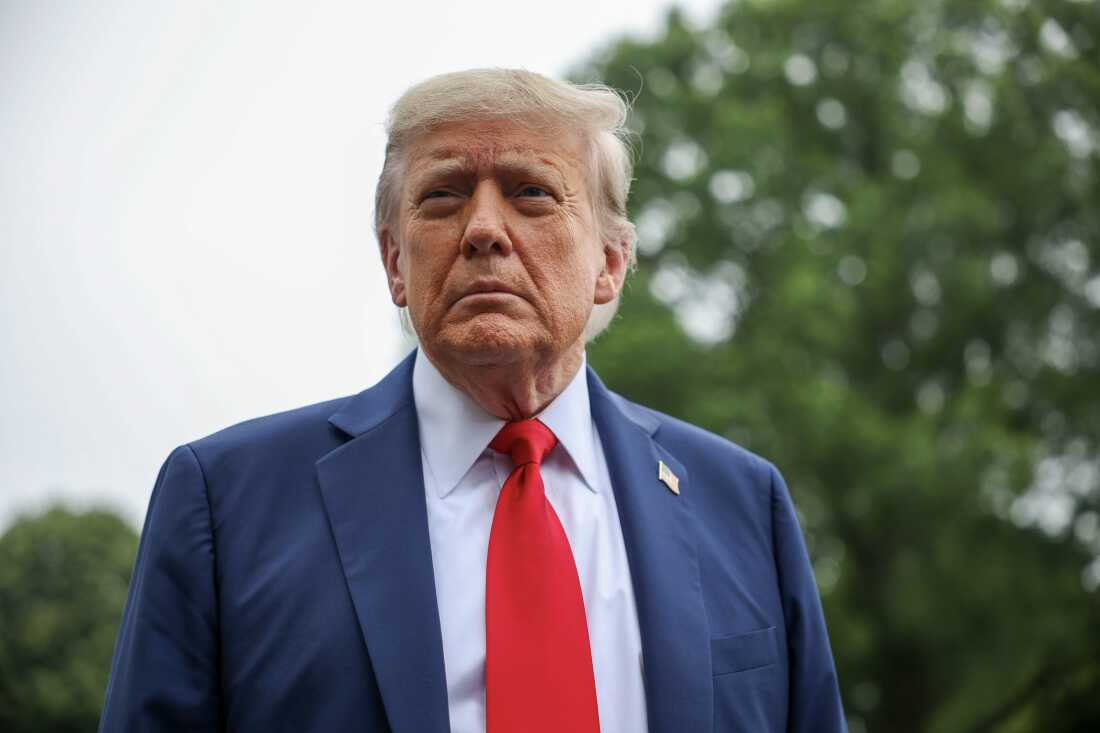
Trump imposed a new set of sweeping tariffs this week, arguing they will benefit the U.S. economy — and American workers. But there is plenty of signs tariffs will end up hurting many households.
Tasos Katopodis/Getty Images North America
hide caption
toggle caption
Tasos Katopodis/Getty Images North America
President Trump’s second term has been marked by intense economic uncertainty, from the war with Iran to tensions with countries around the world – and there appears to be no reprieve coming.
The White House said on Thursday the U.S. would replace a temporary 10% tariff it had imposed earlier this year with a batch of new ones covering dozens of countries.

The new levies, which kicked in on Friday after midnight, range from 10% to 12.5%, and they are meant to be more legally durable — though economists still say they are likely to be challenged.
Here are five takeaways as Trump remains fixated on tariffs.
1. No immediate relief for American households
It’s already been a rough ride for many families, with the cost of living remaining a top concern after years of high inflation.
Things may not get better anytime soon. The renewed tensions with Iran are threatening to push up gas prices and broader energy costs — raising the prospect that inflation could once again pick up after prices had finally seemed to ease in June.
The national average for gas prices is back up above $4 a gallon, according to AAA, after dipping below that level in late June as crude prices once again surge.
Meanwhile, the average 30-year mortgage rate this week hit its highest in nearly a year and remains historically high.
Now Trump’s determination to find new legal ways to justify tariffs on imported goods threaten to burden households for longer.

The new tariffs are not significantly higher than the ones they are replacing, and there are carveouts in place.
But they are still higher than when Trump’s second term started, with a current average rate of 11%, according to the Budget Lab at Yale University.
The prospect of continued tariffs could extend the financial burden on Americans – imposing an additional cost of about $1,100 on households, according to Budget Lab.
2. The path to lower interest rates is tougher
New Fed Chair Kevin Warsh inherited a challenging job when he was sworn in back in May.
Inflation remains a top concern for policy makers even though the U.S. economy has been relatively stable recently.
If inflation starts to rise, the Fed may need to raise rates – in a rebuke to President Trump who appointed Warsh hoping the central bank would be more willing to cut rates instead.
Trump’s determination to extend his tariffs – and his administration’s threat to impose additional ones – will keep additional economic uncertainty in place
“If there are tariffs imposed and if they stick, that is certainly going to drive up the prices of imports, which is going to add to inflation,” says Eswar Prasad, a professor at Cornell University.
3. More uncertainty for businesses that rely on imports
Ever since Trump imposed his initial set of tariffs last year, businesses have faced a period of intense volatility.
Business owners were able to get some reprieve after the Supreme Court struck down many of Trump’s tariffs – allowing many to get refunds from the import taxes they had already paid.

But Trump’s determination to continue to impose tariffs threaten to prolong the uncertainty. The president responded to the Supreme Court setback with a temporary 10% tariff, drawing fresh legal challenges.
The new set of tariffs are intended to be more legally durable. Nonetheless more court fights could still be coming, meaning the question of whether tariffs will ultimately remain could continue to cast a shadow on businesses, warns Prasad.
“It is going to have a dampening effect on business investment,” says Prasad. “Businesses crave certainty and this is going to introduce a whole lot of uncertainty which could potentially lead them to holding back from investment, which will [then] have some implications [on hiring],” he says.
In addition, the administration is threatening additional tariffs, including one on pharmaceuticals and import duties on additional countries.
4. The administration argues there will be benefits — but at what cost?
Despite the warnings from economists and policy experts, the Trump administration has argued tariffs are vital as leverage to obtain key concessions from other countries on trade agreements.
Trump has also argued tariffs will put pressure on American manufacturers to stop importing goods from other countries and instead start creating jobs in the U.S. However, despite tariffs that were imposed during his first term and since the beginning of his second, none of that has yet materialized.
Tariffs, though, have brought more revenue from the government. The Budget Lab projects that tariffs will raise $1.9 trillion in revenue for the U.S.
But Natasha Sarin, president of the Budget Lab argues, that revenue gains need to be weighed against the projected economic costs, including the uptick in inflation and a decline in economic growth.
“The way that [tariffs] are bringing in that revenue isn’t incredibly efficient,” she says. “The fact that the economy isn’t growing as fast as it would be in a counterfactual world without tariffs levied at these levels, you never make up that. It’s sort of a permanent decline in the economic strength as a result of this type of policy.”

Trump tours the Ford Motor Company’s River Rouge complex in Dearborn, Mich,, on Jan. 13, 2026.
Mandel Ngan/AFP via Getty Images
hide caption
toggle caption
Mandel Ngan/AFP via Getty Images
5. The global economy could continue to bear the tariff fallout
Countries around the world face the prospect of continued pressure from the Trump administration.
The expected rise in energy costs from the U.S. war with Iran had already led the International Monetary Fund to lower its outlook for the global economy early this month.

Trump’s determination to extend tariffs could continue to put countries on guard. Just this month, the White House threatened to impose additional tariffs on Canada, over reasons including a boycott of eight Canadian provinces on American liquor.
The global economy – and American households – have already been dealing with over a year of tariff uncertainty. With Trump hellbent on tariffs, that is unlikely to change anytime soon.

- Admin
- Gypsy Rose Blanchard urges fans to sign online harassment petition honoring late fiancé Ken Urker: ‘Pain into purpose’ October 4, 2026
- 10-minute fitness habit can help adults over 40 maintain muscle and stay strong October 4, 2026
- Pike’s botched execution: Letters to the Editor — Oct. 5, 2026 October 4, 2026
- More Gen Z college freshmen are quitting school early and moving back home with mom and dad October 4, 2026
- Sounds of air raid sirens, explosions in Kyiv during German chancellor’s visit with Zelensky October 4, 2026