Medical debt is crushing hospital patients in LA. Health officials may have a fix
Naman Shah examines a patient at Monrovia Health Center, a Los Angeles County public health clinic in Monrovia, California. Shah says reducing medical debt in the community will depend on effective prevention strategies, just as stopping the spread of infectious disease does.
Lauren Justice/KFF Health News and Tradeoffs
hide caption
Lauren Justice/KFF Health News and Tradeoffs
LOS ANGELES — Every Tuesday, Naman Shah sees tuberculosis patients at a small public clinic in Los Angeles’ San Fernando Valley. Shah, a physician and epidemiologist at the Los Angeles County Department of Public Health, pores over images of battered lungs, listens to labored breathing and checks medications.
It’s part of an initiative dating to the early 20th century to control infections so tuberculosis doesn’t spread. “We like doing things upstream,” Shah said, “meaning before they happen, not after the damage is done.”
Today, Shah and his colleagues are applying the same principle to medical debt. A key part of that effort is a new system to allow every hospital in LA County to easily screen patients for financial aid. The goal: to stop low-income families from getting a bill that buries them in debt.
Shah estimates this system could prevent several hundred million dollars of medical debt every year.
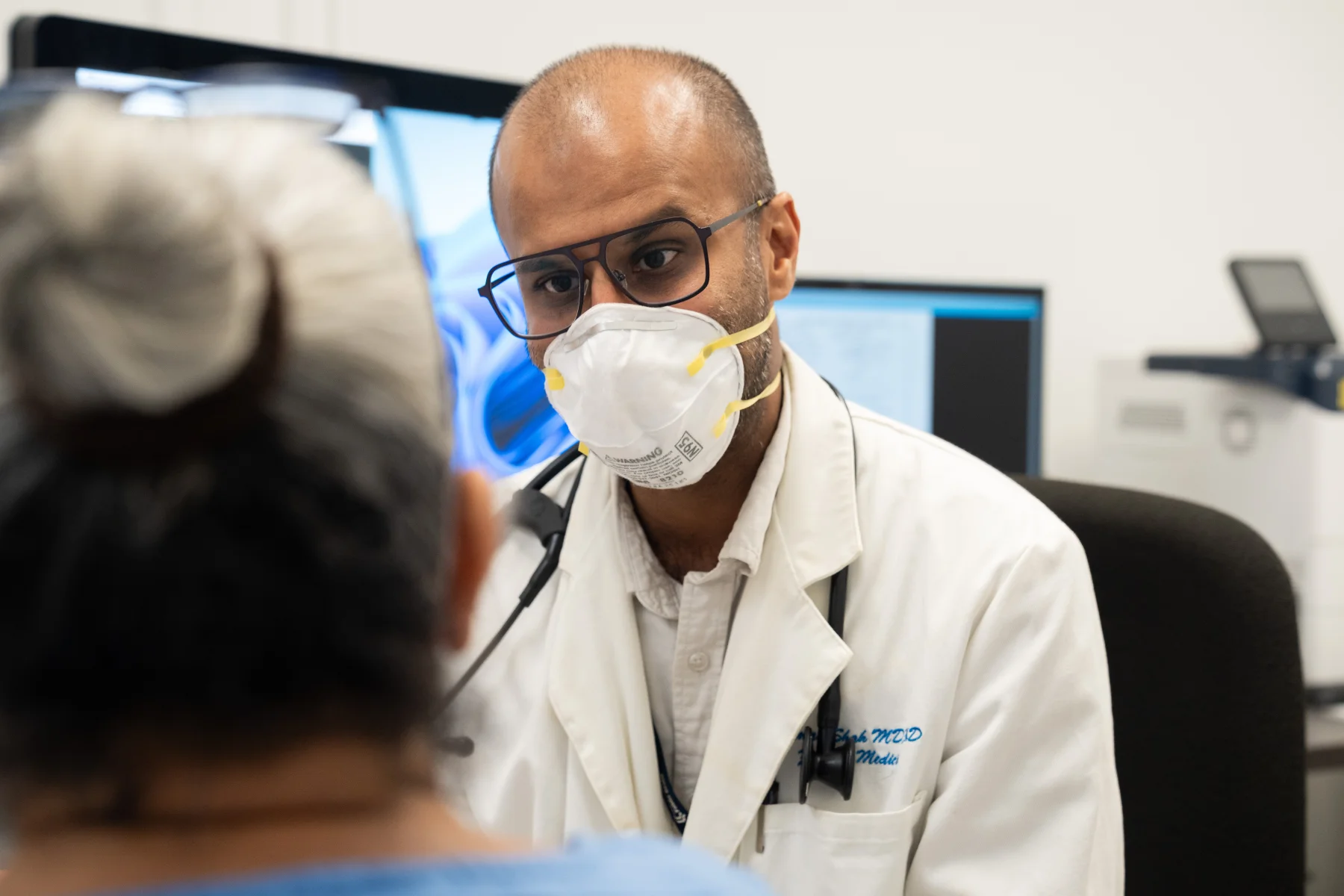
Shah at Monrovia Health Center.
Lauren Justice/KFF Health News and Tradeoffs
hide caption
Lauren Justice/KFF Health News and Tradeoffs
Vicious cycle
In the U.S., an estimated 100 million adults have some form of healthcare debt. In LA County, the nation’s most populous, public health officials calculate that about 800,000 residents have medical bills they can’t pay.

“The impacts of medical debt were staggering,” said Shah, who used to staff a rural health clinic in India and, since 2023, has led a county initiative in LA to tackle the debt problem.
“People end up with credit card debt and then a vicious cycle of high interest rates and poverty,” he said. “People forgo their prescriptions. People forgo appointments. And then you get into worse health.”
Hospitals typically offer financial aid to patients with low incomes. But information about assistance is often hard for patients to get. Applying can be cumbersome. And many eligible patients never seek aid, research shows.
“Most people walk into the hospital and walk out without any knowledge of financial assistance,” said Jared Walker, founder of Dollar For, a nonprofit that helps patients nationwide apply for aid, often called charity care.
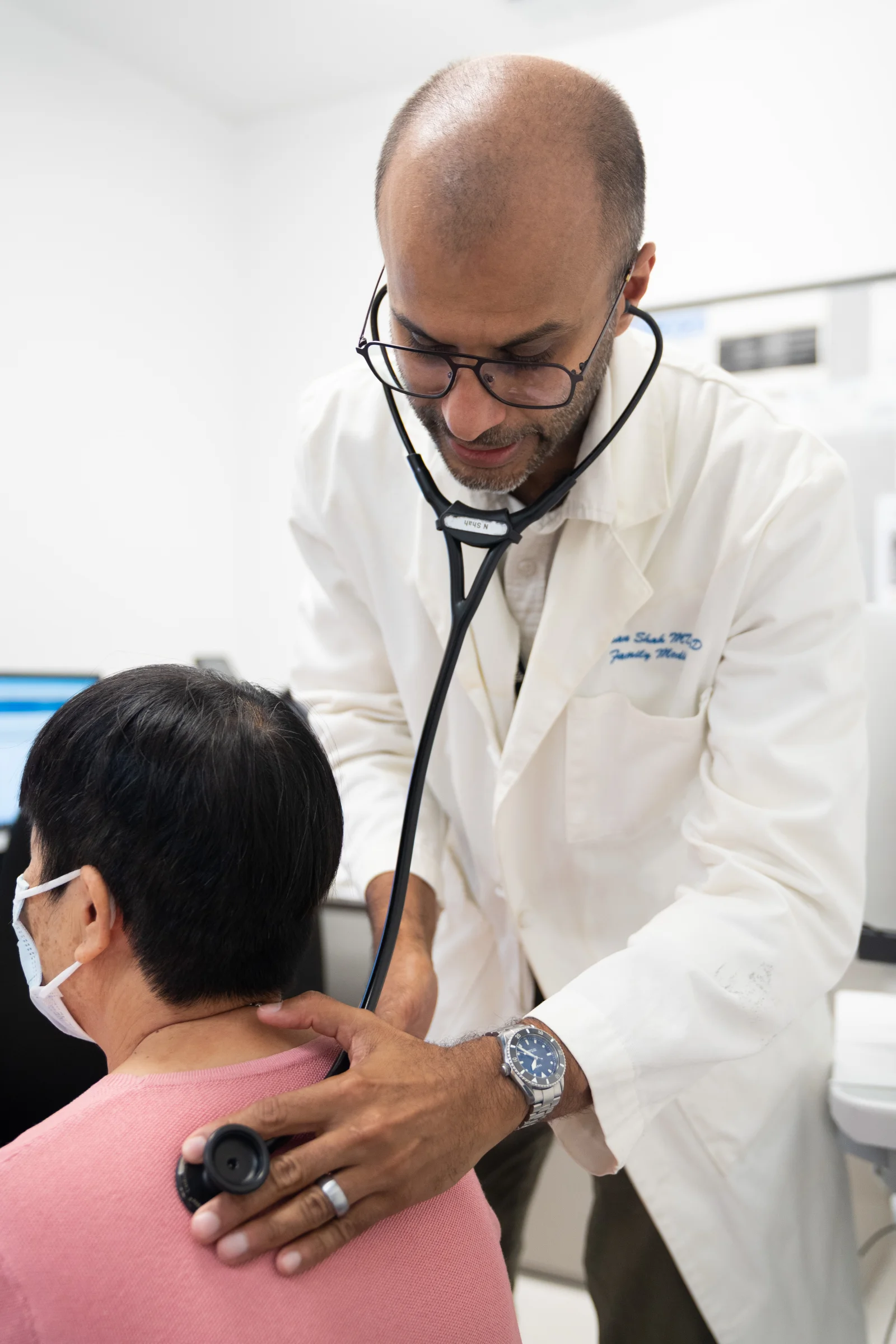
“The impacts of medical debt were staggering,” says Shah, who since 2023 has led a Los Angeles County initiative to tackle the debt problem.
Lauren Justice/KFF Health News and Tradeoffs
hide caption
Lauren Justice/KFF Health News and Tradeoffs
That’s fueling debt. It’s also driving costly collection efforts that even hospital officials acknowledge pointlessly target low-income patients who are unlikely to be able to pay.
“They’re turning their wheels trying to collect on debt that isn’t collectable,” said Adena Tessler, regional vice president for the Hospital Association of Southern California.
Presumptive eligibility
One potential solution is a system that automatically screens and qualifies low-income patients for financial aid without requiring an application. This is called presumptive eligibility.
Some hospitals already use such systems, which rely on software that checks patient eligibility based on publicly available information such as credit history.
The strategy can be very effective. Shah said hospitals that have deployed presumptive eligibility systems have reported as much as a 50% increase in the amount of financial aid they give patients.
Under a state law passed last year, all California hospitals will have to start doing presumptive eligibility screening by next July.
But the systems can be expensive and difficult for smaller hospitals to implement. Only about 1 in 5 hospitals in LA County currently use them, Shah said.
Public health officials wondered whether they could help more hospitals set up the systems.

The county, which, like many local governments, faces major fiscal challenges, couldn’t pay for this, Shah said. But the public health department could bring together healthcare and hospital officials in the county to figure out another solution.
“The beauty of government is not when it always has to do the work,” Shah said. “We have the ability to make sure that people cooperate.”
The Hospital Association of Southern California, initially wary of the county initiative, came to see improving hospital financial aid programs as beneficial to hospitals, many of which were wasting money on collections. “The billing process is cumbersome and costly,” said Paul Young, a senior vice president with the association.
The association agreed to procure a digital presumptive eligibility system and make it available to its members. This bulk-purchasing approach, which Young compared to “a Costco model,” would lower the cost for individual hospitals, he said.
At the same time, L.A. Care, a nonprofit health plan that administers Medicaid coverage for more than 2.5 million low-income county residents, committed $2 million to set up the system.
The investment reflected the safety net insurer’s mission to make medical care accessible to more people, said Melanie Fontes Rainer, who leads strategic planning for L.A. Care. “It’s going to make Los Angeles County better,” she said.
Making it work
Getting the new system up and running by January, as the partners hope, faces challenges.
Hospital officials are figuring out how the system will be funded in the long term. And it’s unclear how many of the county’s 88 acute care hospitals will ultimately use it, even if it’s cheaper and easier to access.
The partners are also working to improve the data that the system relies on to screen patients. One goal is to link the system to tax records maintained by the state of California. This would provide hospitals with more accurate information on patients’ income than current systems, which often rely on estimated income.
Walker, the patient advocate at Dollar For, said he’s heartened by the county’s effort. “I’m optimistic that we can make a better charity care system,” he said. “And the fact that hospitals in LA County are willing to be innovative and creative about ways we can do that is super encouraging.”
For his part, Shah said county public health officials recognize that a better screening system at hospitals won’t by itself eliminate medical debt. But he said the public health department couldn’t ignore a problem that affects more county residents than asthma or tobacco use.
“Prevention is our bread and butter,” he said.
This article is part of Hidden Help, an investigative series from Tradeoffs and KFF Health News about how hospitals can protect their patients from the life-altering harms of medical debt.
KFF Health News is a national newsroom that produces in-depth journalism about health issues and is one of the core operating programs at KFF — the independent source for health policy research, polling and journalism.

- Admin
- House Republican warns CBDC 'communist money' could lead US to 'dystopian' future October 8, 2026
- Sarah Spain calls Fever GM 'defensive' for defending fans, but has plenty to say to her own critics October 8, 2026
- Russian bus stop bombing kills at least 33 in Ukraine October 8, 2026
- Biden-era FBI records reveal sprawling Wiles monitoring and more top headlines October 8, 2026
- Russia plague didn’t accidentally leak from broken test tube, mom of dead scientist says: ‘I know the truth’ October 8, 2026