ROBERT L MAGINNIS: Iran War cost Republicans Congress. What will it cost America?
NEWYou can now listen to Fox News articles!
Twenty years ago, American voters punished Republicans over an unpopular war in the Middle East. On Nov. 3, they did it again.
In 2006, it was Iraq. This time, it was Iran. Democrats captured both houses of Congress, flipping at least seven Senate seats, including Texas, Ohio, Kansas and Iowa. Vice President JD Vance put the blame squarely where President Donald Trump would rather not have it: on the war his administration launched eight months ago.
I remember the earlier debacle. As a Pentagon strategist during the run-up to the 2003 Iraq invasion, I attended meetings with Defense Secretary Donald Rumsfeld and senior military leaders. I questioned whether the administration had adequately considered what would follow Iraqi dictator Saddam Hussein’s overthrow.
HUGH HEWITT: THE GHOSTS OF 2006 ARE STIRRING — BUT WILL THEY CATCH THE GOP?
Now Trump faces a reckoning of his own. American forces have inflicted tremendous damage on Iran’s military. But military success does not guarantee strategic success, especially when the American people lose confidence in the mission.
This image from video provided by U.S. Central Command shows a missile being launched from a U.S. Navy ship in support of Operation Epic Fury on Saturday, Feb. 28, 2026. (U.S. Central Command via AP)
Vance was blunt in his Nov. 4 assessment: “The reason we lost is the war.” He dared anyone to argue that “losing the Senate for the next 6 years was worth it.”
VANCE’S SCATHING IRAN WAR POSTMORTEM PUTS POTENTIAL 2028 GOP SHOWDOWN IN FOCUS: ‘EVERYONE KNOWS WHY’
Trump acknowledged that the war contributed to Republican losses but defended his decision: “I would have done nothing differently.” He added, “You can’t let Iran have a nuclear weapon.”
He is right about that. But the election raises a question his administration has yet to answer: What has eight months of fighting accomplished that will last?
TRUMP IS DISMANTLING IRAN’S WAR MACHINE, BUT AMERICA STILL NEEDS AN ENDGAME
I have consistently argued that a nuclear-armed Iran is unacceptable. In June 2025, I supported decisive action against Tehran’s deeply buried Fordow nuclear facility. Four days later, however, I challenged claims that Iran was only weeks away from producing a usable nuclear weapon. The intelligence did not publicly establish that conclusion.
Those positions were consistent. Iran presented a serious threat, but military action demanded honest intelligence, limited objectives and an understanding of the consequences.
Three days before Trump launched Operation Epic Fury on Feb. 28, I warned in Fox News Digital that the administration needed to establish the facts before committing America to another Middle Eastern conflict. I never doubted that American forces could overwhelm Iran’s military. I doubted that Washington had a realistic plan for what came afterward. Eight months later, Washington still lacks a convincing answer, and the political consequences have become impossible to ignore.
The Fox News Voter Poll explains much of the Republican defeat. More than a third of voters called the Iran war crucial to their House vote, and about 6 in 10 said attacking Iran was the wrong decision.
FOX NEWS POLL: 71% THINK TRUMP ADMINISTRATION LACKS PLAN TO END IRAN WAR
In a separate Fox News survey, nearly twice as many preferred ending military involvement to lower gasoline prices as favored renewed attacks to stop Iran’s nuclear program. That finding should trouble the White House. Americans did not necessarily dismiss the Iranian threat. Many simply concluded that the costs of confronting it had become too high.
Now Trump faces a reckoning of his own. American forces have inflicted tremendous damage on Iran’s military. But military success does not guarantee strategic success, especially when the American people lose confidence in the mission.
The costs are staggering. A Pentagon estimate submitted to Congress put war spending at $47.1 billion through Oct. 16, a figure that excludes repairs to damaged American bases. As I documented Nov. 4, investigations by the Associated Press and The Wall Street Journal exposed extensive damage to American installations throughout the Middle East. The Journal put the repair bill at $5 billion to $15 billion. Congress must determine what was lost, whether some losses were preventable and what restoring our defenses will cost.
COST OF IRAN WAR EXPLODES AS TOLL ON US AIR FLEET NEARLY DOUBLES
Then there is the opportunity cost.
In August, I examined the Pentagon’s decision to divert the Japan-based USS George Washington from the Pacific to the Middle East. That decision reduced America’s carrier presence in a region where China poses our greatest long-term military challenge. A carrier committed to confronting Iran is unavailable for operations in the western Pacific. That is a strategic tradeoff Washington cannot afford to overlook.
TRUMP IS WINNING EVERY BATTLE IN IRAN—AND RISKING THE WAR THAT MATTERS
China remains America’s principal strategic competitor, and every commitment to Iran must be weighed against that reality.
In 1974, as a young lieutenant in South Korea, I served in then-Lt. Col. Colin Powell’s battalion. Powell later championed a doctrine that stressed clear objectives, overwhelming force, public support and an exit strategy. In my July Fox column, I questioned whether Washington was honoring those principles in Iran. Tuesday’s election exposed the consequences of neglecting one of them: A president cannot sustain a costly war indefinitely without the support of the American people.
AMERICANS ‘FRUSTRATED’ ABOUT IRAN WAR GOING INTO MIDTERMS AS TRUMP ADMIN HAS DECISION TO MAKE: GOP LAWMAKER
Instead of the short campaign Trump promised, America has spent eight months cycling through strikes, ceasefires and negotiations that have produced no durable settlement.
Iran has suffered enormously. The opening strikes killed Supreme Leader Ali Khamenei and devastated important military installations, yet the regime survives. Its nuclear ambitions remain unresolved and Tehran continues threatening commercial shipping through the Strait of Hormuz. Eight months of military punishment have weakened Iran, but they have not produced the durable settlement Americans were led to expect.
None of this counsels surrender to Tehran. America needs a strategy capable of achieving something more lasting than another round of destruction.
In January, Democrats can investigate military losses, demand testimony from Pentagon leaders, impose conditions on appropriations and challenge the administration’s authority to continue fighting. Trump retains considerable executive power, but congressional resistance could complicate nearly every national security initiative of his final two years.
Tehran is already celebrating. Iran’s parliament speaker, Mohammad Baqer Qalibaf, declared that “Americans said NO TO WAR.” That is precisely the conclusion Washington must not encourage. Beijing and Moscow will also be watching to see whether the Iran war has weakened America’s ability to sustain its commitments elsewhere.
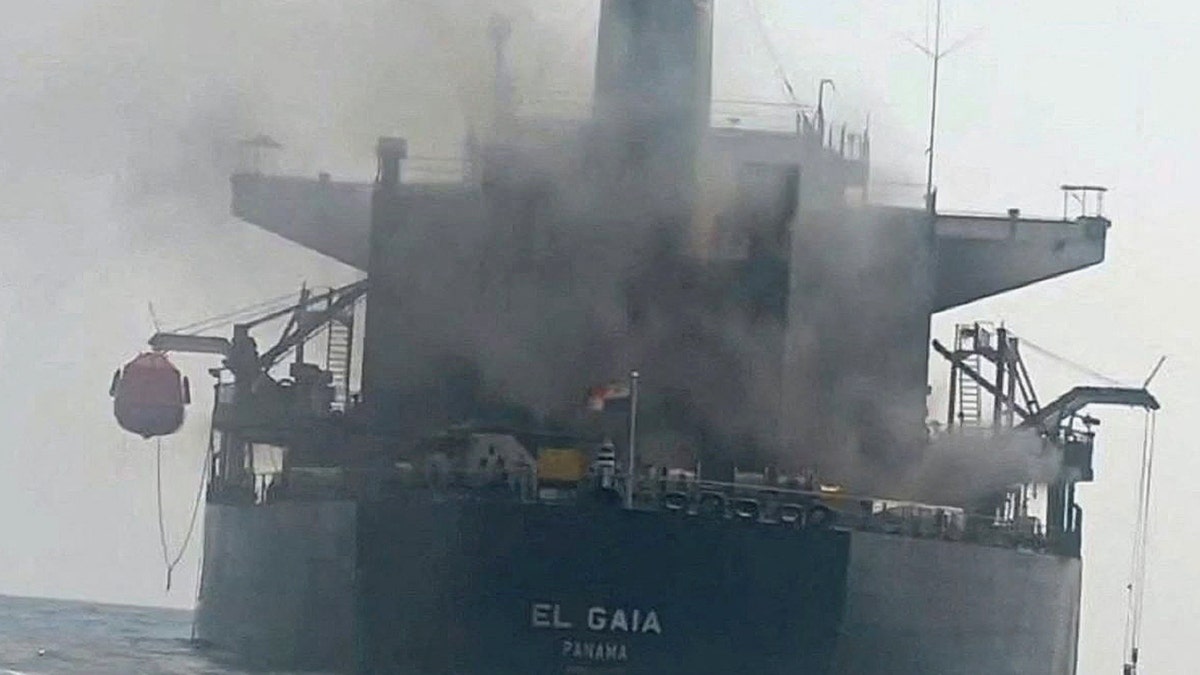
Smoke column rises from tanker El Gaia after incident in Strait of Hormuz
The day after the 2006 election, President George W. Bush announced that Rumsfeld would be replaced by Robert Gates. Two months later, he announced a new Iraq strategy built around a troop surge, and Gen. David Petraeus, whose counterinsurgency expertise I publicly supported, took command.
Trump may face similar pressure to replace Defense Secretary Pete Hegseth or other senior advisers. Their assessments of Iranian capabilities and protection of American forces deserve scrutiny. But new faces alone will accomplish little unless the president also rethinks the strategy itself.
The administration is already divided over what comes next. Axios reported that Vance and presidential envoy Steve Witkoff favor pursuing an agreement, while Hegseth and Israeli Prime Minister Benjamin Netanyahu support renewed military action. Other senior advisers favor continued economic pressure. Trump must decide among those competing approaches, but only after establishing which one offers America a realistic prospect of lasting security.
Trump needs experienced advisers willing to challenge his assumptions, an honest accounting of the war’s costs and a fresh assessment of how closely American decisions should follow Israel’s preferences. Our interests overlap, but they are not identical.
Above all, he must decide what victory means. Is it preventing Iran from acquiring nuclear weapons, protecting regional shipping, negotiating a durable settlement or removing the regime? Those goals demand very different commitments, and Americans deserve to know which their president intends to pursue.
The Fox News Voter Poll explains much of the Republican defeat. More than a third of voters called the Iran war crucial to their House vote, and about 6 in 10 said attacking Iran was the wrong decision.
For now, Trump appears reluctant to resume major attacks while diplomatic efforts continue. That gives him an opportunity to reconsider his approach before another round of fighting imposes still greater costs. He should use it.
Twenty years ago, voters forced Washington to reconsider a costly war. They have delivered another warning.
CLICK HERE FOR MORE FOX NEWS OPINION
Iran’s rulers should not mistake the election for permission to threaten America. But Trump should not mistake battlefield superiority for a winning strategy.
CLICK HERE TO DOWNLOAD THE FOX NEWS APP
Our troops have done what their country asked of them. Their commander in chief now owes them, and the American people, a credible plan to finish the mission at a price this country is willing to pay.
CLICK HERE TO READ MORE ROBERT MAGINNIS

- Admin
- Novig promo code NYPOST: Deposit $10, get $50 in trade credits for Giants vs. Eagles November 8, 2026
- Pierce Brosnan backs 'Fantastic Beasts' star for next James Bond, predicts fans will be 'blown away' November 8, 2026
- Top spending cities on OnlyFans revealed – and NYC is nowhere near the top November 8, 2026
- Stephen Colbert accused of crossing Harvard picket line before event with Yo-Yo Ma cut short by alarm November 8, 2026
- Polymarket promo code NYPMAX1: Deposit $10, get $25 for Browns vs. Saints November 8, 2026