Is the Iran-backed terrorist movement Hezbollah on the ropes in Lebanon?
NEWYou can now listen to Fox News articles!
JERUSALEM — With Israel’s stunning capture of the strategically valuable Ali al-Taher ridge in south Lebanon on Sunday, a major Hezbollah and Iran stronghold, the campaign to degrade Tehran’s so-called “Axis of Resistance” suffered a severe blow.
While the Israel Defense Forces (IDF) triumph is not a death blow, it means that the Iranian-regime-backed Hezbollah terrorist movement lost one of its key offensive bases to plan an invasion of Israel.
IDF Lt. Col. (Res.) Sarit Zehavi, the founder and president of the Israel-based Alma Research and Education Center (Alma), told Fox News Digital that “In the past three years Israel has attacked Hezbollah against various areas, for instance, we degraded the amount of rockets and missiles.”
EXCLUSIVE: ISRAEL SEIZES VAST IRAN TERROR AXIS ARSENAL WITH SURPRISING FOREIGN ORIGINS
Hezbollah members salute and raise the group’s yellow flags during the funeral of their fallen comrades Ismail Baz and Mohamad Hussein Shohury, who were killed in an Israeli strike on their vehicles, in Shehabiya in south Lebanon on April 17, 2024. (AFP via Getty Images)
She noted that the IDF has decimated 90% of Hezbollah’s rocket and missile arsenal. Zehavi said, “Today Hezbollah is holding between 10,000 to 15,000 rockets, which is much less than what it used to have. Most of the array of sophisticated missiles, accurate missiles and long-range missiles was either eliminated or neutralized.”
She said, “The capability to launch an invasion of thousands of terrorists into Israel which was the plan, and this was the preparedness three years ago. This capability doesn’t exist anymore since the IDF is based in South Lebanon along the borderline, preventing Hezbollah from coming back to those places.”
In late August, Alma released a widely read analysis on: “Hezbollah – Situation Assessment: From a Large-Scale Terrorist Army to a Persistent Dispersed Threat.”
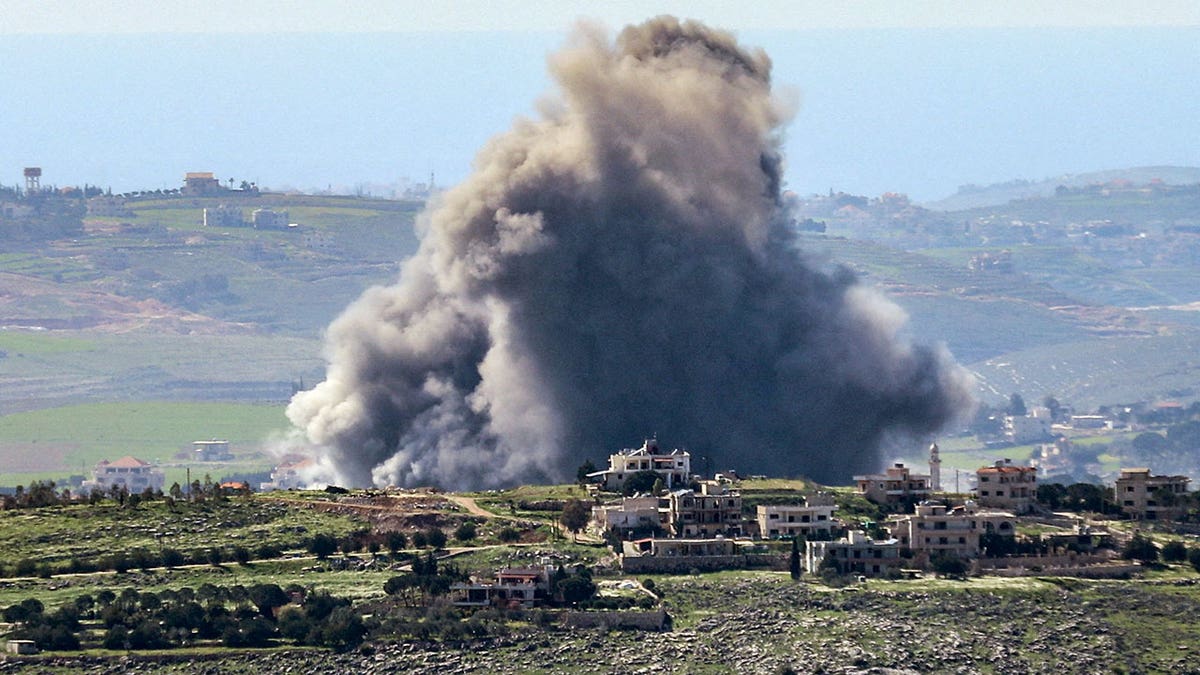
Smoke rises after Israeli strikes in Lebanon, following an escalation between Hezbollah and Israel amid the U.S.-Israeli conflict with Iran, as seen from Marjayoun, Lebanon, March 5, 2026. (Karamallah Daher/Reuters)
Zehavi, who resides in northern Israel and has experienced Hezbollah’s massive aerial attacks into her region since the Lebanese terrorist movement joined Hamas in its war against Israel, warned that, “As long as Iran supports its main proxy, which is Hezbollah, it will be very difficult to prevent its rebuilding of its military capabilities and with everything that happened in Iran In the past year, Iran still supports Hezbollah.”
She noted that Iran still aids Hezbollah via “arms smuggling and money” and “they still put a lot of effort [into] that and the training and the involvement of Iran in Hezbollah in Lebanon. And this must be stopped.”
LEBANON ACCUSES IRAN OF INSERTING IRGC TERRORISTS INTO COUNTRY ‘UNDER GUISE OF DIPLOMATIC ACTIVITY’
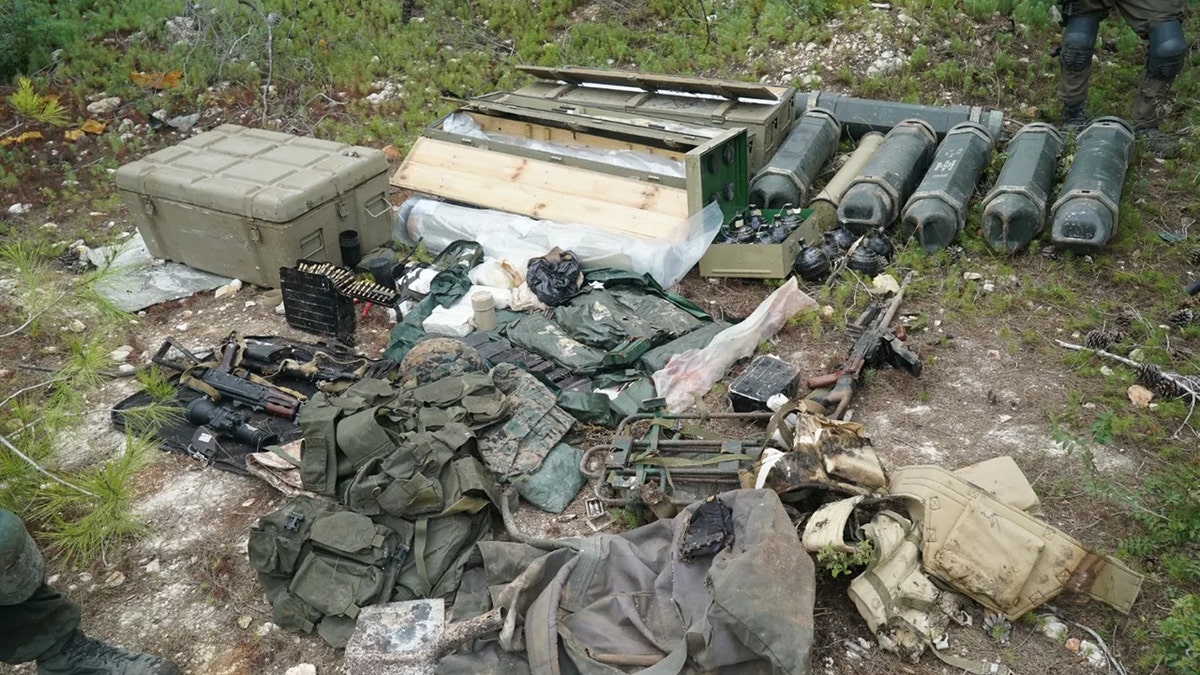
Hezbollah weapons cache located near a UNIFIL post by IDF troops in southern Lebanon in 2024. (IDF Spokesman’s Unit)
Iran’s regime is a state-sponsor of terrorism and Hezbollah’s base is the Shiite community in Lebanon. Radical Shiite Islamism unifies Iran’s regime with its chief proxy, Hezbollah, in Lebanon.
Alma, who has a deep knowledge of Hezbollah’s activities, wrote on X on Sunday: “The battle for the Ali al-Taher Ridge is over – the struggle with Hezbollah is not.”
According to Zehavi, Hezbollah “today is much more of a guerrilla organization than a terrorist army as it used to be. It is having a lot of difficulties in rebuilding its capabilities… It is dedicated to rebuilding its military capabilities. But it has a lot of challenges along the way with this regard because of the regime change in Syria, because of that fact that it’s much more difficult to transfer weapons through the airport in Lebanon and through Syria. But it doesn’t mean that it is not happening. They are still trying and some of it do pass.”
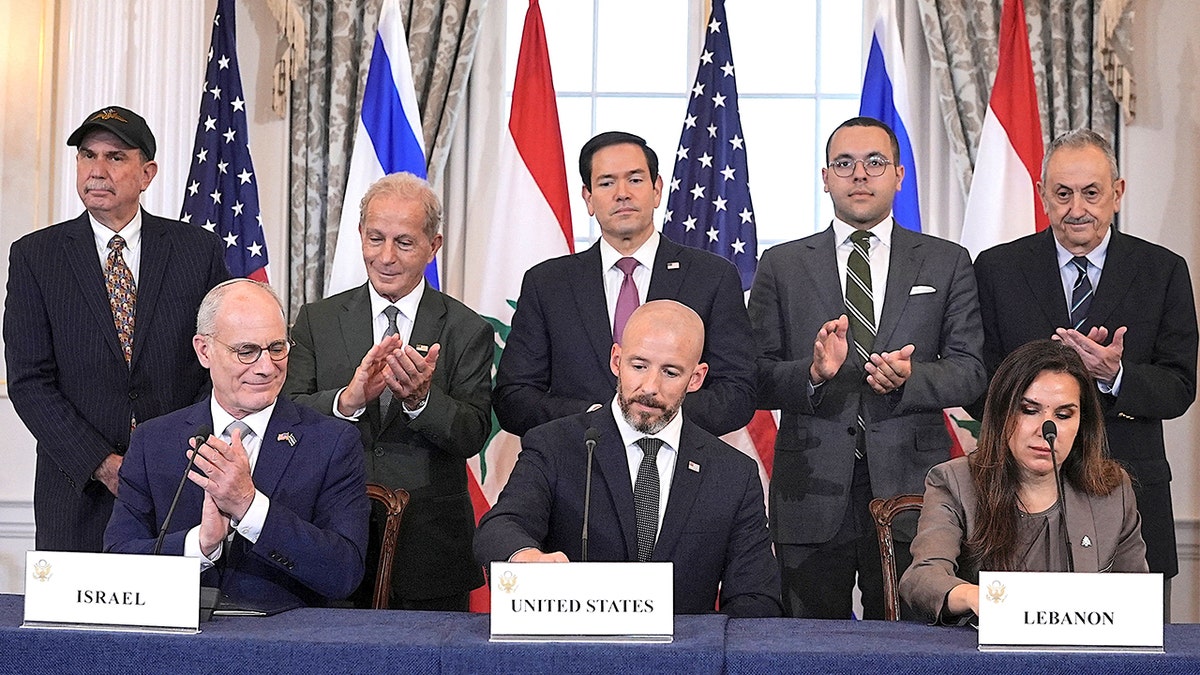
Secretary of State Marco Rubio and Israel’s Ambassador to the U.S. Yechiel Leiter applaud after signing a framework agreement between Israel and Lebanon with State Department Counselor Daniel Holler, and Lebanon’s Ambassador to the U.S. Nada Hamadeh, at the State Department in Washington, D.C., U.S., June 26, 2026. (Ken Cedeno/Reuters)
Hezbollah’s setback was also echoed by Israel TV’s Channel 12 chief political analyst, Amit Segal. He said the Hezbollah base Ali al-Taher was “Just ten kilometers (just over six miles) from the Israeli border, with a clear view of the Litani and the Israeli Hula Valley, it was the place from which Hezbollah intended to coordinate its own Oct. 7 in the Galilee.”
Hezbollah’s ally, the Hamas terrorist organization, invaded Israel nearly 3 years ago on Oct. 7 and slaughtered over 1,200 people in southern Israel, including more than 40 Americans.
The IDF announced on Sunday that “Soldiers from the 36th Division have operated in recent weeks to clear and neutralize the two underground routes in the Ali al-Taher Ridge area in the Security Zone. The soldiers achieved operational control of the ridge area, both above and below ground, and cleared the area of terrorists. Some of the terrorists were eliminated, while others fled the area.”
PENTAGON HOSTS FIRST-EVER ISRAELI–LEBANESE MILITARY TALKS AIMED AT CURBING HEZBOLLAH
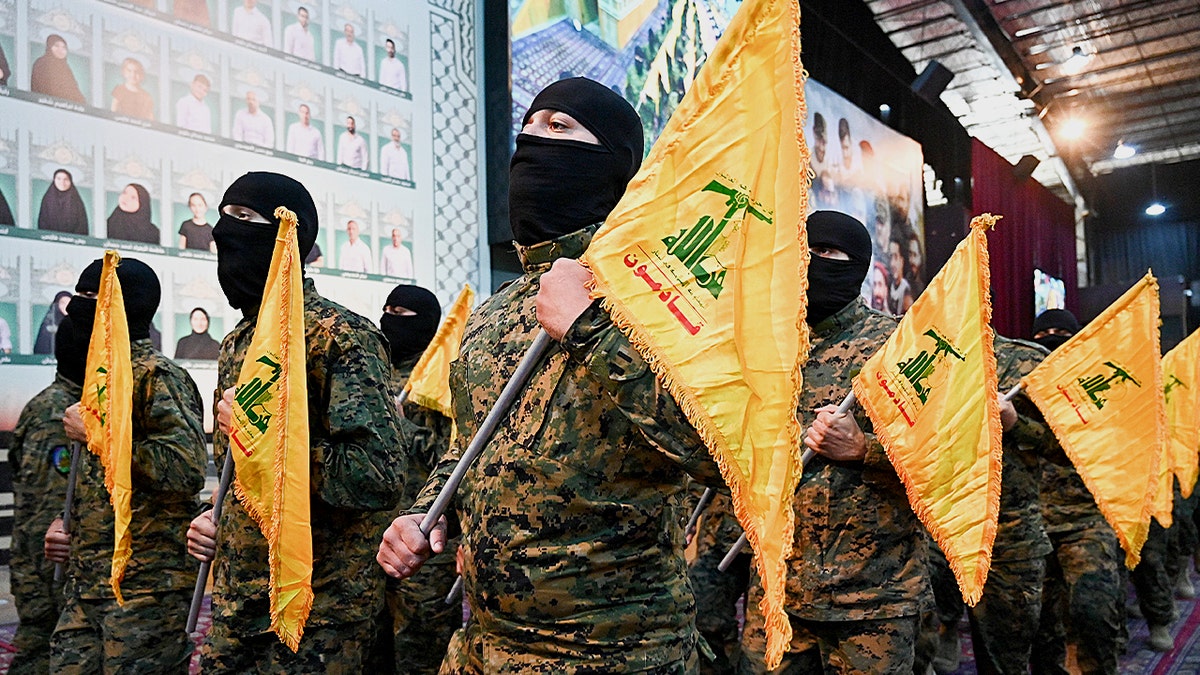
Iran rebuilds Hezbollah ties as Trump gives 10-15 day deadline. (Fadel Itani/NurPhoto via Getty Images)
The IDF statement added that “Following operations in the underground routes over the past several weeks, their capability to carry out terror attacks against Israeli civilians and IDF soldiers from within the routes has been neutralized.”
Hezbollah official Mahmoud Qamati told a Lebanese podcaster in late August that, “Ali al-Taher is important, but if it is lost it does not mean the end of Hezbollah.”
Lebanon’s Deputy Prime Minister Tarek Mitri told an Arab TV station, also in late August, that the Lebanese army was ready to take over the strategic ridge.
He accused Israel of blocking the army due to its own political considerations ahead of Israeli national elections on Oct. 27.
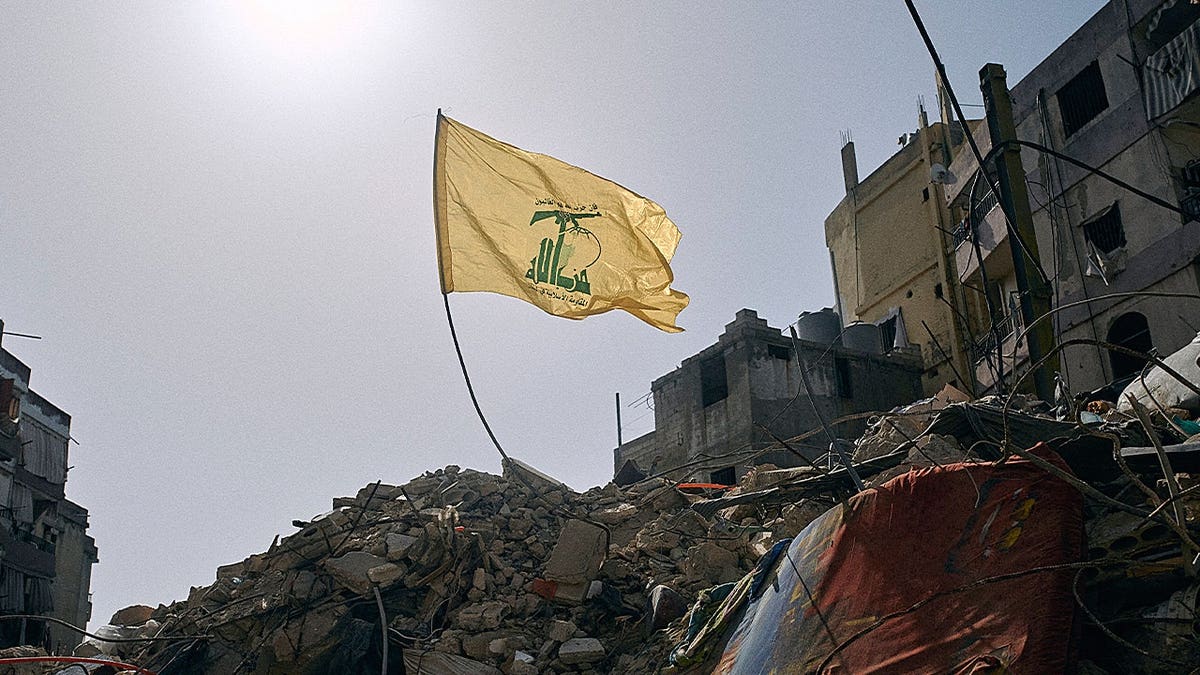
Hezbollah worked to build facilities below private residential buildings and houses in southern Lebanon. (Benoît Durand / Hans Lucas / AFP via Getty Images)
“The problem is not in the Lebanese army’s readiness but in Israel’s stance,” he said.
The Trump administration had pushed for Hezbollah to allow Lebanon’s Army to take control of Ali al-Taher. Hezbollah refused the proposed U.S. deal.
A State Department spokesperson told Fox News Digital that “Hizballah has been the primary obstacle to Lebanon’s economic recovery, the main blemish on its international reputation, and the biggest threat to the safety and stability of Lebanon. It bears sole responsibility for Israel’s presence on Lebanese soil. This is precisely why Hizballah must be disarmed and dismantled.”
EXPERTS URGE EXTREME CAUTION ON IRAN’S ‘CROWN JEWEL’ HEZBOLLAH — TERROR GROUP WITH US BLOOD ON ITS HANDS
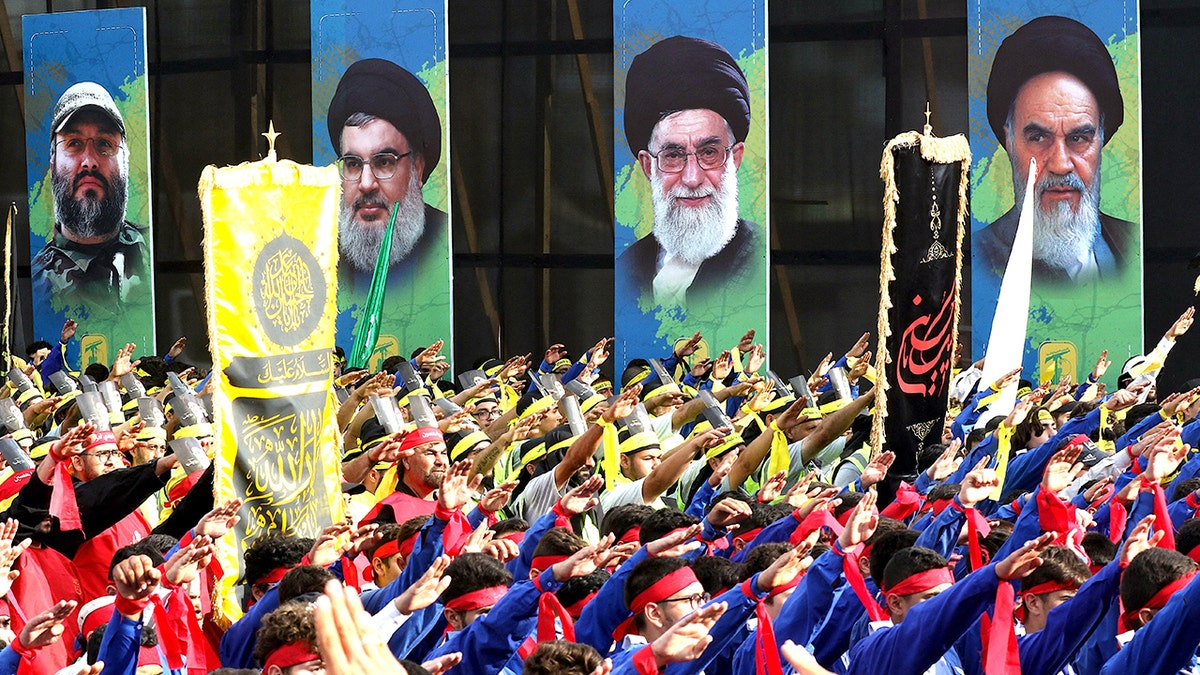
Scouts loyal to the Lebanese Shiite Hezbollah movement, taking part in a procession on the 13th of Muharram on the Islamic calendar, raise their arms in salute as they march past posters of (L to R) Hezbollah’s slain military leader Imad Moghniyeh, current leader Hassan Nasrallah, Iran’s Supreme Leader Ayatollah Ali Khamenei and late supreme leader Ayatollah Ruhollah Khomeini, in Lebanon’s southern city of Nabatiyeh on Aug.12, 2022. (Mahmoud Zayyat/AFP via Getty Images)
The State Department spokesperson added that “Hizballah is drastically weaker than at any point in recent history, which has allowed the Government of Lebanon to outlaw its military activities. We fully support that decision, as do all of our regional partners.”
Hanin Ghaddar, a Senior Fellow at The Washington Institute who focuses on Shia politics throughout the Levant, told Fox News Digital that “Hezbollah is weakened on two levels. They lost a lot of people, commanders and people, and weapons. Today, there is a goal to rebuild this military structure, invest in rebuilding in personnel, infrastructure and weapons. This is their primary goal.”
Ghaddar, who is from Lebanon, added the second level of weakness for Hezbollah is the people are divided within the Shiite community. Hezbollah is no longer the father figure. Hezbollah ended with [Hassan] Nasrallah with his assassination. Hezbollah as protector and liberator is no longer there. It is a mix of IRGC [Islamic Revolutionary Guard Corps], Hezbollah and Nabih Berri [ the Shiite speaker of the Lebanese parliament and the president of the Amal movement].”
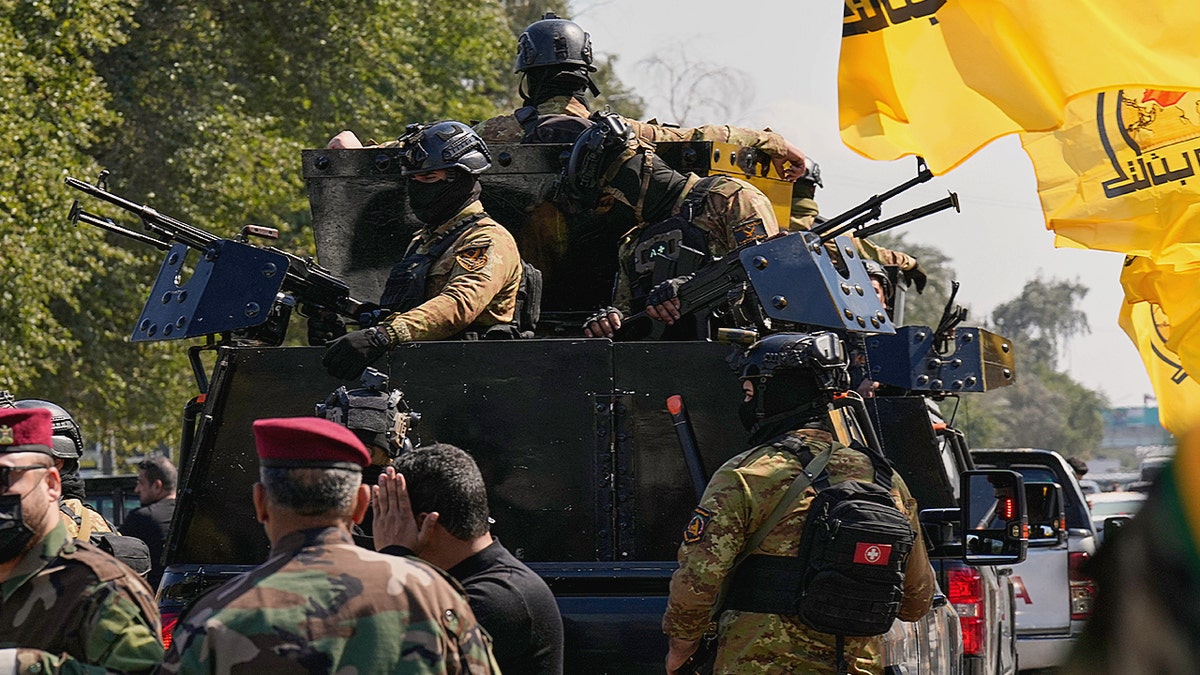
Hezbollah launches long-range missiles from Lebanon into northern Israel within 48 hours of strikes on Iran, escalating the widening conflict amid Operation Epic Fury. (Hadi Mizban/AP)
Ghaddar said the Shiite community in Lebanon is fractured over whether to continue its support for Hezbollah after multiple wars with Israel. She said it’s “divided over whether Hezbollah is the solution. There is where Hezbollah is bleeding. Hezbollah needs the Shiite community for political power.”
Ghaddar said that “Hezbollah has managed to get appointments through their allies, Berri and Amal… They have ministries of finance and health ministry… They really wanted appointments in general security and military. They got that. This reflects their strength economically. They are in survival and using power in the state and cash economy to rebuild.”
Multiple Fox News Digital press queries sent to the Lebanese Embassy in Washington D.C. went unanswered.
CLICK HERE TO DOWNLOAD THE FOX NEWS APP
The Associated Press contributed to this report.

- Admin
- Divers uncover hundreds of ancient relics near shipwreck untouched for 2,100 years September 8, 2026
- 50 Most interesting people in the NFL 2026: Patrick Mahomes tops annual list September 8, 2026
- ‘60 Minutes’ Prepares for a High-Pressure Premiere After Its Turbulent Shake-Up September 8, 2026
- UCLA football already making heck of run for it under Bob Chesney September 8, 2026
- Oil Climbs Toward $100 a Barrel Following Houthi Attacks September 8, 2026