Here's why Major League Baseball's response to Giants' Pride Night hat controversy is so misleading
MLB commissioner blames communication breakdown amid Bible verse cap backlash
‘America’s Newsroom’ discusses the MLB’s response to players wearing Bible verses on their baseball caps. Commissioner Rob Manfred sent a letter to Sen. Josh Hawley, R-Mo., explaining that the initial warning was a ‘routine oral warning’ due to a communication lapse with the Giants organization and that players faced no penalties. FOX Business’ Brian Brenberg and Fox News contributor Tom Shillue praise the players for their courage in upholding their beliefs.
Major League Baseball has once again found itself in the middle of unnecessary controversy.
After years of growth and momentum as a result of rule changes to speed up pace of play and increase the amount of action on the field, ratings have surged and attendance continues to improve. But despite the obvious positives, the league seems to be committed to alienating as many fans as possible by allowing overt political messages. Always slanted in one direction, of course.
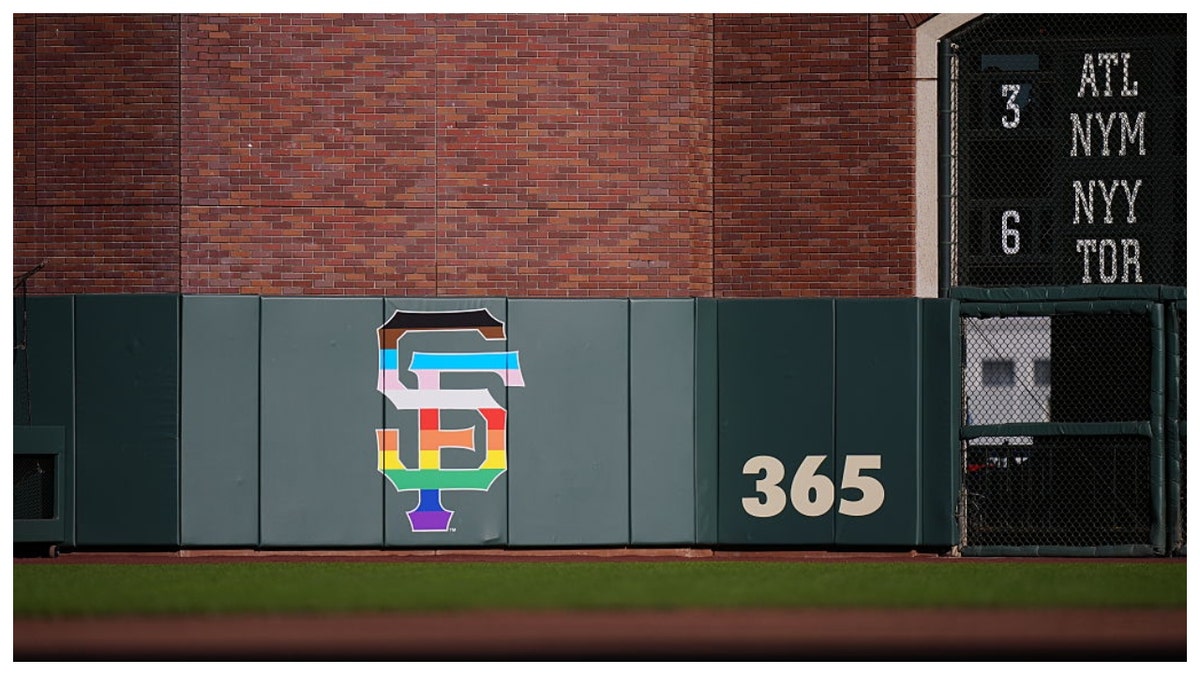
The latest incident involves the San Francisco Giants, who held their annual “Pride Night” celebration earlier in June. Several players engaged in a form of protest by writing Bible verses on their hats, specifically referencing a verse from Genesis that discusses the rainbow representing God’s covenant. Only one player, reliever Sam Hentges, wore the traditional hat without the rainbow logo.
Then, the league made things worse by issuing an official warning to the players who wrote the verses. Essentially implying that they would treat these specific messages differently than other similar incidents in the past.
MLB COMMISSIONER TELLS SEN. HAWLEY GIANTS PLAYERS WON’T BE DISCIPLINED OVER BIBLE VERSES ON PRIDE NIGHT HATS
The San Francisco Giants Pride Night logo is displayed during an event in San Francisco, Calif.
Reactions were swift. The Assistant Attorney General for Civil Rights, Harmeet Dhillon announced that she’d referred the league’s warning to the EEOC for a potential investigation. The attorney general of Florida, James Uthmeier, announced his own investigation. And Republican Sen. Josh Hawley from Missouri sent a letter to MLB Commissioner Rob Manfred demanding answers.
Manfred, surprisingly, responded.
Initially, many believed the league’s answer was a sort of “victory,” with Manfred and the league saying these players would not be subject to discipline for writing Bible verses and that it was a “routine oral warning” without attached punishment. But a closer reading of Manfred’s answer indicates that Major League Baseball has always and will continue to privilege certain viewpoints over others.
As well as revealing that the teams who have special Pride Night uniforms are likely putting their players in an uncomfortable situation without proper explanation.
In the letter, Manfred says that while many teams have faith-based events, the league “does not regulate” them, “but also does not permit Clubs or players to utilize special uniforms/equipment for such games, or alter the uniform or equipment.”
The league’s claim is that they changed their rules in 2023 to specifically avoid such situations, that they didn’t want their players or clubs becoming vehicles for political statements. After specifically encouraging and celebrating political statements in 2020, when they thought it would benefit them.
DOJ CRACKING DOWN ON MLB FOR POTENTIAL RELIGIOUS DISCRIMINATION AFTER PRIDE NIGHT CAPS CONTROVERSY
MLB Commissioner Rob Manfred looks on ahead of game one of the National League Wild Card Series between the San Diego Padres and the Chicago Cubs at Wrigley Field in Chicago, Ill., on Sept. 30, 2025. (Michael Reaves/Getty Images)
But that’s not entirely accurate either. The league had similar rules in 2020, yet broke them to promote “Black Lives Matter” messaging. MLB allowed players to wear jersey patches with “Black Lives Matter” or “United For Change.” Teams could stencil “MLB-BLM” on the mound, or the same “United for Change” message. Restrictions on cleats were relaxed, so players could put social justice messages on them. The league also permitted players to use a wristband where the MLB logo portrayed a Black hitter.
They happily violated their own rules in 2020, because they wanted to, then point to a 2023 crackdown as justification for warning Christian athletes in 2026.
So if these rules governing what teams can do and wear are in place, why are certain organizations allowed to violate these collectively bargained rules in favor of a specific viewpoint? Well, because they want to. That’s it. And therein lies the problem.
As the letter states, the “Dodgers and the Giants requested their use of the pride emblem on uniforms/hats on Pride Night be grandfathered.” Why? because “Los Angeles and San Francisco are homes to some of the largest LGBTQ communities in the United States, and those Clubs desired to show their appreciation and support for those communities that have supported their Clubs throughout the years.”
So what? Why does this exception only qualify for this specific community? Would the league make an exception for say, the Houston Astros to wear a hat celebrating the Christian community in that area? Of course not. But because the Dodgers and Giants asked nicely, they get an exception. It gets worse.
The letter continues, “MLB agreed to allow them to utilize the hats/uniforms with the emblems provided that no player or uniformed staff would be required to wear them, and that the team would speak to the players to make sure they were comfortable with the apparel.”
LA and San Francisco get exceptions because 5-10% of the city belong to this specific community, and those franchises want to pander to the political left. The league is fine with this, as long as those teams tell players they don’t have to comply. Nonsensical, sure, but at least there’s that caveat, right?
Wrong. Because these teams clearly aren’t communicating to players that they don’t have to comply with their political statements.
“Unfortunately, this year the Giants communication with players was inadequate and not clear,” Manfred writes. “Some players apparently did not understand that they had the option to wear their normal uniform and elected to add messages to their hats bearing the pride logo as a result.”
Of course not, and that’s the problem. If the Giants tell their locker room that they don’t have to participate in a politically motivated farce, they risk a number of players opting out. Say as many as 30-50% of the clubhouse declines to wear their pride hats. How does that make the team look? Does it not open the players who don’t participate up to criticism and anger from fans or broadcasters?
We know that it does, because that’s exactly how the protesting players were treated this year. Including by the team’s own radio broadcaster.
ZERO BS. JUST DAKICH. TAKE THE DON’T @ ME PODCAST ON THE ROAD. DOWNLOAD NOW!
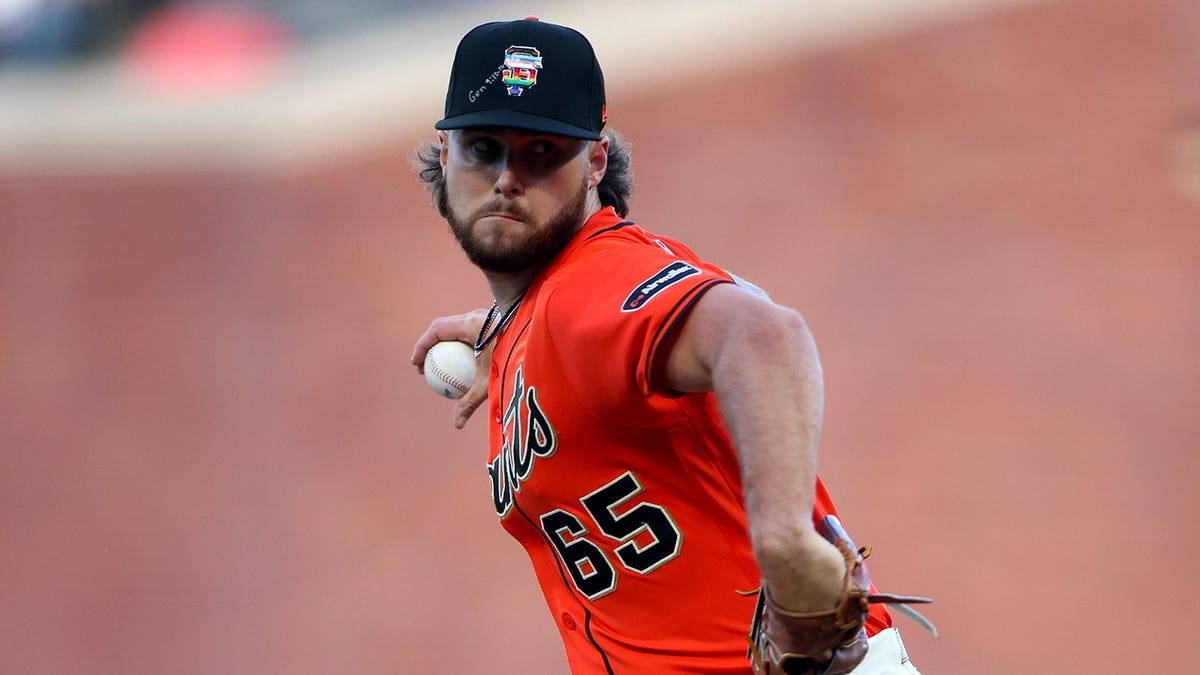
San Francisco Giants pitcher Landen Roupp throws to a Chicago Cubs batter during the first inning of a baseball game in San Francisco, Calif., on June 12, 2026. (Scott Marshall/AP Photo)
Players are generally provided their uniform for the day’s game in their locker. It’s a near-certainty that the Giants hand out the pride hats without even mentioning the option to those in the clubhouse. Which again, highlights the stupidity of allowing these exceptions in the first place.
Even if players have the option to decline, there’s undoubtedly pressure on them to comply. They know that certain fans will be upset, that sports media, which generally leans further left than Zohran Mamdani, will be outraged.
CLICK HERE TO DOWNLOAD THE FOX NEWS APP
This answer doesn’t clear anything up, it doesn’t make the league look good. It makes the league look worse. There should be no exceptions to these rules, regardless of how much the Dodgers and Giants want to keep their political statements going.
Giving players an option, even if properly explained, is not enough. And obviously, it’s not being properly explained by these organizations. Because they don’t want to. For a sport finally seeing growth after years of stagnation, it’s an unnecessary misstep. MLB makes so many of them.

- Admin
- Biden judge overruled on key Trump immigration policy June 24, 2026
- Today’s leftists are destroying what America’s Founding Fathers fought for — on the same NYC streets they once marched June 24, 2026
- Trump scores major win as Congress passes housing crackdown on Wall Street investors June 24, 2026
- ‘Surprising’ reasons why New Yorkers no longer think NYC is the greatest city in the world: poll June 24, 2026
- Trump endorsement streak gets unusual boost with South Carolina GOP governor nomination June 24, 2026