Senate Republican pushes overhaul to cut red tape and speed up American energy projects
NEWYou can now listen to Fox News articles!
FIRST ON FOX: The Senate’s newest member is reviving an issue that has echoed through the halls of Congress for years, and one that, if successful, could turbocharge energy production in the U.S.
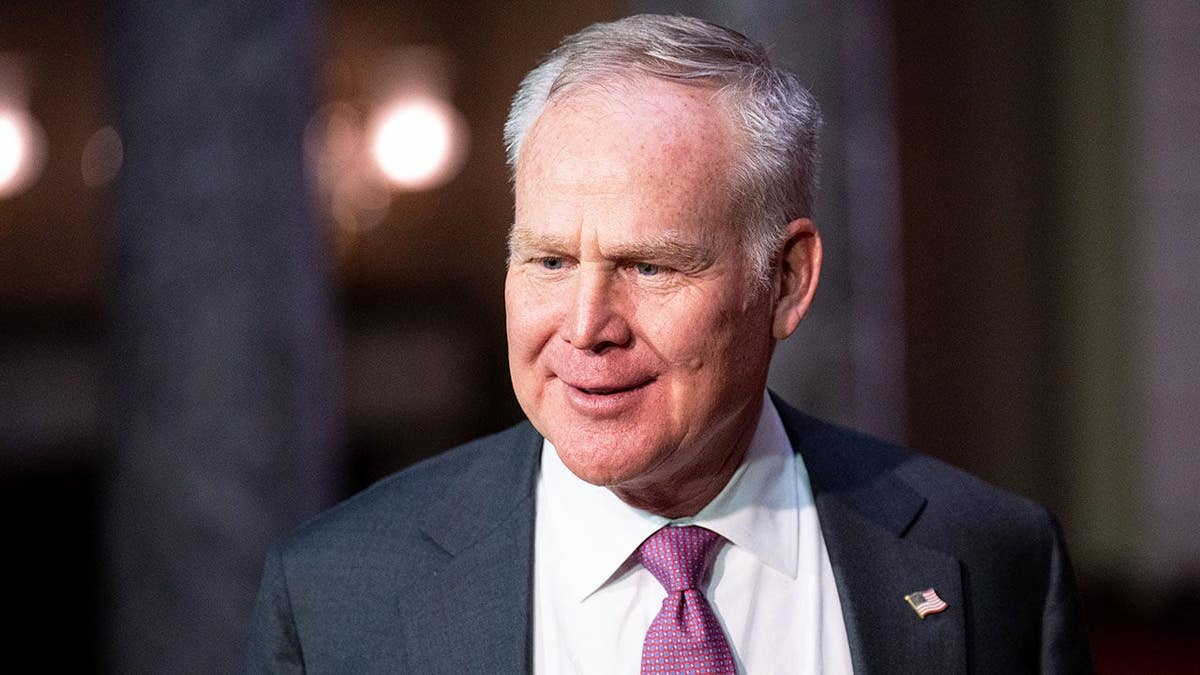
Sen. Alan Armstrong, R-Okla., who was appointed to replace Department of Homeland Security Secretary Markwayne Mullin earlier this year, has one priority in the few months that he has been the Sooner State’s junior Senator: permitting reform.
It’s not one of the sexy, bombastic issues on the Hill, but it’s one that has percolated among lawmakers on both sides of the aisle for years. And one that has never quite made it to the finish line.
IN 2026, ENERGY WAR’S NEW FRONT IS AI, AND US MUST WIN THAT BATTLE, API CHIEF SAYS
Sen. Alan Armstrong, R-Okla., participates in his ceremonial swearing-in in the Old Senate Chamber at the U.S. Capitol on March 24, 2026. (Bill Clark/CQ-Roll Call, Inc)
But for Armstrong, who stepped down as CEO of the Oklahoma-based natural gas processor and transporter Williams Companies before joining the Senate until the end of the year, the only issue that matters is gutting red tape and legal hurdles for new energy infrastructure projects that proponents argue, in the long run, could provide a boom in America’s economic competitiveness, particularly against China.
“There’s no magic, overnight fix to lower prices, but comprehensive, meaningful permitting reform will ensure that the U.S. remains the global leader in energy,” Williams said in a statement. “When we can build our own infrastructure and produce our own supply, our allies will be far less reliant on adversarial sources for their energy.”
“The U.S. cannot afford to remain idle while our global competitors move ahead, and the cost of inaction will be paid directly by American consumers through higher utility bills,” he continued.
RAPID RISE OF AI PUTS NEW URGENCY ON CONGRESS TO UNLEASH AMERICAN ENERGY
Williams has produced a package of bills geared toward permitting reform that combines ideas from the House and Senate, dubbed the American Energy and Mineral Infrastructure Act of 2026.
The package would ultimately alleviate time and money spent on the permitting process for pipeline developers, liquid natural gas (LNG) export companies and natural gas producers, among others, as they navigate the dense and slow-moving permitting process.
Armstrong’s legislation, which so far has the backing of Republican Sens. Cynthia Lummis of Wyoming, Rick Scott of Florida, and Katie Britt of Alabama, along with nearly two dozen oil and gas companies, would make the Federal Energy Regulatory Agency (FERC) the lead agency in approving interstate pipelines and LNG terminals, a change in current law that would prevent a single state from blocking a federally approved interstate project.
GAS PRICES THREATEN MEMORIAL DAY ROAD TRIPS AS PUMP COSTS HIT HISTORIC HIGHS
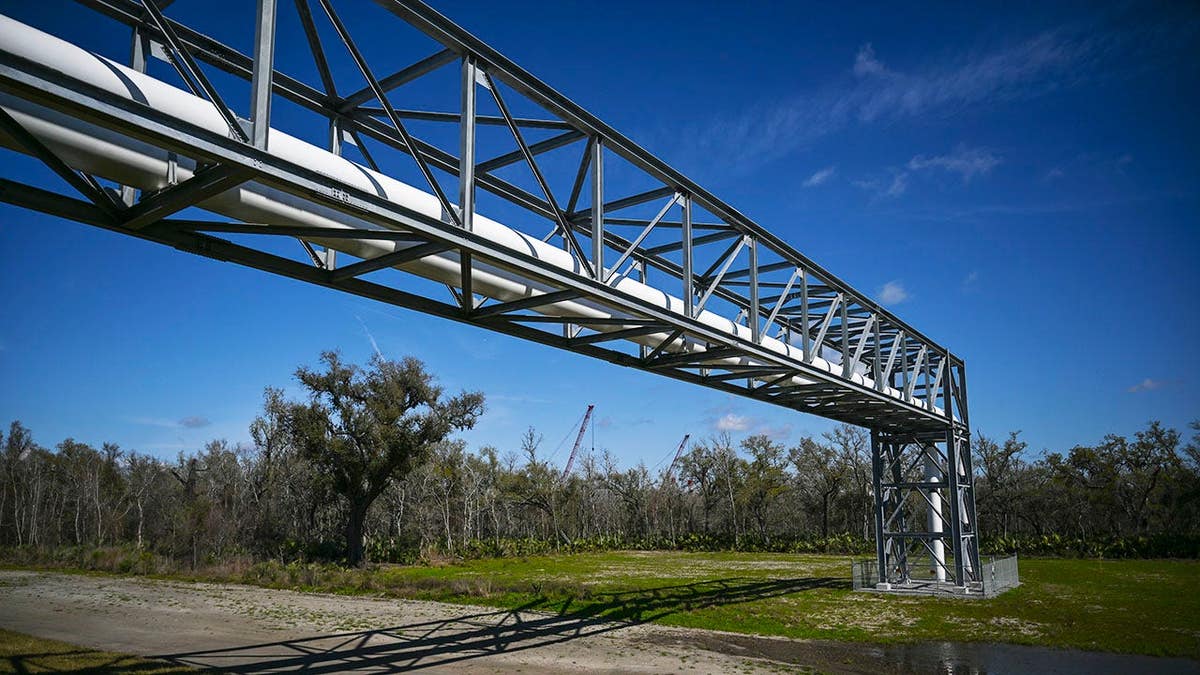
Pipelines are raised above the levee system surrounding Venture Global’s Plaquemines LNG export facility in Port Sulphur, La., on Feb. 26, 2024. (Ricky Carioti/The Washington Post)
It would also require “evidence-based” review when it comes to environmental-based decisions in the permitting process, and would expand the usage of Nationwide Permits under the Environmental Protection Agency (EPA) to create a broader standardized approval process for certain projects.
The package also creates standardized requirements for projects that affect wetlands and waterways and would make it easier for mining, particularly of critical minerals, to take place on federal lands.
And it would broadly reform the National Environmental Policy Act (NEPA) that requires federal agencies to study environmental impacts before approving many projects to narrow what agencies analyze, clarify that NEPA is largely a procedural law, limit expansive environmental analyses and establish clearer rules for review in court.
CLICK HERE TO DOWNLOAD THE FOX NEWS APP
“America has got to be able to build again, or else we are leaving our kids a worse country than the one we inherited from previous generations,” Armstrong said. “I’m glad that my presence in the Senate these last few months has reinvigorated this conversation, and rest assured, I won’t be stepping off the gas.”

- Admin
- 'As long as it takes': Trump allies freeze House floor to pressure Senate on voter ID bill June 25, 2026
- Christina Ricci’s ex denied emergency custody after son’s texts about actress drinking on plane June 25, 2026
- Qatar's Assim Madibo handed five-match FIFA World Cup ban after tackle broke Canada star's leg June 25, 2026
- LAX’s long, frustrating journey to your rideshare June 25, 2026
- Blue state governors join gun-grabbing efforts by targeting Glock pistols June 25, 2026