Archaeologists uncover 1,700-year-old Christian city hidden beneath Egypt's desert
NEWYou can now listen to Fox News articles!
Archaeologists in Egypt recently uncovered an ancient Christian city — complete with a church and a deacon’s home — that dates back to the religion’s earliest centuries.
The discovery was announced by Egypt’s Ministry of Tourism and Antiquities on July 3.
The remnants were uncovered during excavation work at the Ain al-Sabil archaeological site in the Dakhla Oasis of New Valley Governorate, about 185 miles west of Luxor.
ARCHAEOLOGISTS MAKE UNUSUAL FIND NEAR SITE WHERE ARK OF THE COVENANT WAS ONCE KEPT
In a statement translated from Arabic, ministry officials described the Byzantine-era city as “complete.”
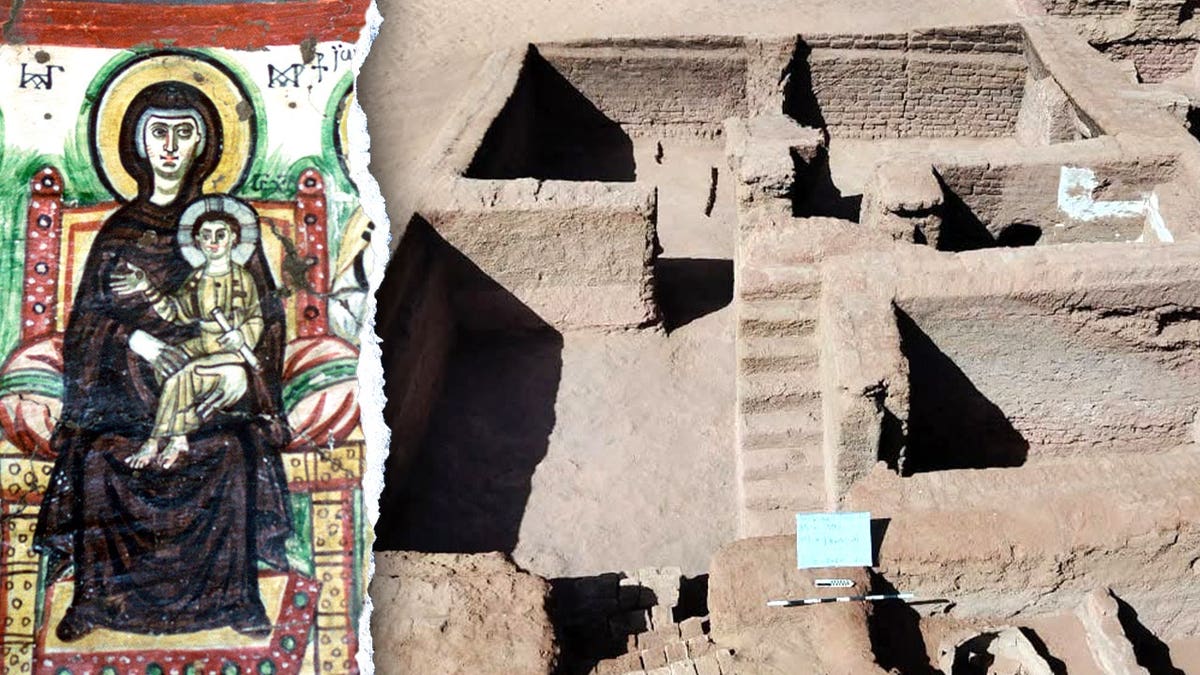
Photos from the site show mudbrick rooms and passageways within the newly uncovered settlement, along with preserved domed ovens that archaeologists say were used for baking bread.
Archaeologists uncovered a Byzantine-era Christian city in Egypt’s Dakhla Oasis, revealing churches, homes and artifacts dating to Christianity’s earliest centuries. A later Coptic-era depiction of the Virgin Mary and Child appears on the left. (CM Dixon/Print Collector/Getty Images; Egyptian Ministry of Tourism and Antiquities via Facebook)
“All of the city’s buildings were constructed of mudbrick,” the statement said.
“These include the basilica church, dating to the mid-fourth century A.D.; the remains of two watchtowers on the city’s outskirts; a fortress with thick defensive walls; and a cluster of houses featuring large halls and vaulted ceilings.”
1,740-YEAR-OLD ROMAN COIN BEARING EMPEROR’S NAME FOUND AS ENGLAND RAIL DIG REVEALS CLUES
One of the most notable structures uncovered was the home of Tisos, a church deacon, which dates to the second half of the fourth century A.D.
Archaeologists also identified the house of Tapibos, which archaeologists believe served as a house church before the city’s basilica was constructed.
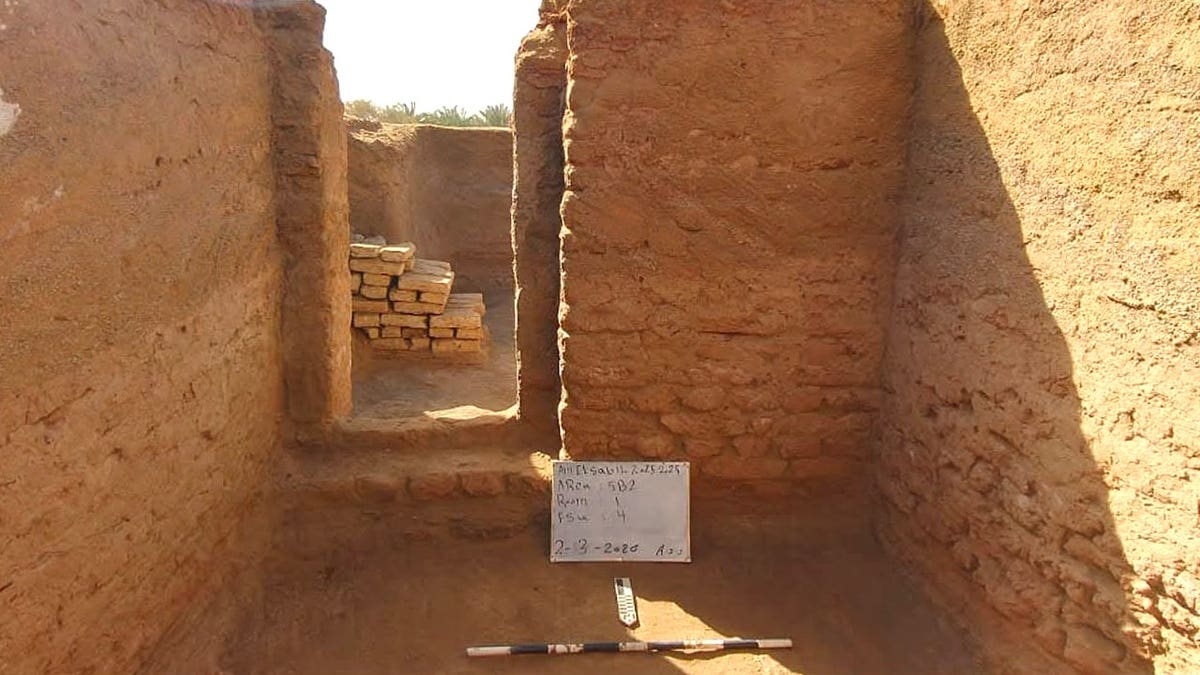
Excavations revealed mudbrick buildings, domed bread ovens and other structures that archaeologists say formed part of a complete Christian settlement. (Egyptian Ministry of Tourism and Antiquities via Facebook;)
Diaa Zahran, head of the Islamic, Coptic and Jewish Antiquities Sector at the Supreme Council of Antiquities, said the city followed “a well-planned urban layout.”
“It features main streets running north to south intersected by east-west cross streets, creating open squares and plazas,” Zahran said in a translated statement.
STARTLING MYSTERY REVEALED IN CENTURIES-OLD ROYAL TOMBS AT POWERFUL QUEEN’S MONASTERY
“At the center of the city stands a basilica church overlooking one of the principal streets.”
Archaeologists also uncovered a variety of artifacts, including household pottery, bottles used to store oils and perfumes, oil lamps and stone tools for grinding grain.
“The texts record sales transactions, correspondence and other details of everyday life.”
A treasure trove of coins was found as well, including well-preserved bronze coins bearing images of Byzantine emperors, Latin inscriptions and Christian symbols.
Some of the gold coins date to the reign of Emperor Constantius II, who ruled from 337 to 361 A.D.
CLICK HERE TO SIGN UP FOR OUR LIFESTYLE NEWSLETTER
One of the most “significant discoveries” at the site was an archive of written documents, said Zahran Mahdi, director of excavations for the Islamic and Coptic Antiquities Sector.
TEST YOURSELF WITH OUR LATEST LIFESTYLE QUIZ
The archive consists of 200 ostraca — broken pieces of pottery or limestone — that contained Coptic and Greek inscriptions.
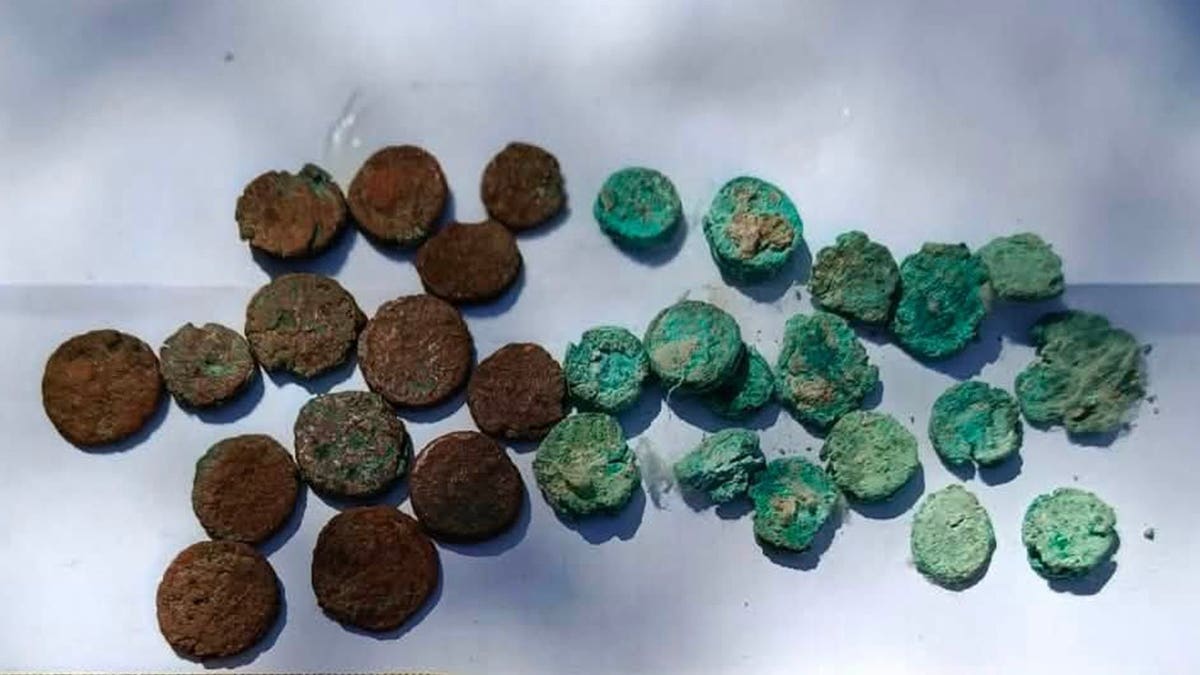
A collection of coins bearing Byzantine emperors, Christian symbols and Latin inscriptions was uncovered during the excavation. (Egyptian Ministry of Tourism and Antiquities via Facebook; DEA PICTURE LIBRARY/De Agostini via Getty Images)
“The texts record sales transactions, correspondence and other details of everyday life,” Mahdi said in a statement.
CLICK HERE FOR MORE LIFESTYLE NEWS
Egypt, one of the centers of early Christianity, has been the site of several historic Christian discoveries in recent years.
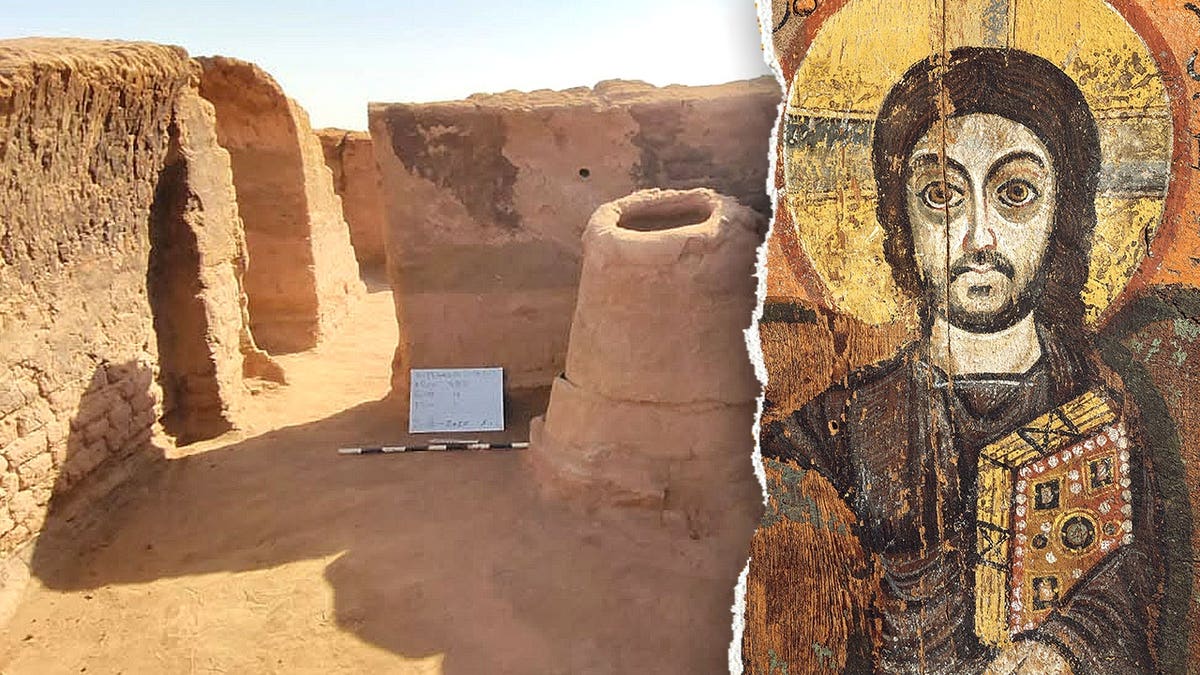
Officials said the discovery provides new insight into the growth of Christian communities in Egypt during the Byzantine period. A later Coptic-era depiction of Jesus is seen at right. (Egyptian Ministry of Tourism and Antiquities via Facebook;)
This spring, Egyptian officials announced they had found an ancient monastery dating to the dawn of Christianity in Wadi El-Natrun.
CLICK HERE TO DOWNLOAD THE FOX NEWS APP
Earlier this year, archaeologists uncovered an ancient Christian monastic complex in Upper Egypt, shedding light on monastic life before the Arab conquest.

- Admin
- Braves’ risky Chris Sale decision could work to Dodgers’ NLDS benefit October 5, 2026
- NFL ‘Sunday Night Football’ betting promos: Grab over $5K in sportsbook, prediction market bonuses for Lions vs. Panthers October 5, 2026
- Hollywood developer unveils ambitious $450M ‘old school’ plan to rescue the movie industry October 5, 2026
- Israeli soccer players wear armbands to remember terror attack victims as Irish opponents pull stunt again October 5, 2026
- Braves vs. Dodgers prediction, best bets: Blake Snell’s late-season hot streak will continue in Game 2 October 5, 2026