Appalachia's black lung rates highest in nearly 50 years as miners' protections stall

Like many miners with advanced black lung disease, Tim Balthis looks healthy, sitting with his wife Fran Balthis on their porch in Pound, Va. But a scan of his lungs shows so much fibrotic tissue a doctor told Balthis he was surprised he was still alive.
Roger May for NPR
hide caption
toggle caption
Roger May for NPR
Respiratory therapist Marcy Freeman doesn’t need a research study to confirm for her a return to the dark days of coal mining. She finds evidence in a stack of more than 150 funeral programs, all for former patients at her pulmonary rehabilitation clinic in Norton, Virginia.
“Each one of these represents a life that’s gone because of black lung,” Freeman explained as she flipped through the programs, recognizing names and images.

“These are husbands. These are brothers. … These men were just hardworking men, and the only thing they did was go to work and provide for their families. And it cost them everything. … This is the aftermath of black lung.”

Respiratory therapist Marcy Freeman has treated hundreds of coal miners with complicated black lung disease at her clinic in Norton, Va., including her husband, a coal miner who worked close to 27 years underground.
Justin Hicks/Louisville Public Media/LPM
hide caption
toggle caption
Justin Hicks/Louisville Public Media/LPM
This aftermath is more dire than even black lung clinicians and researchers expected, according to new data published Wednesday in the American Journal of Respiratory and Critical Care Medicine.
The data appears in a peer-reviewed research letter from the National Institute for Occupational Safety and Health (NIOSH), a federal research agency.
Public Health Watch, Kentucky Public Radio and NPR obtained a draft of the NIOSH research letter before publication.
NIOSH researchers found that working veteran underground coal miners in central Appalachia are suffering from the incurable and fatal lung disease at the highest rates in nearly 50 years.
Miners working in Kentucky, Virginia and West Virginia who’ve had at least 25 years underground have the worst rate of coal workers’ pneumoconiosis, or black lung disease. One in three — 32.5% — tested positive in X-rays conducted by NIOSH during the last five years.
The last time the rate of disease was that high for miners with the same work history was 1978. In 2018, when NIOSH last reported rates of the disease, the rate was 20.6%.
The new research shows that even miners with as few as 15 years underground have higher rates of black lung — rates not seen in nearly 40 years.

“I’m disgusted,” said Scott Laney, a NIOSH research epidemiologist who is the lead author of the research letter.
“This is not going to get better because of all the disease that’s already in the pipeline. These guys are being treated like disposable widgets, not human beings. … We’re watching them die right before our eyes.”
More than 1,700 coal miners died from black lung from 2020 through 2023, according to an earlier NIOSH study.
Kentucky Public Radio and its reporting partners provided the federal Mine Safety and Health Administration (MSHA) a summary of the NIOSH findings, but the agency declined to comment or respond to questions before seeing the published report.
“Coal miners are no better off”
The new findings “should stagger and shock anyone who has compassion for … hardworking people,” said Celeste Monforton, a former federal mine-safety regulator and a workplace-safety academic and advocate.
“This is the consequence of their work and the consequence of us wanting cheap electricity,” Monforton added. “We’re back where we were [nearly 50 years ago]. … Coal miners are no better off than they were [then].”
The newly published findings do not include the number of miners tested or diagnosed in the five-year period used to determine the rate of disease. But in response to questions from Public Health Watch and Kentucky Public Radio, NIOSH said it screened 280 working veteran underground miners in central Appalachia in the past five years, with 91 testing positive for black lung. The agency used that sample to estimate a rate for all similar miners in the region, an approach used since 1974.

Coal miner Jess Bishop near the end of his life, with his sons, both coal miners. Bishop died of black lung disease in 1976, just before Congress passed tough new limits on exposure to the coal mine dust that causes the disease.
Earl Dotter/Need to get source from Howard/Justin
hide caption
toggle caption
Earl Dotter/Need to get source from Howard/Justin
“The overall process” that NIOSH researchers applied here “is valid in my opinion,” said Akshay Sood, a clinical and research pulmonologist specializing in occupational lung diseases, including black lung, at the University of New Mexico School of Medicine. Sood reviewed a draft of the NIOSH research letter at the request of NPR, Kentucky Public Radio and Public Health Watch.
The NIOSH study “reinforces prior observations that disease prevalence continues to increase despite modern dust-control regulations,” Sood concluded.
The NIOSH researchers also wrote that “multiple external indicators … demonstrate patterns consistent” with their findings, including thousands of new cases of disease diagnosed by black lung clinics in the last decade.
The new estimated rate for the veteran central Appalachian underground miners is more than a fourfold increase since the prevalence of the disease hit a low point: just 7%, in 1999. That was 22 years after Congress imposed strict limits on exposure to the coal mine dust that causes black lung.

Coal miners on the U.S. Capitol steps in 1975 demanded congressional action to protect workers from the coal mine dust that causes incurable and fatal black lung disease.
Earl Dotter/Need to get from Justin/Howard
hide caption
toggle caption
Earl Dotter/Need to get from Justin/Howard
Since then, the dramatic plunge has reversed, especially in Appalachia, where thousands of miners are suffering from early, advanced and fatal stages of disease, according to data gathered from clinics testing and treating miners. Unlike NIOSH, which focuses on working miners, the clinics tend to see retired and laid-off miners who seek lung exams while trying to obtain state or federal black lung benefits.
The clinics have been inundated with miners in the wake of coal mine closures. More than 15,000 workers across the U.S. lost coal mine jobs in the last decade, according to employment data from the U.S. Bureau of Labor Statistics.

Radiologist Brandon Crum scrutinizes an image of a coal miner’s lungs in his clinic in Coal Run Village, Ky. The lungs were riddled with fibrotic tissue, the breath-stealing signature of black lung disease.
Justin Hicks/Kentucky Public Radio
hide caption
toggle caption
Justin Hicks/Kentucky Public Radio
“It’s awful,” said Brandon Crum, a radiologist in Coal Run Village, Kentucky, who specializes in detecting signs of black lung in X-rays. In 2016, Crum first documented an alarming spike in severe black lung — as well as rapid progression of the disease — among younger and younger coal miners. NIOSH researchers and an NPR investigation confirmed his findings.
The new NIOSH research indicates to Crum that the trend continues.
“It’s just another thing that proves what we’ve been saying for the last 10 years,” he said. “And this may be even worse than what we thought it was going to be.”
The National Mining Association (NMA), the leading industry trade group, was also provided a summary of the NIOSH findings. NMA noted that the rates of disease reported by NIOSH in miners tested in the last five years — along with the new cases diagnosed at clinics — do not stem from current silica dust exposures in coal mines because it can take years for disease to develop and for disease to be diagnosed.
“This means that the incidences discussed in these studies cover miners whose initial exposure dates back years and, in many cases, decades,” Ashley Burke, a spokeswoman for NMA, wrote in an emailed statement. “These incidences do not reflect the conditions, practices, protections or regulations that are in place today.”
Still, miner advocates are concerned that high rates of disease will continue because of a major change in coal mining that’s causing dangerous dust exposure.

A wall in the New Beginnings clinic shows many of the coal miners who’ve been treated there. Respiratory therapist Marcy Freeman also has a collection of funeral programs for those who’ve died.
Justin Hicks/Kentucky Public Radio
hide caption
toggle caption
Justin Hicks/Kentucky Public Radio
Cutting through rocks
In recent decades, the biggest coal seams in Appalachia were mined out. Mining companies turned to the thinner seams that remained, digging through mountains to reach and then mine them. That requires cutting lots of rock, and in Appalachia, that rock typically contains quartz, which is rich in silica. The result is clouds of both coal dust and highly toxic silica dust.
“Excessive inhalation of coal mine dust is the sole cause of [black lung] in coal miners,” the new NIOSH research letter says. “Substantial evidence shows that exposure to the respirable crystalline silica component of coal mine dust plays an important role in contemporary disease patterns.”
Laney, the NIOSH epidemiologist, said the link between silica dust and black lung disease is strong, based on exposure data and radiographic data, which shows abnormalities “suggestive of silica exposure.” And he said researchers have inspected lungs removed in autopsies and after transplantation and “we can see the silica in these lungs.”

A working coal mine preparation plant outside Appalachia, Va. Coal mining continues in the region even though nearly 350 underground mines have closed since 2008, putting thousands of miners out of work.
Roger May for NPR
hide caption
toggle caption
Roger May for NPR

A thin coal seam no more than a foot thick outside an abandoned underground coal mine near Haysi, Virginia. Now that mining companies are going after thin seams like this, miners are exposed to more silica dust when mining machines cut through the rock.
Justin Hicks/Kentucky Public Radio
hide caption
toggle caption
Justin Hicks/Kentucky Public Radio
Silica dust is 20 times more toxic than coal dust alone and contains fine particles that are easily inhaled. Silica particles cause lungs to fight back with fibrotic tissue that builds and builds, severely inhibiting the ability to breathe.
Coal miners who’ve worked underground in the last 25 years have witnessed the changes that led to more silica dust exposure.
“The thickness of the coal is not there,” explained Tim Balthis, a former miner and mine foreman in Kentucky and Virginia. It’s not like the days when the “grandpas” mined the big coal seams, he said. “So you’re having to take more rock, which in turn creates silica dust.”
Balthis spoke at New Beginnings Pulmonary Rehab, one of four black lung clinics owned and operated by Freeman, the respiratory therapist. The clinics help miners ease symptoms of the incurable disease.
At 57, Balthis has what is called complicated black lung, the advanced and fatal stage. He tried to describe for non-miners what it’s like working around silica dust in an underground coal mine.
“It’s like opening your front door and letting the sunshine [in]” with dust particles floating in the light. “And then multiply that by 10 billion times. … It’s like a fog,” Balthis recalled.

A display at the National Institute for Occupational Safety and Health in Morgantown, West Virginia, compares a preserved healthy lung with the coal-black lung of a coal miner who died from black lung disease.
Howard Berkes for NPR
hide caption
toggle caption
Howard Berkes for NPR
“Thousands of opportunities for disease”
The National Mining Association cites government data that shows increasing compliance with silica dust exposure limits in the last 10 years, with mining companies nationwide meeting those limits more than 90% of the time. Last year, the compliance rate hit 97%.
But a high rate of compliance doesn’t mean miners are fully protected. The small percentage of overexposures has translated to thousands of instances in which miners are put at risk.
Kentucky Public Radio and Public Health Watch analyzed MSHA silica dust sampling data and found that coal miners were exposed to excessive levels of silica dust more than 5,000 times since 2014. Silica particles are so toxic, so easily inhaled, and so easily embedded in lungs, that “thousands of exposures equate to thousands of opportunities for disease,” said former regulator Monforton.
In fact, an NPR and FRONTLINE investigation in 2018 documented 21,000 instances of overexposure to silica dust in a review of 30 years of federal data. The news organizations also documented a growing number of retired and laid-off miners stricken with complicated black lung, a count that now exceeds 4,000 since 2010.
“A love affair with the black rock”

Even though the federal Mine Safety and Health Administration issued stickers like this warning of the danger of silica dust in coal mines, the agency under President Trump has joined a federal court in indefinitely delaying a new regulation aimed at preventing over exposure to the toxic dust.
Mine Safety and Health Administration
hide caption
toggle caption
Mine Safety and Health Administration
NIOSH first recommended tougher limits on silica dust exposure in coal mines in 1974. But for 50 years, both Democratic and Republican administrations failed to act. That finally changed in 2024, when the Biden administration succeeded in establishing a new silica dust regulation for mining. It made the exposure limit twice as restrictive. It also provided, for the first time, a direct regulatory response to overexposure, including imposition of even tougher exposure restrictions, and possible fines, for noncompliance.
But the mining industry sued, agreeing with the tougher exposure limit but not the enforcement mechanism.
Federal courts responded to the industry lawsuits, which also cite other issues, with an indefinite delay in enforcement of the tougher silica exposure limits. The Trump administration did not oppose the delay, announcing it too would put enforcement on hold.
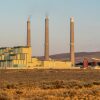
And the Trump administration is trying to boost coal mining. In early June, Trump announced close to $700 million in federal spending to sustain coal-burning power plants and to support exports of coal.
“Coal’s a great business,” Trump said at the time. “In terms of power, there’s nothing like it.”
Monforton said the administration seems to have “a love affair with the black rock, and not a love affair or compassion or concern for coal miners.”
Mining companies are required to control dust exposure with robust ventilation underground. Mining machines must also have water sprays that tamp down dust. But sometimes, they don’t work well enough to keep the dust down.
The coal mining industry wants to be able to require the use of dust masks, so that miners could still work when other control measures fail.
“When other controls do not adequately reduce exposure levels, those extensive controls will be supplemented with respirators, which is no different than any other profession that requires the use of masks to ensure air quality safety.” the NMA’s Burke said.
But federal law treats underground coal mining differently from other industries. The Mine Safety and Health Act requires coal mining companies to prevent “unsafe and unhealthful conditions” and to make sure miners can work their entire careers in working conditions “sufficiently free of respirable dust” so they don’t fall victim to black lung.
Dust masks and respirators have also been problematic. Many miners interviewed by NPR complained that masks impair communication in a dangerous and noisy environment, become clogged with dust, are too hot to work in, and fail to screen out finer particles. Lawsuits against dust-mask companies have resulted in multimillion-dollar verdicts and settlements.

A billboard advertising assistance with black lung disease claims overlooks the Calvary Baptist Church along the Dickenson Highway near Clintwood, Va.
Roger May for NPR
hide caption
toggle caption
Roger May for NPR
Even more modern devices have issues, including helmets that push fresh air down across the face and behind a clear shield. MSHA noted in its 2024 silica dust regulation that the helmets “are not a permanent solution” because they make it difficult to communicate effectively, and may limit peripheral vision and situational awareness, which can make work hazardous.
The uncertain future of the silica dust regulation is noted by the NIOSH researchers in their newly published study, saying it’s difficult to predict the impact of the delay of enforcement, but more disease is “likely to result.”
Dr. Drew Harris, a University of Virginia pulmonologist, who is also medical director at the Stone Mountain black lung clinics in Virginia, is more direct about delayed protections for coal miners.
“We need to act and we need the will to act,” Harris asserted. “We need to enforce the protections that we know will work to make this disease go away.”
“Folks that don’t have a voice”
Harris’ black lung clinics in southwestern Virginia, Stone Mountain Health Services, see more miners and diagnose more cases of disease than any clinic in the country. Miners from coal counties across Appalachia flock to Stone Mountain because it provides testing, treatment and legal help with black lung benefits claims.
Harris called the new findings from NIOSH “outrageous.” But they’re not surprising based on what he’s been seeing in the clinics. In just the past five years alone, Stone Mountain has diagnosed 2,400 new cases of black lung.
“If you imagine one out of every three school teachers were getting an incurable lung disease because of something they were exposed to at work, the whole country would put their hands up screaming, and stop whatever this exposure was immediately,” Harris said. “[But] this is largely impacting rural Appalachian folks that don’t have a voice, that don’t have a country to unite behind them.”
The growing rate of disease has resulted in a steady stream of miners seeking state and federal benefits for living and medical expenses. More than 26,000 miners or their surviving dependents drew $175 million from a federal black lung trust fund in 2024, according to a Labor Department report to Congress.
Mining companies contributed more than $23 billion to the fund, according to NMA, but bankruptcies and underinsurance shift some of the burden to taxpayers. The fund owes more than $3 billion to the U.S. Treasury.
Public funds pay for most of a growing number of lung transplants, which cost as much as $2 million each, and are mostly for miners in central Appalachia, according to a NIOSH study.

Coal miner Tim Balthis was diagnosed with complicated black lung, the fatal stage of the disease, five years ago. His lungs are filled with fibrotic tissue that severely limits his ability to breathe, and to play with his grandkids for more than five or ten minutes.
Roger May for NPR
hide caption
toggle caption
Roger May for NPR
The black lung burden for miners like Tim Balthis makes life itself challenging. Even the simplest tasks are difficult as fibrotic tissue builds up in his lungs. Breathing becomes more and more labored. He knows it will only get worse. He’s likely to die from it, unless he qualifies for a lung transplant. But even that, for coal miners, comes with a median survival rate of less than seven years.
“It’s like a cut in your manhood.” Balthis said, noting that he carries and uses an “emergency inhaler” to get more than a few minutes of playing time with his grandchildren or even singing at church.
“I’ve had several doctors say that I should already be dead… And I tell them this…’God’s not done with me yet.’ I’ve been obedient to Him, and now He’s giving me back to my grandbabies…He’s not finished with me.'”
This story was produced as a collaboration between NPR; Public Health Watch, an independent nonprofit investigative newsroom focused on public, environmental and occupational health; Kentucky Public Radio; and the Appalachia + Mid-South Newsroom.

- Admin
- Trump promised a swing district blitz. He's going to a lot of very red states October 17, 2026
- Sidewalk sleepers: They have nowhere else to stay while a loved one is in the hospital October 17, 2026
- Weddings are expensive. How about a grocery store cake? October 17, 2026
- Florida art dealer gets nearly 4 years in prison for scheme to sell fake Andy Warhol artworks October 17, 2026
- No Kings turns its focus to voting this weekend. Here's what we know October 17, 2026