Iran aims to ban U.S. and Israeli ships from Strait of Hormuz and charge others a toll
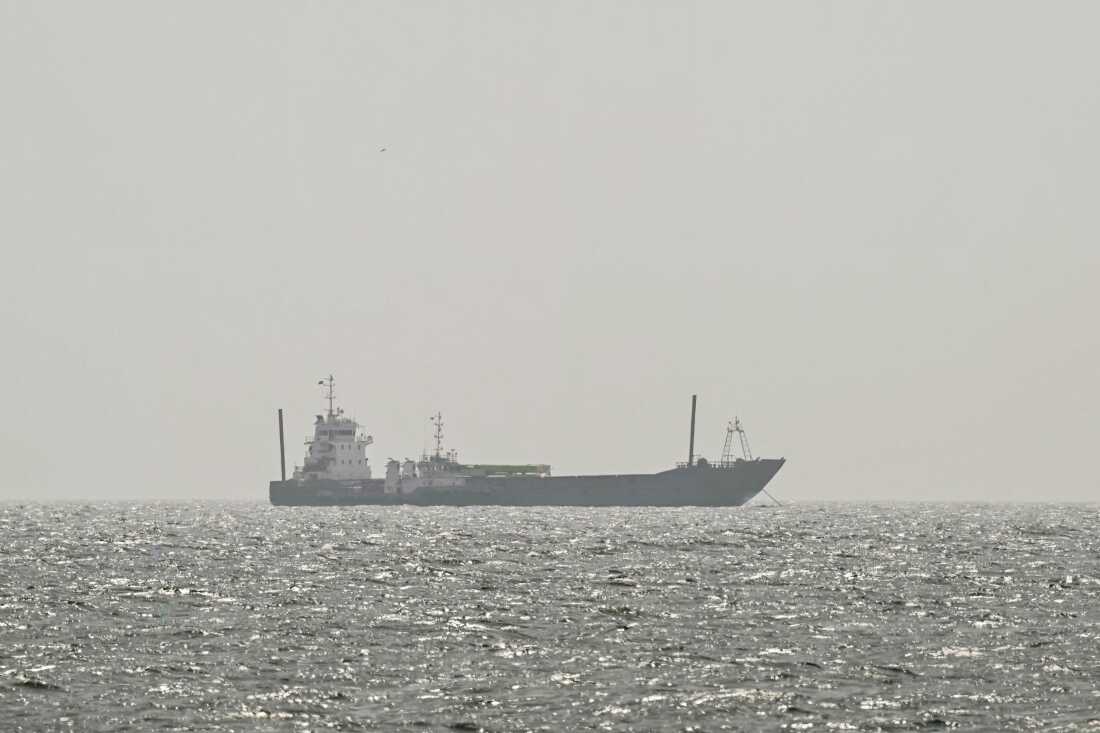
A vessel is anchored off the coast of Sharjah in the United Arab Emirates on Aug. 3. The war with Iran nearly ground traffic to a halt in the Strait of Hormuz.
AFP via Getty Images
hide caption
toggle caption
AFP via Getty Images
Iran’s parliament is reviewing a plan to ban ships linked to the U.S., Israel and other “hostile countries” from transiting the Strait of Hormuz until Tehran is compensated for war damage, according to Iranian state media.
The plan would impose fees of up to 7% of cargo value on commercial vessels that pass through the strait. It would also fine ships 20% of cargo if they violate Iran’s conditions.
Iran on Wednesday said it was finalizing an agreement on shipping routes with Oman, a U.S. ally that sits on the other side of the Strait of Hormuz. Iranian state media quoted the Foreign Ministry as saying that ships would enter through the strait’s northern corridor near the Iranian coast and exit through the southern corridor near the Omani coast.
The Trump administration has disputed Iran’s characterization of the agreement.
“Any temporary routes will be without any impediments — meaning no approvals or permissions and no tolls or charges. The Strait of Hormuz is an international waterway and no party controls the lanes or the ability to transit through them,” a U.S. official told NPR on condition of anonymity because they were not authorized to speak on the record.
Oman has not commented.
This comes more than five months after the U.S. and Israel started their war against Iran on Feb. 28.
The Strait of Hormuz — a key route for crude oil, liquefied natural gas and other goods, located between Iran and Oman — was open for shipping until the war. After Israel and the U.S. launched joint military attacks, Tehran struck back across the region and asserted control over the critical waterway. With Iran blocking the strait, the U.S. imposed a naval blockade on Iran.
The Trump administration and Iran’s leadership signed a temporary memorandum of understanding in mid-June to stop the war and reopen the strait, but it broke down weeks later amid back-and-forth strikes.
The strait’s closure has caused a major disruption to fuel and fertilizer supplies, driven up prices and shaken economies around the world.
On Tuesday, President Trump said the U.S. was in talks with Iran and mediators and may reach an agreement to reopen the strait this week.
Turkey’s foreign minister, who has been assisting in mediations, said on Thursday a temporary agreement between the U.S. and Iran could be announced soon.
Hadeel Al-Shalchi reported from Istanbul. Alex Leff contributed to this story from Washington.

- Admin
- SoCal authorities issue urgent order as flooding overwhelms picturesque beach town October 10, 2026
- Cristiano Ronaldo suspended by Portugal in latest twist to national team drama October 10, 2026
- Eagles release Pro Bowl quarterback Andy Dalton after just one disastrous pass in loss October 10, 2026
- Gypsy Rose Blanchard reveals private texts with Ken Urker to shut down custody battle rumors: ‘The truth’ October 10, 2026
- ‘Below’ Ending Explained: Does Calvin Kill the Monster? Does the Monster Kill Calvin? October 10, 2026