Harvard-China links unearthed as Congress finds 140 papers co-authored by CCP military universities
NEWYou can now listen to Fox News articles!
FIRST ON FOX: Harvard allegedly failed to adequately safeguard research collaborations with Chinese institutions, including universities tied to Beijing’s military and defense-industrial base, according to a report from the House Select Committee on the Chinese Communist Party.
Researchers affiliated with the New England Ivy League co-authored more than 140 publications with other researchers affiliated with a group of Chinese universities, according to the report reviewed by Fox News Digital ahead of its public release.
The “Seven Sons of National Defense” are a group of Chinese universities identified by the Pentagon and other U.S. officials as central to China’s defense research and military modernization efforts. The House Committee created to crackdown on China argues Harvard’s approach to research security opened the door for collaborations that could advance technological and military capabilities of the hostile nation.
Harvard also reported received more than $600 million from China under the federal Section 117 foreign-gift disclosure system — more than any other American university, according to the Education Department dashboard cited in the report. The committee argues the U.S. university’s financial ties to China heighten the need for strict oversight of its research partnerships and foreign-funding disclosures.
Banners hanging from Memorial Church on the Harvard University campus in Cambridge, Massachusetts, US, on Tuesday, May 27, 2025. (Sophie Park/Bloomberg via Getty Images)
HARVARD TOPS NATION IN FOREIGN CASH HAUL AS COTTON DEMANDS PROBE INTO CHINA FUNDING
The stakes in the latest report extend far beyond Harvard. U.S. officials have warned for years that China uses academic partnerships and access to Western research to advance CCP strategic capabilities in military, surveillance and other areas.
The House Select Committee on China argues that universities receiving U.S. taxpayer funding must do more than meet the narrowest legal requirements when collaborating with institutions embedded in China’s military research system, particularly when it comes to technology with potential defense or military uses.
The report highlights a 2023 paper on bio-inspired soft robots for deep-sea exploration co-authored by a Harvard-affiliated researcher and a researcher from Beihang University, one of the Seven Sons institutions. Beihang, also known as Beijing University of Aeronautics and Astronautics, has appeared on the Commerce Department’s Entity List since 2001.
The committee report argues the work examined in the paper has potential military applications, including underwater detection, while Harvard’s research-compliance office characterized the project as nonmilitary research.
FOREIGN ROBOT BAN TARGETS CHINA OVER SECURITY FEARS
Harvard researchers also co-authored a 2023 paper with a researcher at China’s National University of Defense Technology, another institution on a U.S. restricted list, according to the report. That study involved magnetic materials and acknowledged partial support from the U.S. Army Research Office.

An image from a 2023 paper on bioinspired soft robots for deep-sea exploration co-authored by researchers affiliated with Harvard and China’s Beihang University. (House Select Committee on the CCP)
The committee said it reviewed publications spanning dozens of disciplines and found that engineering accounted for the largest share of Harvard-affiliated research involving Seven Sons institutions.
“From allowing violence against anti-China protestors to collaborating with entities linked to the PLA, Harvard has made serious mistakes and must act now to prevent more. It should use this investigation as a catalyst for significant reforms that end CCP influence on campus and prioritize secure American research,” committee chairman Rep. John Moolenaar, R-Mich., said in a statement.
The report also examines Harvard’s executive education program with China’s National Healthcare Security Administration, which trained Chinese health officials on international health-insurance systems.
According to the report, attendance and registration records show officials affiliated with the Xinjiang Production and Construction Corps, or XPCC, were listed in connection with some sessions. The Treasury Department sanctioned XPCC in 2020 over human-rights abuses against Uyghurs and other ethnic minorities in Xinjiang.
The report acknowledges it is unclear whether XPCC officials ultimately attended every program in question.
It alleges, however, that Harvard had advance participant information for a 2020 online session that included XPCC-affiliated officials and did not take further action.
Harvard professor Winnie Yip, who helped organize the executive education program, told committee investigators she did not know XPCC was a sanctioned entity at the time and had not received training on sanctions compliance, according to the report.
The report further alleges Harvard’s research-security practices focused too narrowly on technical legal compliance and failed to account for broader national-security risks posed by work with Chinese military-linked institutions.
It cites testimony from Harvard research official John H. Shaw, who said the university evaluates research collaborations case by case and does not prohibit all work involving robotics or Chinese institutions. The committee criticized that approach, arguing research with entities embedded in China’s military-civil fusion system can have military applications even when the research is unclassified and intended for publication.
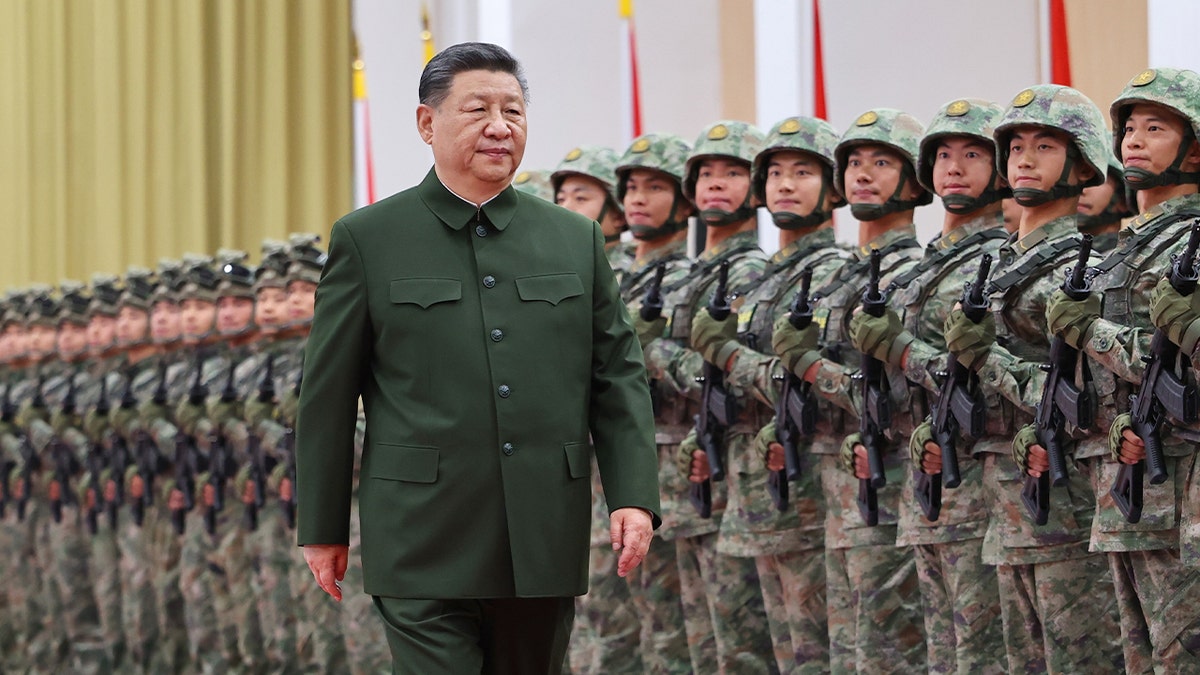
Chinese President Xi Jinping, also general secretary of the Communist Party of China Central Committee and chairman of the Central Military Commission, reviews the troops during his inspection of the Chinese People’s Liberation Army PLA garrison stationed in the Macao Special Administrative Region, south China, Dec. 20, 2024. (Li Gang/Xinhua via Getty Images)
The report also raises questions about Harvard Global Research and Support Services, a nonprofit affiliated with the university that can accept awards when Harvard is unable to accept a sponsor’s terms directly. The committee alleges the entity could be used to circumvent federal foreign-gift reporting requirements, an allegation Harvard will likely dispute.
Harvard did not respond to Fox News’ request for comment on the House Committee report’s findings.
CLICK HERE TO DOWNLOAD THE FOX NEWS APP
The report recommends that Harvard prohibit research relationships with entities on U.S. government restricted or sanctioned lists and centralize its research-security oversight. It also urges Congress to strengthen foreign-funding disclosure requirements for universities.

- Admin
- Rangers recall Taylor Raddysh in roster shuffle following ugly loss to Devils October 16, 2026
- Sleigh the season: 48 luxury gifts for men worth splurging on during the holidays October 16, 2026
- Whitney Rose speaks out about divorce and drama with ‘RHOSLC’ costar Ashley Quai October 16, 2026
- Darius Slayton’s NFL career in jeopardy after Colts cut bait fast October 16, 2026
- Eagles sign Joe Milton away from Cowboys after Jalen Hurts injury stunner October 16, 2026