White House silent on Iran-Oman Hormuz plan Tehran says would ban US warships
Trump: We CONTROL Hormuz, declare it a US territory
Declaring the Strait of Hormuz a U.S. territory could secure critical oil passages against Iran, says President Donald Trump. Samir Kapadia joins ‘Mornings with Maria’ to evaluate the legal path and economic blockade stakes. He examines potential maritime shipping tolls and the strategic impact of U.S. sanctions on Middle Eastern trade.
NEWYou can now listen to Fox News articles!
The Trump administration spent months insisting Iran did not control passage through the Strait of Hormuz.
But after Iran and Oman unveiled a proposed framework that Tehran says would exclude military vessels if finalized, the White House would not say whether President Donald Trump would accept any restriction on U.S. warships under the arrangement.
U.S. Central Command, meanwhile, rejected Iran’s underlying claim of authority.
“Iran does not control the Strait of Hormuz,” CENTCOM spokesperson Capt. Tim Hawkins told Fox News Digital. “The strait is an international waterway that commercial vessels continue to transit with U.S. military assistance.”
IRAN FAILS TO STRIKE DEAL WITH US AS DEADLINE PASSES AND TRUMP CALLS FOR ‘WHITE FLAG OF SURRENDER’
A view of commercial cargo vessels and crude oil tankers are anchored in the Gulf of Oman, off the coast of Muscat, Oman, on June 21, 2026, as they prepare to transit through the critical Strait of Hormuz. (Shady Alassar/Anadolu via Getty Images)
Fox News Digital asked whether Trump would accept a restriction on U.S. military vessels if the proposal becomes binding, whether American forces would be expected to comply and whether U.S. warships retain the right to operate in the strait regardless of any future arrangement. The White House did not respond.
Hawkins said U.S. forces have helped nearly 1,500 vessels transit the strait since early May.
The silence marks a shift after months in which the administration publicly challenged Iranian efforts to dictate passage through Hormuz. Secretary of State Marco Rubio repeatedly called a proposed toll system illegal and unacceptable, while Trump threatened Oman this month if it “gets in the way” of a U.S. deal with Iran.
TRUMP THREATENS ‘UNPRECEDENTED’ ECONOMIC CONSEQUENCES FOR ANY NATION AIDING IRAN
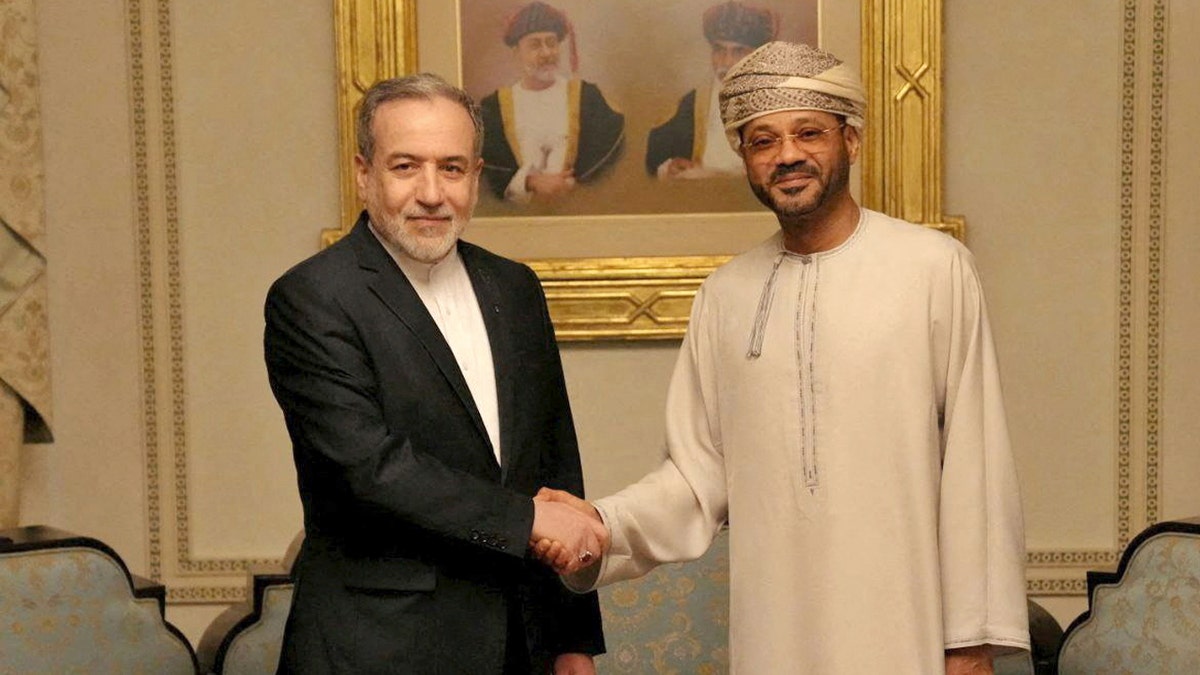
Iranian Foreign Minister Abbas Araghchi meets with Omani Foreign Minister Badr al-Busaidi in Muscat, Oman, Feb. 6, 2026. (Iranian Foreign Ministry/WANA (West Asia News Agency)/ Handout via Reuters)
The administration has also spent months applying military and economic pressure aimed at reopening the strait on U.S. terms. American forces have struck Iranian military targets, protected commercial shipping and maintained a blockade of Iranian ports, while the administration expanded sanctions through its new Operation Economic Outcast campaign.
Those measures have helped push some ships back through Hormuz, but traffic remains far below pre-war levels.
Oil flows through the strait stood Monday at about 5 million barrels per day, down from more than 20 million barrels per day before the war, according to Reuters, which cited provisional Vortexa tracking data.
Iran is now pursuing a reopening arrangement that, by its account, would preserve a measure of control over the waterway while excluding foreign military vessels.
Oman and Iran announced a proposed framework Monday to reopen the strait through a joint temporary navigational corridor and a joint mine-clearing project.
Their joint statement said technical talks would continue on a permanent corridor, future administration of the strait, traffic management and security services, leaving key terms unresolved.
Iranian officials filled in some of those blanks Tuesday.
CLICK HERE TO DOWNLOAD THE FOX NEWS APP
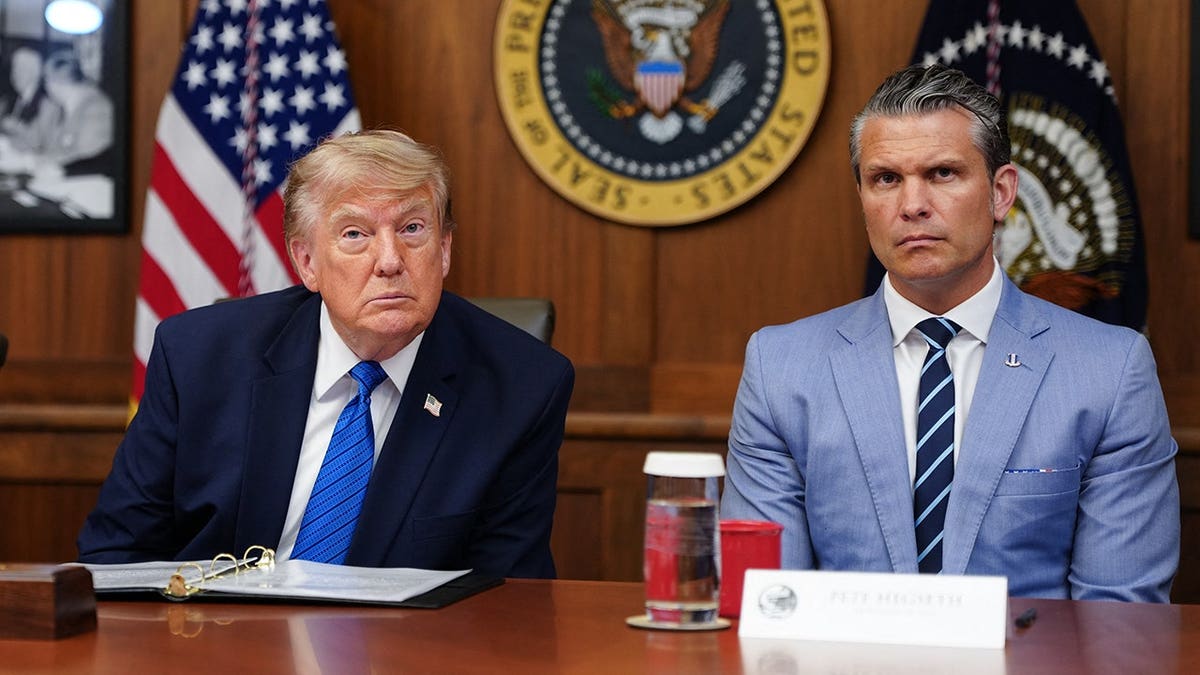
U.S. President Donald Trump and U.S. Secretary of War Pete Hegseth listen to questions from the press during a Cabinet meeting at Camp David in Maryland, on July 31, 2026. (Aaron Schwartz / AFP via Getty Images)
Deputy Foreign Minister Kazem Gharibabadi said the temporary arrangement would route commercial ships entering the Persian Gulf through Iranian waters, with outbound traffic moving through Iranian and Omani waters. He said the proposal would exclude military vessels if it becomes binding.
Separately, Sepah News, an outlet run by the Islamic Revolutionary Guard Corps, quoted IRGC spokesman Hossein Mohebbi as saying Iran and Oman had reached agreements on “each country’s share of the strait’s waters” and the two countries’ “share of its revenues.”
Mohebbi also accused the U.S. of obstructing the talks.
US CLAWS BACK KEY CONCESSION TO IRAN AFTER FRESH ATTACKS ON COMMERCIAL SHIPS IN STRAIT OF HORMUZ
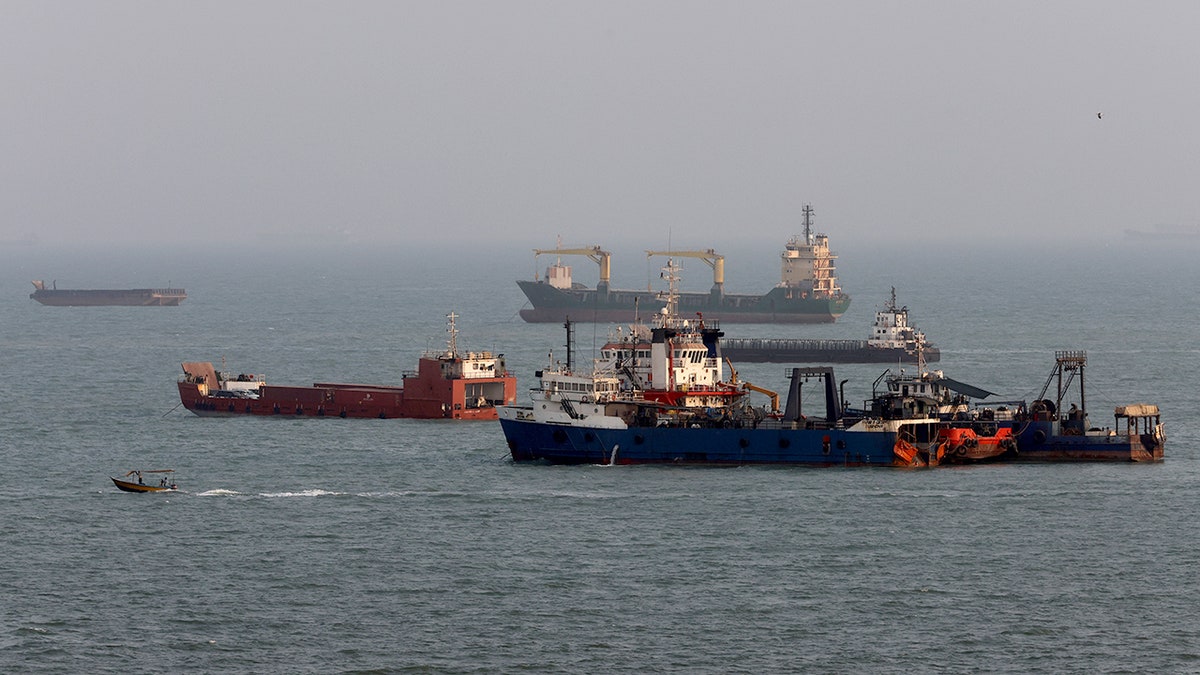
Ships are anchored in the Strait of Hormuz on August 10, 2026 off the coast of Bandar Abbas, Iran. (Ali Saeedi/Getty Images)
SIGN UP TO GET THE POLITICS NEWSLETTER
But Oman’s public statement did not mention a military-vessel ban, transit fees or revenue sharing, and described the framework as proposed. Iranian officials also told Reuters the arrangement was not yet final.
That leaves the arrangement’s most consequential question unresolved: whether Iran can use the emerging commercial shipping framework to restrict American military access to the strait — and what the Trump administration intends to do if Tehran tries.

- Admin
- Netflix’s ‘La Bola Negra’ Movie Makes the Case for Queer Historical Speculation October 20, 2026
- DOJ sends grand jury subpoenas to Philadelphia DA Krasner after judge's referral, sources say October 20, 2026
- Dan Quinn ‘definitely knew it was 4th down’ after lip readers questioned Commanders bizarre play October 20, 2026
- Far-left French rioter on national securty watchlist busted over fire that gutted historic town hall October 20, 2026
- Dashcam video captures small plane crashing on San Jose highway, injuring three on board, including child October 20, 2026