A week after the deadly floods in Nepal, rescuers work to find survivors
A view of damaged tunnel of the Trishuli Hydropower Plant on the banks of the swollen Trishuli River following landslides on August 30, 2026, in Trishuli, Nepal.
Ritesh Shukla/Getty Images
hide caption
toggle caption
Ritesh Shukla/Getty Images
KATHMANDU, Nepal — A week after powerful flash floods devastated riverside communities in Tibet and Nepal and killed more than 1,000 people, rescuers are still racing to locate survivors who may be trapped inside around a dozen hydro-power plants buried under the mud.
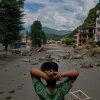
But to rescue them, one man overseeing part of a rescue says, first, they have to find the tunnels where the men and women are believed to have fled. Just finding the tunnels is an achievement, amid a post-flood landscape that tunneling expert Arnold Dix described as “like a bomb’s gone off.”
The effort to locate the trapped workers was just one part of a sprawling, complex rescue and humanitarian operation that some 21,000 Nepali security forces and rescuers have been undertaking since floods left some 4,000 people missing, according to a Wednesday briefing by the spokesperson for the Ministry of Foreign Affairs, Lok Bahadur Poudel Chhetri.
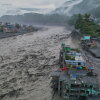
Nepal’s army is leading rescue efforts for the trapped hydropower workers, and on X, the military shared a video of khaki-clad men pulling themselves on ropes in what appeared to be a muddy, dripping, narrow tunnel. The flood was triggered after part of a glacier about 3,000 feet wide snapped off a mountain and tumbled some 4,000 feet into a river valley. The water barreled the debris, mud and ice forward, smashing away buildings, wiping away riverbank communities and burying hydropower stations that once dotted the landscape, particularly along the Trishuli River.
“It’s removed the power stations from the surface, like they’re just not there,” Dix told NPR. “So the first problem we had is just finding them. So you’re presented with a moonscape.”
Dix said the ground has risen between 30 and 50 feet in some areas, causing the river to shift, and the force of the water had caused about a dozen power stations to be completely or partially destroyed. “And so in each of them, because there’s tunnels and powerhouses, we’ve potentially got people trapped,” Dix said.
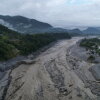
Dix says rescuers are relying on advanced mapping techniques to locate the tunnels that lead into the turbine houses. “And the Goldilocks zone where we think people may have survived is actually in the turbine houses,” Dix said.
Dix was assigned to oversee the tunneling rescue of people in one hydropower plant called Trishuli 3A, where dozens of people are feared trapped.
He said in the past few days, rescuers dug down into the entrance of the tunnel, which was once open to the air. “It’s now underneath the river,” Dix said. And “we found there were huge boulders,” he said, “thrown right into our tunnel and mud.”
Dix explained that while usually “it’s a no-no to use explosives” when extricating people from tunnels, “we had to call the army in to blow up the rocks.” He added that the rescue team tried to prevent water from rushing in by creating “an artificial drain for the tunnel so that we can let the water out.”
Some people have survived. Nepal Prime Minister Balen Shah said on Saturday that nearly 300 people had been rescued from hydropower projects. Reuters reported that most of those people were rescued over the weekend from the Upper Trishuli-1 powerplant, which was under construction.
Janak Thapaliya, a worker from that powerplant, told NPR that he saw flood waters gushing down on Wednesday, “people started screaming. We all started running.”
Thapaliya saw a floating water tanker and climbed onto it. “So that’s the only reason why I was able to save my life.” He added, “my friends were not able to save themselves. They could have survived, but they did not get the chance.”
Thapaliya’s anger echoed that of many Nepalis who thought the government had initially turned down offers of foreign assistance. The government refuted those reports, with the finance minister, Swarnim Wagle saying assistance had been accepted only “according to the needs on the ground.”
“I think this government could have maybe done better and certainly the initial hesitation to reach out to outside help was something that they course-corrected on,” said Ashish Pradhan, senior adviser at the International Crisis Group. He said in the context of this complex, ongoing disaster, the government was “doing the best that they can. They are rolling with the punches.”
On Tuesday, the Nepali foreign affairs spokesperson Chhetri said two teams from India and another from China, specialized in tunnel rescues, had arrived to assist Nepali rescuers, and a Korean team was also on its way.
Omkar Khandekar contributed reporting from Mumbai, India. Hadid reported from Socorro.

- Admin
- LeBron James gets jealous about wife Savannah’s ‘pat down’ confession October 22, 2026
- Is the Ali G Movie ‘Ali G: Who Iz I’ Streaming on Amazon Prime Video? October 22, 2026
- You had us at ‘sushi’: This NYC restaurant favorite just rolled in an affordable fish and sake tasting flight October 22, 2026
- Abby Lee Miller blasts ‘awful’ American Airlines after wheelchair allegedly arrives ‘in pieces’ October 22, 2026
- American tourist plunges almost 1,000 feet to her death in Italy while taking a photo October 22, 2026