Workers renovating major city street stumble on ancient discovery buried 20 feet below
NEWYou can now listen to Fox News articles!
Workers renovating a bustling city boulevard stumbled across a piece of the ancient past — a cache of pottery dating back roughly 1,000 years.
The discovery was made amid ongoing excavations in Tbilisi, the capital city of Georgia in the Caucasus region, south of Russia.
The artifacts were found roughly 20 feet beneath Rustaveli Avenue, Tbilisi’s main thoroughfare.
ARCHAEOLOGISTS UNCOVER MASSIVE ANCIENT SITE DURING RAIL PROJECT, INCLUDING RARE ROMAN FIND
Pictures show archaeologists examining the intricately decorated pottery fragments, as well as centuries-old jugs and various shards.
The roadwork is part of a larger project to upgrade Rustaveli Avenue with new pedestrian crossings, improved signage and other improvements, according to Reuters.
Workers renovating Rustaveli Avenue in Tbilisi uncovered intricately decorated pottery fragments during a project to upgrade the thoroughfare. (Reuters)
David Lordkipanidze, director of the Georgian National Museum, told Reuters the discovery was not entirely unexpected given Tbilisi’s history.
“Tbilisi is very rich with archaeological material … so it’s very logical to find workshops of different periods,” he said.
ANCIENT SHIPWRECK GIVES UP DAZZLING TREASURES AFTER MORE THAN 1,300 YEARS UNDERWATER
Lordkipanidze also pointed to Tbilisi’s long history as a crossroads for cultures and commerce.
“Tbilisi was always multicultural,” he said.
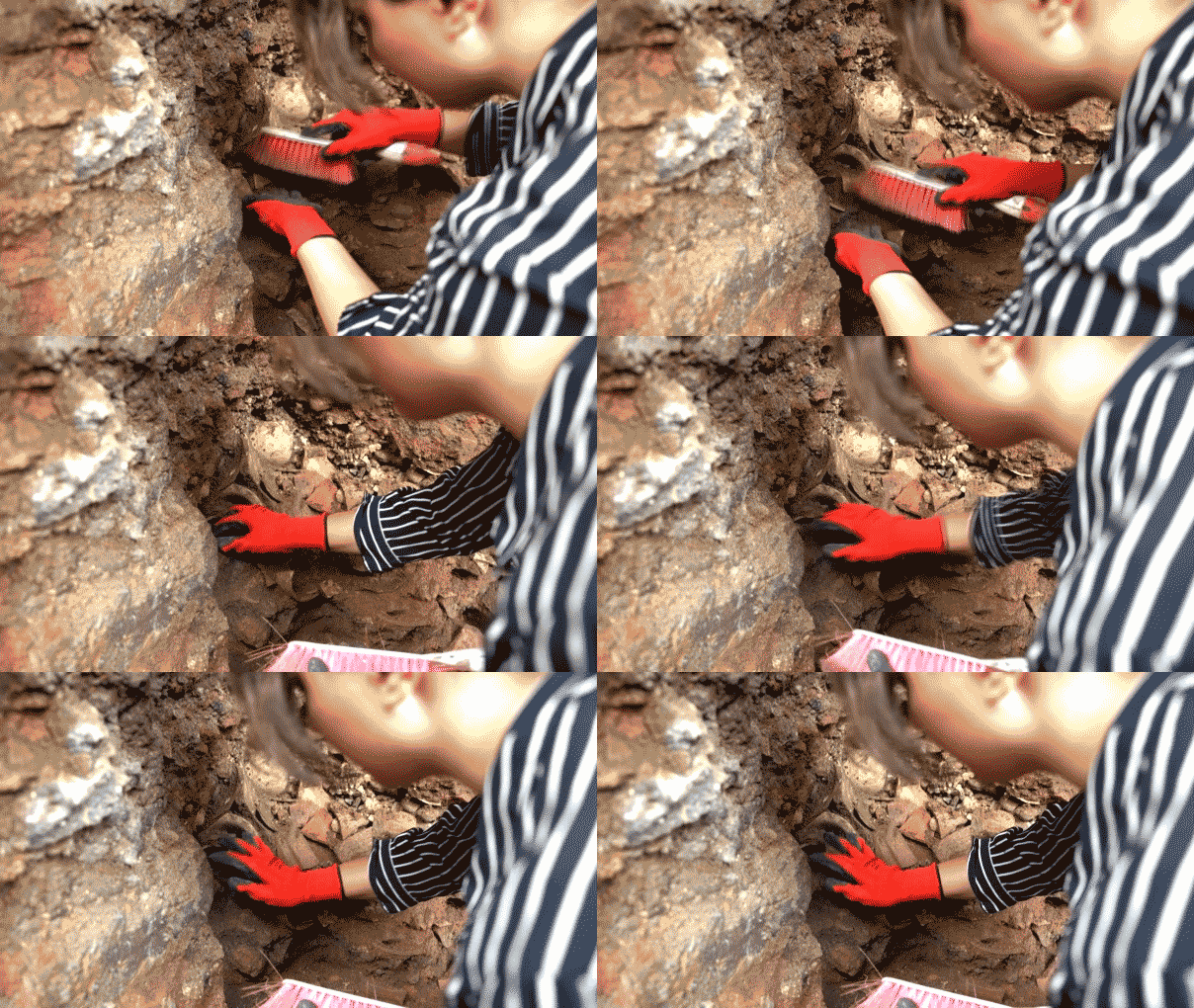
Researchers are studying pottery believed to go back to between the 10th and 11th centuries in Tbilisi. (Reuters)
“[It’s been] a real center for the region, particularly an economic center.”
CLICK HERE TO SIGN UP FOR OUR LIFESTYLE NEWSLETTER
The pottery appears to date between the 10th and 11th centuries, when Tbilisi was under Arab rule and served as an important stop along the Silk Road.
Additional studies, including 3D scanning, will help researchers more precisely determine the artifacts’ age.
CLICK HERE FOR MORE LIFESTYLE NEWS
Georgia, cradled between Europe and Asia, forms part of the Caucasus region alongside Armenia and Azerbaijan.
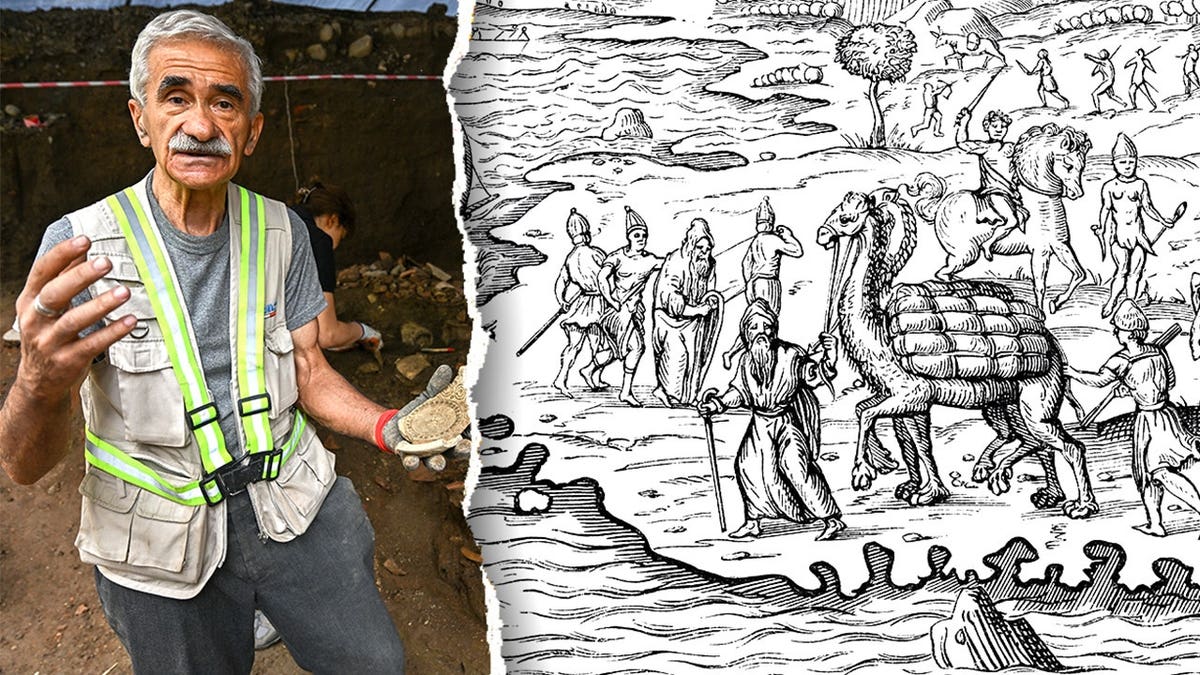
The pottery appears to date to the 10th and 11th centuries, when Tbilisi served as an important stop along the Silk Road. One of the workers is pictured on the left. (Reuters; iStock)
Tbilisi was founded in the fourth century, and the region has since come under the control of various powers, including Mongols, Persians and Russians, as well as Arabs during the Middle Ages.
TEST YOURSELF WITH OUR LATEST LIFESTYLE QUIZ
The discovery comes as workers across the world stumble on ancient sites during routine work.
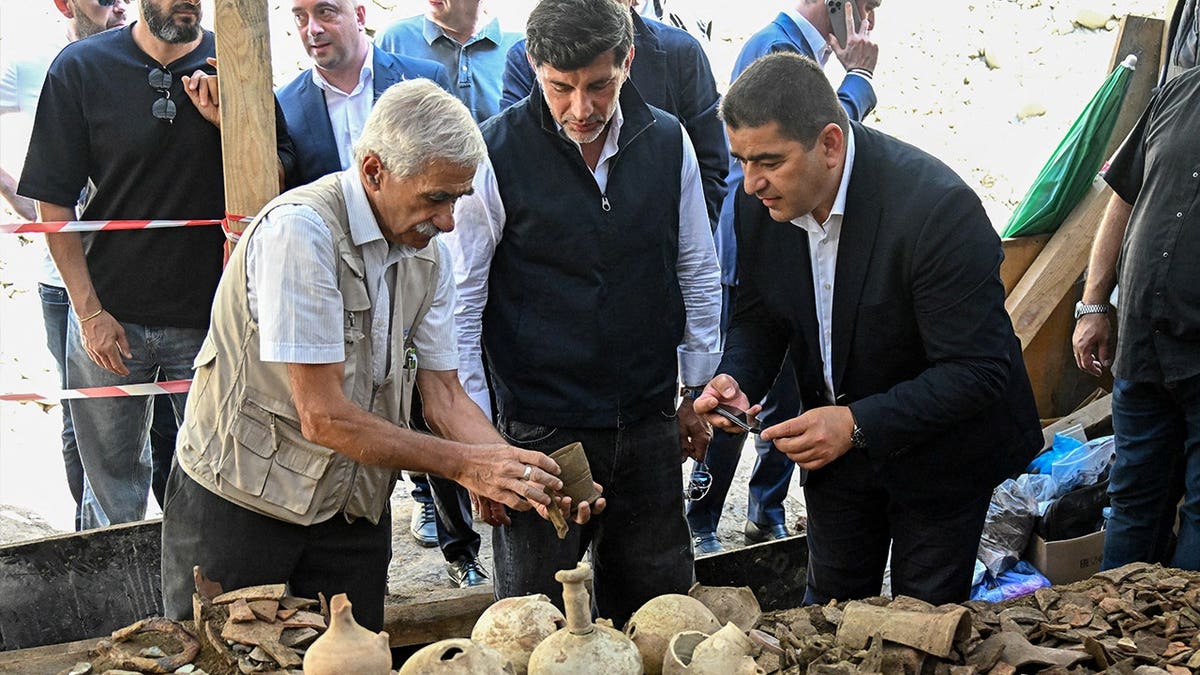
Archaeologists plan additional studies, including 3D scanning, to more precisely determine the age of the artifacts. (Reuters)
In Italy, construction crews building a new highway unexpectedly uncovered the remains of an ancient sanctuary dating to the fifth century B.C., prompting an archaeological investigation.
CLICK HERE TO DOWNLOAD THE FOX NEWS APP
Last summer in Peru, utility workers digging trenches for an underground gas network unearthed two pre-Incan tombs belonging to the Chancay culture, which existed from roughly 1000 to 1470 A.D.
Reuters contributed reporting.

- Admin
- Jaguars pass rusher has heated confrontation with NFL staffer in wild scene: ‘You can’t touch me’ September 28, 2026
- JASON CHAFFETZ: Fox News has never let DC scandals become mere footnotes September 28, 2026
- Why betting on Dodgers completing historic World Series 3-peat is a fool’s errand September 28, 2026
- Baker Mayfield suffers dislocated thumb as Buccaneers’ nightmare start worsens September 28, 2026
- Former South Park writer creates ‘Cornell 7’ website to expose alleged gang rapists, issues chilling warning: ‘Accountability is coming’ September 28, 2026