LEE CARTER: Polls say Democrats could swamp Republicans. As a pollster, I have a question
NEWYou can now listen to Fox News articles!
The blue wave is coming.
Maybe even a blue tsunami.
At this rate, Democrats may want to stop ordering yard signs and start ordering life jackets.
REPUBLICANS FACE BRUTAL MIDTERM HEADWINDS. SIX FORCES COULD HELP THEM DEFY HISTORY.
And look, I get it.
President Donald Trump speaks on inflation at Mount Airy Casino Resort in Mount Pocono, Penn., on Tuesday, Dec. 9, 2025. (Adam Gray/Bloomberg/Getty Images)
The polls are very good for Democrats right now. The latest Fox News Power Rankings has Democrats ahead by 11 points among likely voters on the generic congressional ballot. Reuters/Ipsos has them ahead by among registered voters.
LEE CARTER: I STUDY POLLING. DEMOCRATS ARE GAMBLING ON ANTI-TRUMP VOTES, NOT IDEAS
President Donald Trump’s approval rating is struggling. Voters are miserable about prices. Democrats have an enthusiasm advantage.
If you’re a Democrat, there is a lot to like.
If you’re a Republican, maybe skip ahead a few paragraphs.
But I’m a pollster. And when everyone starts looking at the same numbers and reaching the same conclusion, I get a little itchy.
Not because I don’t believe the polls.
I do.
The question is whether we’re asking them to tell us more than they actually can.
The polls are telling us pretty clearly that a lot of Americans are unhappy with Trump.
FOX NEWS POWER RANKINGS: VOTERS SAY THEY’RE IN ECONOMIC PAIN, BUT WILL DEMOCRATS GAIN?
What I don’t think they’ve answered yet is whether those same Americans believe in the alternative.
But I’m a pollster. And when everyone starts looking at the same numbers and reaching the same conclusion, I get a little itchy.
And there is a very big difference.
100 DAYS UNTIL MIDTERMS AND DEMOCRATS ARE WINNING BECAUSE THEY ACTUALLY HAVE A MESSAGE
In 2018, Democrats had something wonderfully simple – Healthcare. Not a framework. Not a 14-point plan. Not a word tested in a focus group until everyone in the room agreed it was “accessible.” A cause.
Republicans had tried to repeal Obamacare. Voters worried about losing coverage and protections for pre-existing conditions.
You could explain the stakes in about eight seconds.
More importantly, you could finish the sentence:
I’m voting because ________.
Healthcare filled in the blank.
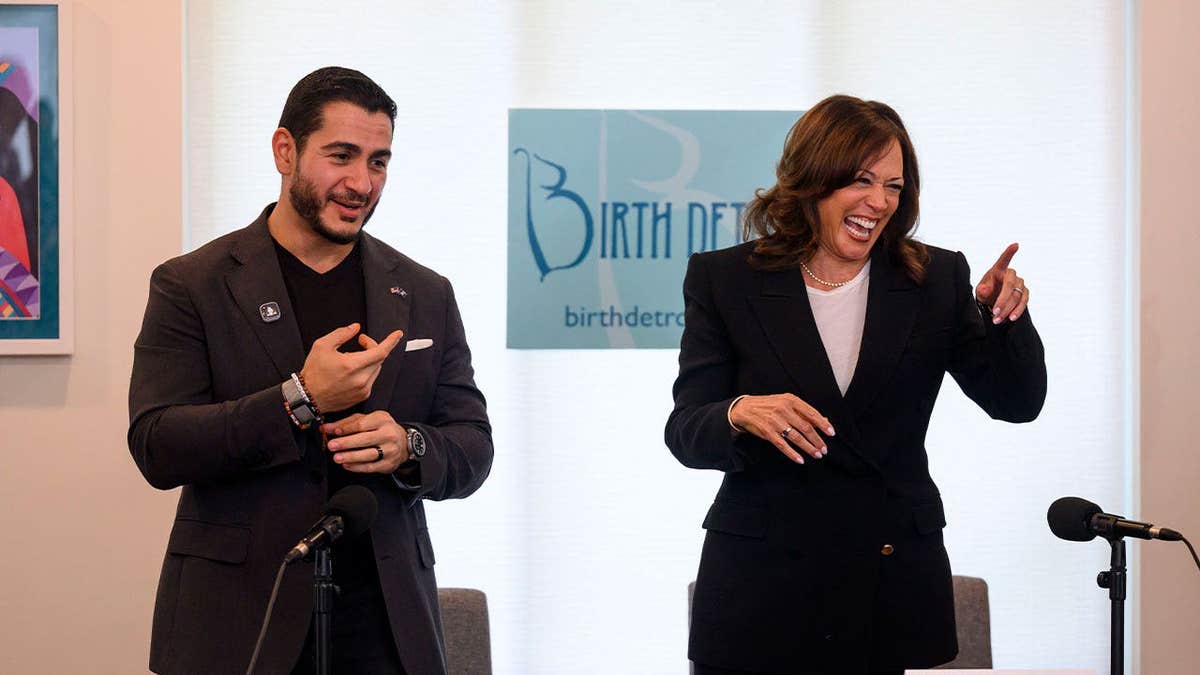
Former Vice President Kamala Harris joins Michigan Democratic Senate candidate Abdul El-Sayed for a roundtable discussion at Birth Detroit on Tuesday, Sept. 22, 2026. (David Guralnick/Pool/Getty Images)
And it did. Healthcare was the most important issue for more voters than any other issue in polling leading into the 2018 midterms.
So, what fills in the blank in 2026?
Well, Democrats have a word.
Affordability.
MIDTERM HISTORY MASSIVELY FAVORS DEMOCRATS. BUT THEY ARE MAKING A BIG MISTAKE
And it is having quite a year.
Everyone is for affordability.
Democrats are for affordability.
Republicans are for affordability.
People who charge $24 for a chopped salad are presumably for affordability.
And voters are absolutely furious about prices.
So, the problem isn’t whether voters care about affordability.
They care.
A lot.
The question is: What does affordability mean Democrats are actually going to do?
Because affordability describes the problem beautifully.
So, what fills in the blank in 2026? Well, Democrats have a word. Affordability. And it is having quite a year.
It doesn’t necessarily describe the solution.
REDISTRICTING GIVES REPUBLICANS AN EDGE, BUT AFFORDABILITY WILL DECIDE THE MIDTERMS
That’s where, to me, the numbers get interesting. Pew asked Americans which party’s economic policies they agreed with more.
Remember the environment we’re talking about.
Only 24% rated the economy good or excellent. Six in 10 said Trump’s economic policies had made economic conditions worse.
The economy is front and center. Trump is struggling. Democrats are leading the congressional ballot.
And yet, on economic policy:
Democrats: 37%.
Republicans: 36%.

Jimmy Kimmel revealed that his interview with James Talarico would only air on YouTube, citing FCC threats during “Jimmy Kimmel Live!” on Sept. 9, 2026. (Randy Holmes/Disney via Getty Images; Brandon Bell/Getty Images)
One point. Not even the margin of error. That’s the number I can’t stop thinking about.
Because Democrats may be winning the referendum on Trump without yet winning the argument for themselves.
And those are two very different victories.
Rejection isn’t conversion.
This is where I think we may be getting ahead of ourselves.
A voter can be unhappy with Trump without falling madly in love with Democrats.
These are not mutually exclusive positions.
In fact, judging by Americans’ views of politics generally, they may be the national consensus.
You can think Republicans have failed on prices without believing Democrats know how to fix them.
You can prefer a Democrat when a pollster calls in September and still not be particularly motivated to vote in November.
You can desperately want change and remain profoundly unconvinced by your available choices.
That’s why I’m not dismissing today’s Democratic polling advantage.
I’m asking what is underneath it.
Is it a preference?
Is it a protest?
Or is it a cause?
The economy is front and center. Trump is struggling. Democrats are leading the congressional ballot. And yet, on economic policy: Democrats: 37%. Republicans: 36%.
Because causes get people out of the house.
Democrats also have the small matter of deciding what they believe
There isn’t exactly one Democratic Party right now.
There is a progressive Democratic Party talking about corporate power, housing and fundamental economic change.
There is a center-left Democratic Party talking about competence, stability and lowering costs.
There are Democrats trying to win back Trump voters.
Democrats trying to rebuild the Obama coalition.
Democrats trying to create a new coalition altogether.
They can all say affordability.
I’m less certain they would all finish the sentence the same way.
And voters don’t only need to know what you’re against.
Eventually, they want to know where you’re taking them.
And what on earth do Republicans do with that?
This is where Republicans might want to resist a favorite Washington pastime: explaining to voters why voters are wrong.
If people say groceries are too expensive, telling them the economy is actually terrific is unlikely to make the eggs cheaper.
If they say they’re exhausted by chaos, producing more chaos seems an unusual voter-retention strategy.
And if they say affordability is their biggest concern, changing the subject may work for a news cycle. It doesn’t change the grocery bill.

Vice President J.D. Vance (C), accompanied by (L-R) Centers for Medicare & Medicaid Services Deputy Administrator & Chief Operating Officer Kimberly Brandt, Administrator for the Centers for Medicare & Medicaid Services Dr. Mehmet Oz, Federal Trade Commission Chair Andrew Ferguson, and Health and Human Services Deputy Secretary nominee Chris Klomp, speaks during a news conference on fraud at the Eisenhower Executive Office Building on Sept. 22, 2026, in Washington, DC. Vance announced a federal crackdown on Affordable Care Act fraud, removing over 750,000 allegedly ineligible enrollments and banning hundreds of suspect brokers to save taxpayers an estimated $2.2 billion. (Andrew Harnik/Getty Images)
But here’s the thing.
Voters haven’t completely abandoned Republican policies.
Pew found the parties essentially tied on economic policy. Republicans still had an advantage on immigration and a much larger advantage on crime.
So, this isn’t necessarily an electorate saying:
We have embraced the Democratic worldview.
It may be saying:
We don’t particularly like what you’re doing with the keys.
They can all say affordability. I’m less certain they would all finish the sentence the same way. And voters don’t only need to know what you’re against. Eventually, they want to know where you’re taking them.
That’s a different problem.
Democrats have to turn dissatisfaction into belief.
Republicans have to convince voters that the things they elected them to do are actually making their lives better if they get more time.
Both parties are trying to close a gap.
For Democrats, it’s the gap between rejection and conversion.
For Republicans, it’s the gap between policy and lived experience.
And neither one gets across that gap by shouting affordability more loudly.
Voters already know things cost too much.
They don’t need another politician to identify the problem.
They need some reason to believe somebody can actually solve it.
Now, about those polls
I’m a pollster, so I want to be very clear:
Believe them.
When poll after poll shows Democrats ahead, that’s meaningful.
When Trump’s approval falls, that’s meaningful.
When voters repeatedly say affordability is their biggest concern, that’s meaningful.
A poll is doing its job when it tells us where voters are today.
Where we get into trouble is when we turn a snapshot into a screenplay and start writing the ending.
Michigan and Wisconsin gave us a useful reminder of that this summer.
The lesson wasn’t that polling is broken.
For Democrats, it’s the gap between rejection and conversion. For Republicans, it’s the gap between policy and lived experience. And neither one gets across that gap by shouting affordability more loudly.
It was much less dramatic.
Voters move.
Undecided people eventually decide.
Turnout is hard to model.
And enthusiasm can sometimes make one group much easier to see than another.
In other words:
Intensity isn’t prevalence. And prevalence isn’t turnout.
That’s not an argument against polling.
It’s an argument against getting cocky about it.
Which brings us back to the blue tsunami
Could it happen?
Absolutely.
The current political environment gives Democrats plenty of reasons for optimism.
Affordability could become the 2026 version of healthcare.
Opposition to Trump could itself become the motivating cause.
Democrats could spend the remaining weeks turning “affordability” from a word into an argument voters understand and believe.
But that’s different from saying the outcome is inevitable.
What strikes me most about voters right now isn’t enthusiasm.
It’s exhaustion.
They’re tired of Trump.
They’re tired of Democrats.
They’re tired of Washington.

Members of Congress begin to arrive in the House Chamber before US President Donald Trump delivers the State of the Union address at the US Capitol in Washington, DC, on February 24, 2026. (ANDREW CABALLERO-REYNOLDS / AFP via Getty Images)
They’re tired of paying too much for everything.
They may even be tired of being asked how tired they are.
That’s a volatile electorate.
And volatile electorates have a nasty habit of embarrassing people who think they’ve figured them out.
So yes, Democrats should be happy about the polls.
Republicans should be worried about them.
But neither party should mistake unhappiness for allegiance.
The question that will decide this election isn’t simply whether Americans are disappointed in Donald Trump.
We know many of them are.
It’s whether Democrats can give those voters something affirmative to believe in.
Democrats could spend the remaining weeks turning “affordability” from a word into an argument voters understand and believe. But that’s different from saying the outcome is inevitable.
And whether Republicans can give them something affirmative to choose.
In 2018, Democrats had healthcare.
CLICK HERE FOR MORE FOX NEWS OPINION
In 2026, they have affordability.
CLICK HERE TO DOWNLOAD THE FOX NEWS APP
One was a cause. The other is still a word. For now.
CLICK HERE TO READ MORE FROM LEE CARTER

- Admin
- Prince William ‘incandescent with anger’ at Prince Harry as Diana anniversary deepens royal rift: Piers Morgan October 5, 2026
- These foods could be boosting your brain — while others may be doing damage October 5, 2026
- Former Prince Andrew files legal action to quash warrants that led to residence searches October 5, 2026
- 5 Challenges David Ellison Faces as He Snags His Hollywood Prize October 5, 2026
- Kalshi bets big on NY with $3M Housing Works donation — despite legal battle with Gov. Hochul October 5, 2026