Who's really played the best thus far through the first half of the college football season?
Most agree that the AP Top 25 Poll has become fatally flawed, thanks to a combination of human voter bias, time zone issues, mistakes and the sheer number of games, which makes following each one in detail virtually impossible.
These issues start in the preseason polls, which are no more than lightly educated guessing based on recruiting rankings, coaches, the transfer portal, success in the previous season and conference affiliation. Even in season, the polls have become so unreliable and inaccurate that there’s a case to be made that they might do more harm than good when the season hits crunch time and the selection committee starts their rankings.
This page may contain affiliate links to legal sports betting partners. If you sign up or place a wager, FOX News may be compensated. This content was created by a team that works independently from the FOX newsroom.
One way to solve for this is to look at rankings that are based not on preseason expectations, stadium size, jersey patches, or recruiting rankings, but actual on-field performance. Meaning, how efficient have you been on offense and defense, adjusted for the competition you’ve faced. What is the success rate you’ve had on offense, and allowed on defense, again adjusted for the competition you’ve faced.
MIAMI HURRICANES COACH COMES OUT IN FAVOR OF ENDING PRESEASON COLLEGE FOOTBALL POLLS, BLASTS SEC
Alabama head coach Kalen DeBoer looks on during the first half of an NCAA college football game against Florida State, Saturday, Aug. 30, 2025, in Tallahassee, Fla. (AP Photo/Phelan M. Ebenhack)
The advantage to this? It filters out noise, like individual game results. Believe it or not, head-to-head matchups don’t actually determine which team is better than the other, especially when the teams are closely matched. For example, look at the two games between the Alabama Crimson Tide and Georgia Bulldogs in 2025.
In the first matchup, the Tide went into Athens and eked out a 24-21 win. The underlying performance, though, heavily favored Georgia. The Bulldogs averaged 6.7 yards per play, while allowing just 5.2 to Alabama. Georgia averaged a whopping 6.9 yards per rush, while the Tide could only muster 3.1. UGA missed opportunities too, only converting two of their red zone opportunities into points, losing a fumble, and only going 2-8 on third downs and 0-1 on fourth down.
As a result, the postgame win expectancy heavily favored Georgia. Per ESPN’s SP+, the adjusted scoring margin was Georgia by nearly seven points. The Bulldogs, based on their underlying performance, would win that game nearly 81% of the time. They didn’t. Sure enough, when the two teams met again in the SEC Championship, the outcome was very different.
CLICK HERE FOR MORE OUTKICK SPORTS COVERAGE
To say Georgia dominated is a bit of an understatement. Alabama had -3 net rushing yards on 16 tries, a remarkable -0.2 yards per attempt. The third down success rate flipped, with the Tide going 3-14 and Georgia 6-16, plus 2-2 on fourth downs. Despite losing the penalty battle, the Bulldogs rolled, 28-7. The stats backed it up; UGA had 99.8% win expectancy with a +21.2 adjusted scoring margin. Looking at wins and losses is useful and necessary, but often deceiving as to which team is better.
THE CRAIG CARTON SHOW–UNFILTERED, UNAPOLOGETIC AND UNMISSABLE. DOWNLOAD HIS DAILY PODCAST NOW!
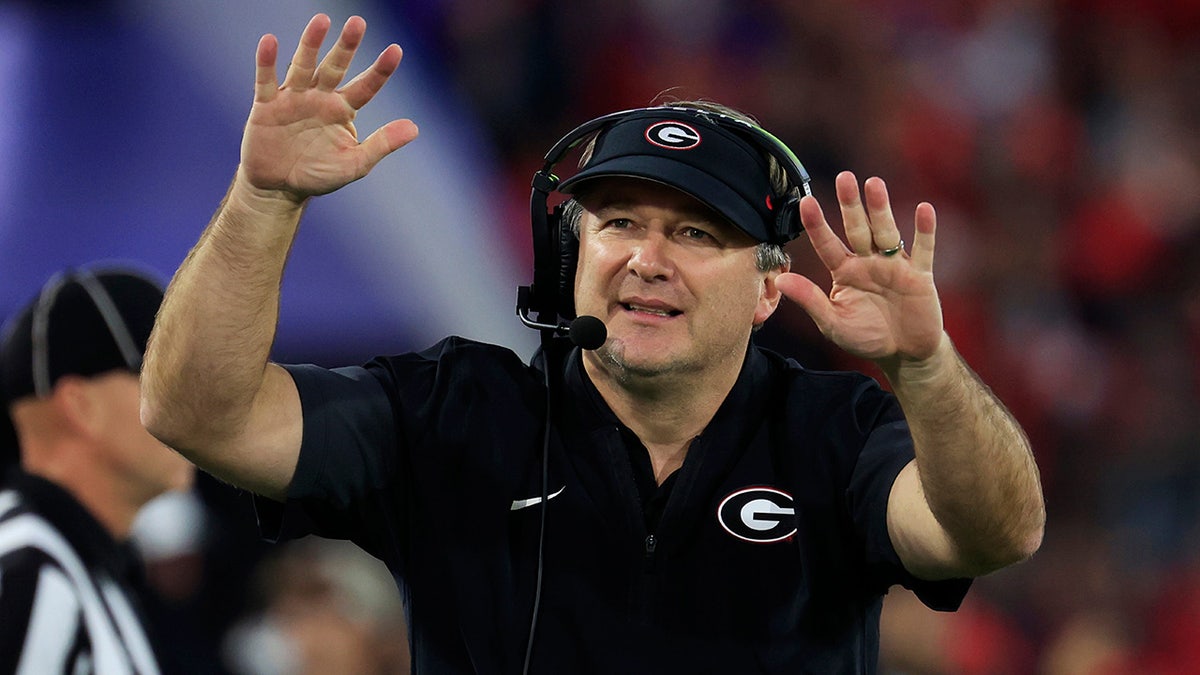
Georgia Bulldogs head coach Kirby Smart tells the students section to calm down during the fourth quarter of an NCAA football game, Saturday, Nov. 1, 2025 at EverBank Stadium in Jacksonville, Fla. (Corey Perrine/Florida Times-Union)
So what’s happened thus far in 2026 that can give us some clues as to who’s trending up and who’s trending down? The latest SP+ ranking might be a better place to look than the AP Poll for who’s truly elite in college football this year.
Well, there’s one team that somehow seems to have flown a bit under the radar, perhaps due to a lackluster schedule over the first few weeks. Once again, the Georgia Bulldogs are right back at it, with their dominance thus far making them the No. 1 team based on efficiency and success rate, combined with preseason expectations of team quality.
Right behind them? Ohio State, a perfect example of on-field results not necessarily matching team quality. The Buckeyes lost to Texas, but the two teams played an essentially equal game, and the Buckeyes’ other performances have been more impressive than the Longhorns. So while they’ve dropped to fifth in the poll, they’re a far better team than their ranking suggests.
SIGN UP FOR THE DAILY OUTKICK NEWSLETTER
Speaking of Texas, they’re all the way down at No. 8, as once again their offense has looked far less impressive than most expected heading into the season. Meanwhile, the most surprising team? The Nebraska Cornhuskers, who have thoroughly dominated their (easy) schedule through the first half. Don’t be stunned though if their game against Indiana is a lot closer than most expect.
OUTKICK IS NOW AVAILABLE ON THE FOX NEWS APP: CLICK HERE TO DOWNLOAD
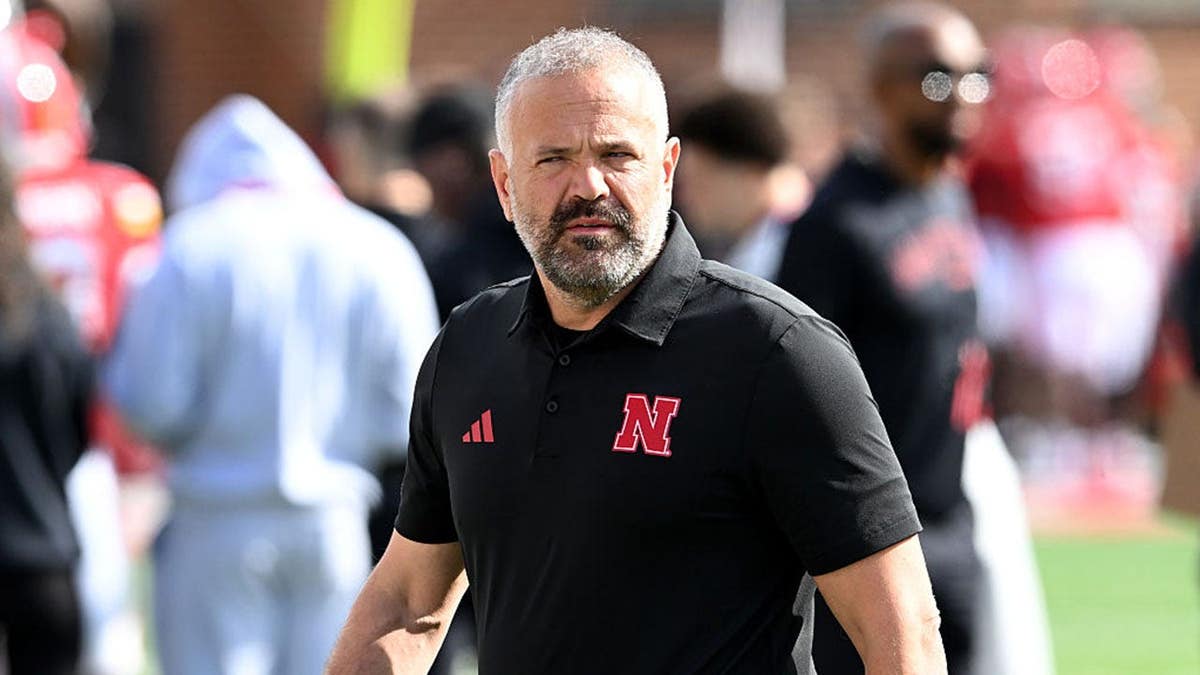
Head coach Matt Rhule of the Nebraska Cornhuskers watches the teams warm up before the game against the Maryland Terrapins at SECU Stadium on Oct. 11, 2025, in College Park, Md. (Getty Images)
Where SP+ really deviates from the AP Poll, however, is in the middle tier of the SEC, which is where most voters struggle. Despite their win over LSU, Ole Miss hasn’t actually been very impressive on the field. The Rebels are No. 9 in the AP Poll, while SP+ has them at No. 35. Mississippi State is No. 27 in SP+ and No. 17 in the poll, inexplicably. Kentucky just dropped out of the top-25, but SP+ has the Wildcats all the way down at No. 45.
Other teams, like Iowa and Oklahoma State, are well below their AP number too.
These rankings are forward-looking, and will change as the season progresses. But it’s a good reminder not to sleep on Georgia, or downplay how good the Buckeyes are, even with the somewhat fluky Texas loss. And another that we don’t have to rely on, often not very good, poll voters to figure out which team is more likely to beat another.

- Admin
- Illegal migrant who allegedly stabbed detective during brutal NYC robbery wore bizarre Halloween mask: sources October 8, 2026
- Tom Hanks’ son Chet confronts Eric André over comedian’s past comments about him October 8, 2026
- Sonja Morgan blasts ‘higher than mighty’ ‘Golden Life’ cast for ‘bullying’ her when cameras aren’t rolling: ‘It gets annoying’ October 8, 2026
- Marlon Humphrey says meeting President Trump inspired him to vote in the next election October 8, 2026
- Gwyneth Paltrow’s ‘skin-transforming’ exfoliator is 25% off for October Prime Day October 8, 2026