Caitlin Clark sends WNBA All-Star ratings soaring as 3-point contest audience falls without her
The WNBA Finally Has Stars. Why Is It Fighting Them? | The Riley Gaines Show
Caitlin Clark and Sophie Cunningham are giving the WNBA exactly what every league says it wants: attention, rivalry, ratings, personality, memes, and real fan emotion. So why does the league keep looking uncomfortable with the very energy that is making people watch? On this episode of The Riley Gaines Show, Riley breaks down Clark’s return to elite form, the Fever’s surge, the technical foul controversy, and Sophie Cunningham pushing back on the
ESPN had plenty to celebrate after WNBA All-Star Weekend.
Saturday night’s WNBA All-Star Game averaged 3.2 million viewers on ABC, peaked at 3.3 million and became the second-most-watched edition of the event in league history.
The audience increased 44% from last year, when Caitlin Clark attended the game but didn’t play because of an injury.
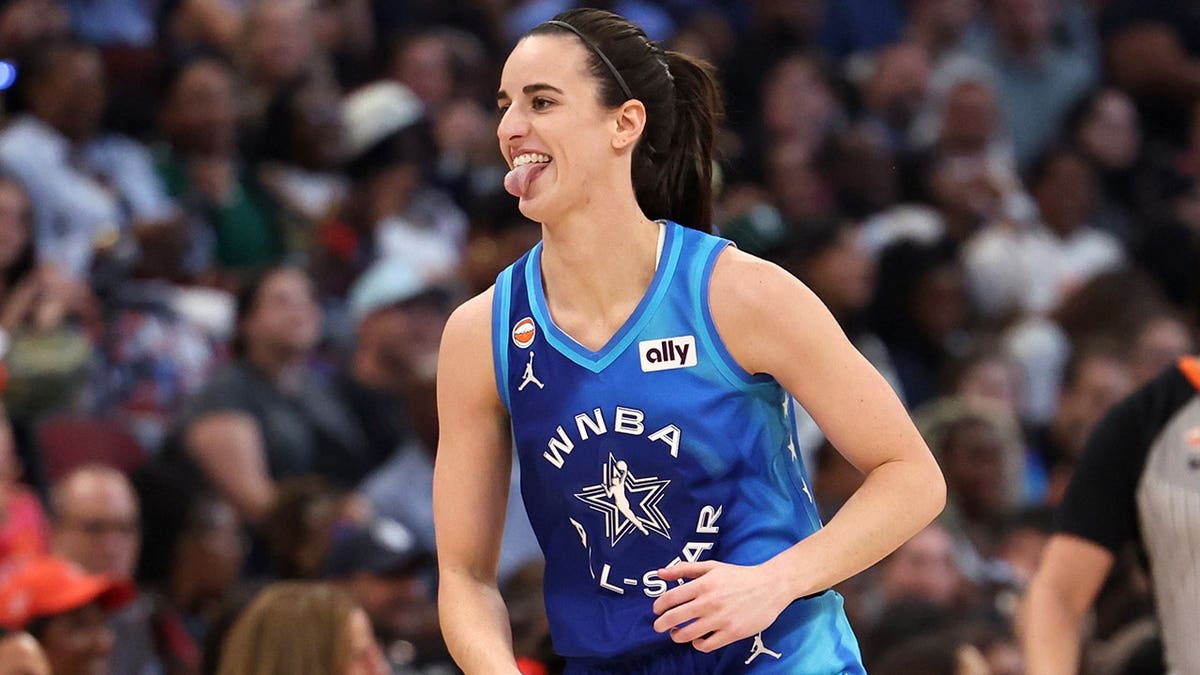
This year, Clark returned to the court.
WNBA All-Star Game ratings surged 44% with Caitlin Clark on the court. (Getty Images)
One night earlier, however, she wasn’t part of the WNBA 3-Point Contest after declining an invitation, and she wasn’t among the participants in the WNBA’s new Shooting Stars event.
CAITLIN CLARK DECLINES WNBA 3-POINT CONTEST INVITATION, DEALING MAJOR BLOW TO ALL-STAR WEEKEND AND ESPN
That audience, predictably, went in the opposite direction.
After OutKick and Fox News Digital asked ESPN for the figures, a network spokesperson said Friday’s telecast averaged 1.17 million viewers on ESPN and peaked at 1.35 million.
The average declined approximately 11% from the 1.318 million viewers who watched last year’s competition.
Clark didn’t compete last year either, but she was expected to make her 3-Point Contest debut before withdrawing because of an injury just one day before the broadcast.
ESPN publicly celebrated Saturday’s strong audience. It also promoted the 1.8 million viewers who watched WNBA Countdown, which featured a sit-down interview with Clark before the game.
But its ratings graphic did not include Friday’s average or peak audience.
ESPN didn’t explain why.
The 1.17 million figure is quite solid for a league that went 16 years without drawing a seven-figure audience before Clark arrived on the scene.
It was the second-largest audience on record for the WNBA’s Friday All-Star events, approximately 68% higher than the 695,000 viewers who watched in 2024 and more than four times the 288,000-viewer audience from 2023.
Still, the number declined.
And ESPN, which found space in its graphic for Saturday’s game, its peak audience, the year-over-year increase, the game’s historical ranking and even the pregame show, didn’t publicly mention it.
WNBA MEDIA PREDICTABLY EMBARRASSES ITSELF AGAIN BY IGNORING SOPHIE CUNNINGHAM STORY OVER ALL-STAR WEEKEND
Networks promote numbers that make their programming look good, obviously.
But the selective celebration produced a revealing contrast between the WNBA events in which Clark participated and the one she didn’t.
Saturday’s game drew roughly one million more viewers than the 2.19 million who watched the 2025 All-Star Game, when Clark remained on the bench with a groin injury.
Last year’s audience was still the second-largest in event history at the time, but it fell 36% from the record set in 2024.
This year, Clark returned to the court and the audience surged 44%.
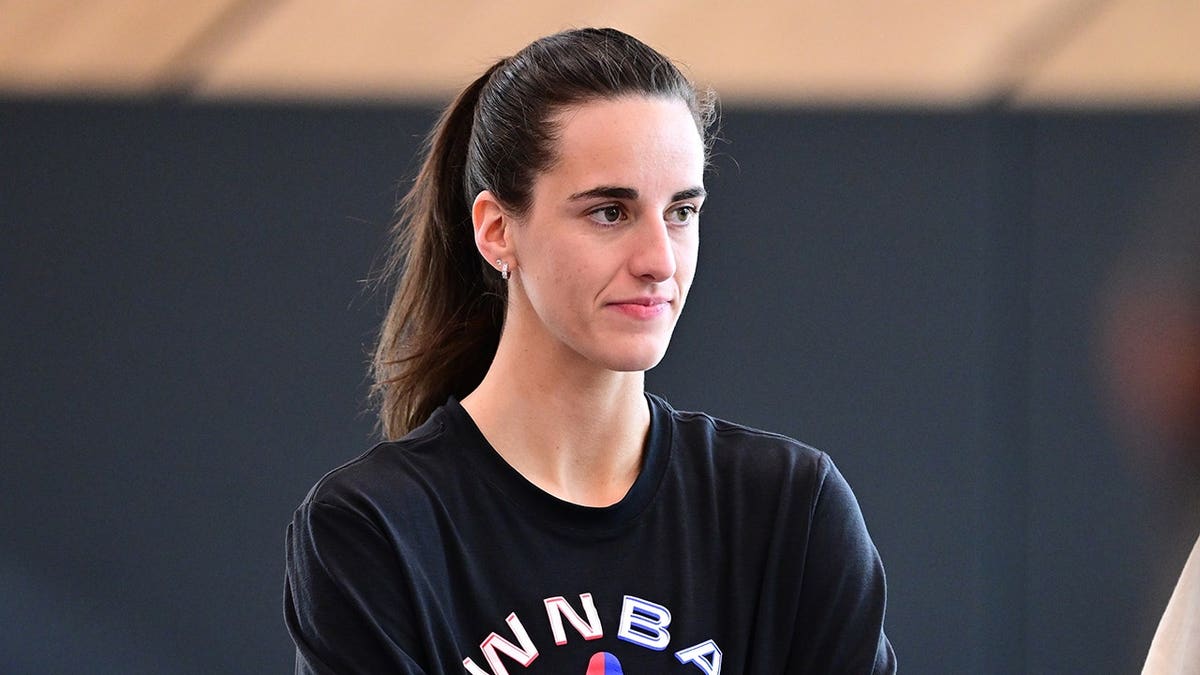
Caitlin Clark looks on during the 2026 WNBA All-Star Practice at the Obama Presidential Center in Chicago. (NBAE via Getty Images)
Apparently, there is a meaningful difference between having Caitlin Clark in the building and having Caitlin Clark actually playing basketball. Who would have thought?
The 2026 audience also finished only about 7% below the record 3.442 million viewers who watched the 2024 All-Star Game.
That comparison makes this year’s number look even more impressive, although it requires substantial context.
The 2024 game wasn’t a traditional All-Star exhibition.
Clark and Angel Reese, whose college rivalry helped transform women’s basketball viewership, played on the same team for the first time.
ANGEL REESE’S LATEST WNBA CONTROVERSY SHOWS HOW VICTIMHOOD BECAME CENTRAL TO HER BRAND
Their WNBA All-Star team faced the U.S. Olympic roster after Clark’s controversial exclusion from Team USA, creating an obvious revenge storyline.
The players also treated the game seriously. Team WNBA defeated Team USA, 117-109, in what doubled as a tune-up before the Paris Olympics.
This year’s game had none of that.
It used a more conventional All-Star format, lacked the Olympic controversy and featured the limited defensive effort that has become common in professional All-Star showcases.
Yet it still attracted 3.2 million viewers.
There’s also an important Nielsen caveat because the 2024, 2025 and 2026 audiences were not all measured under the same system.
Nielsen expanded its out-of-home measurement to cover 100% of the contiguous U.S. television population beginning in early 2025, up from 66% previously. That change is especially relevant to live sports, which attract substantial viewing in bars, restaurants and other communal locations.
This year’s numbers were also reported using Nielsen’s newer Big Data + Panel methodology, which became the standard after last year’s All-Star Weekend.
That means neither the comparison with the 2024 record nor the year-over-year comparison with 2025 is perfectly apples-to-apples.
Still, the methodology changes don’t diminish the most obvious result.
Clark didn’t play in last year’s All-Star Game.
She played this year.
The audience increased by roughly one million viewers.
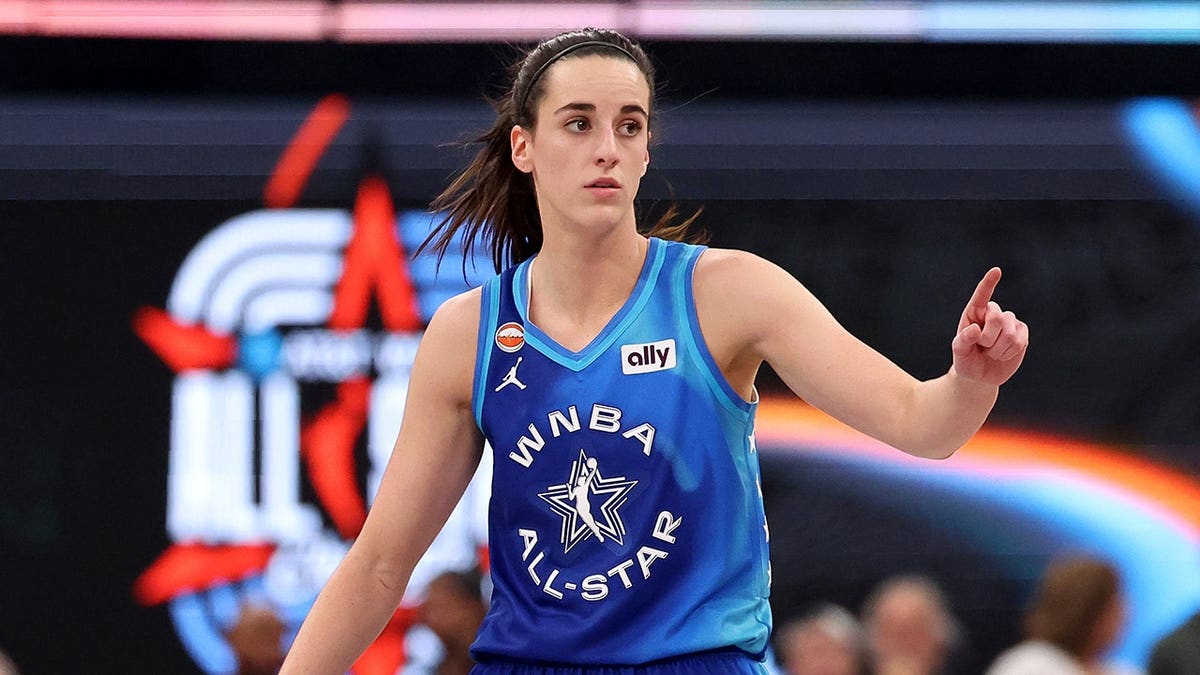
Caitlin Clark’s return to the WNBA All-Star Game drew 3.2 million viewers, a 44% increase from last year but Friday’s 3-Point Contest without her saw an 11% ratings decline. (Getty Images)
Friday’s comparison is more complicated, but the decline remains newsworthy because it’s important not to treat the “Clark effect” as an on-off switch.
WNBA events benefit from Clark’s presence even when she isn’t competing.
Indiana Fever games have continued to produce strong audiences while Clark is injured because viewers remain interested in her team, her status and whether she appears on the broadcast.
A Fever game without Clark on the court is still a Fever game. Those broadcasts routinely outperform games featuring two teams with no connection to her.
All-Star Weekend works similarly.
Clark didn’t compete Friday, but the event remained attached to a weekend whose central attraction was Clark. She was in Chicago, appeared throughout the weekend and was scheduled to play in Saturday’s game.
So the Shooting Stars event and 3-Point Contest still benefited from the same halo that helps Fever games when she is sidelined.
Even with that advantage, and despite the broader Nielsen system used this year, the audience declined from 1.318 million to 1.17 million.
ESPN’s decision to omit Friday’s figures becomes more interesting with that backdrop.
The network had Friday’s average and peak audiences available but chose not to include either figure in its public ratings graphic.
Instead, ESPN celebrated 3.2 million viewers for a game featuring Clark, a 3.3 million peak and 1.8 million for a pregame show featuring a sit-down interview with Clark.
It provided Friday’s 1.17 million average and 1.35 million peak only after OutKick and Fox News Digital requested them.
CLICK HERE FOR MORE SPORTS COVERAGE ON FOXNEWS.COM
The WNBA continues to insist that its growth story is bigger than one player.
SIGN UP TO GET THE LATEST SPORTS NEWS
But All-Star Weekend provided another reminder of the hierarchy.
When Caitlin Clark is around, the WNBA benefits.
When Caitlin Clark actually plays, the audience changes entirely.

- Admin
- Fox News Poll: Democratic enthusiasm shapes North Carolina Senate race July 30, 2026
- Mets owe their 1986 World Series triumph to two Game 6s for the ages July 30, 2026
- ‘Lucky’ Episode 4 Recap: Making Love Out of Nothing At All July 30, 2026
- Salman Rushdie’s Attacker Found Guilty of Aiding a Foreign Terror Group July 30, 2026
- Lincoln Riley says USC would be playing Notre Dame 'had some things come true that were said' July 30, 2026